Why Tamarac insulation work is different from a standard house call
Most insulation advice is written for a detached house with one roof, one attic and one owner. Tamarac does not fit that picture very often. A large share of the housing here is made up of condominium buildings, villas and attached homes grouped into big communities, many of them planned around single-floor living. In those buildings the attic above your ceiling may be continuous with the attic above your neighbor's, separated only by a firewall or a partial partition, and sometimes not even that for part of the span.
That matters because insulation is a physical layer sitting on a shared space. If the layer is thin or disturbed over your unit, the heat that builds under the roof comes down through your ceiling whether or not the unit next door is well covered. At the same time, you may not have the right to make changes in a space that the association controls. The first job in a Tamarac call is therefore sorting out who owns what: the ceiling drywall and the air handler belong to the unit owner, while the roof, the roof deck and often the attic space itself belong to the association.
A good technician starts with that question before talking about materials. It saves wasted visits and avoids the situation where an owner buys work that the board then refuses to allow. If you live in a community with a board or a management company, have the governing documents or the contact for the property manager within reach when you call.
Shared roofs and shared attic spaces
In a villa building with several attached units under one roof line, the attic is often one long cavity. Trusses run front to back or side to side, and the insulation lies across the ceiling joists below them. Where the attic is open from one unit to the next, a technician can sometimes walk from your section into a neighbor's section without crawling through any barrier. Where there are partitions, there is usually a small gap or a fire-rated wall with its own rules.
This has three practical effects. First, coverage can be uneven in a way that follows the building, not the owner. One unit may have a thick, even layer because a past owner had work done, while the next has patches and bare drywall tops. Second, the work area can be hard to reach. Access hatches in condo buildings are sometimes in a hallway closet, sometimes in a shared corridor, and sometimes sealed or painted over. Third, anything that changes the roof system, such as adding a radiant layer or changing ventilation, affects the whole building and usually needs association approval.
A technician looking at a shared attic will note the building construction, check where your unit begins and ends in the attic, and look at how the air moves through the space. If you are interested in attic insulation, expect that conversation to include the question of whether the work stays strictly above your own ceiling.
- Ask the property manager who holds the right to enter the attic above your unit.
- Find out whether the association has a standard approach or approved contractor process for attic work.
- Photograph your ceiling, closet hatch and any visible stains before the visit.
- Note whether neighbors have had work done, and when, if you know.
Single-floor living and what it means for heat
A single-story unit has one particular weakness: all of the ceiling is directly under the roof. In a two-story house, the upstairs floor shields the downstairs ceiling from roof heat. In a one-floor villa, every room, including the bedrooms and the living area, shares a ceiling with the hot attic. On a summer afternoon the attic air is far warmer than the outdoors, and that heat has to be stopped by whatever is lying on top of your drywall.
Residents often describe the result in the same way: the unit never quite cools in the late afternoon, the air conditioner runs long cycles, and the rooms nearest the exterior walls feel warmer than the ones in the middle. The cause is not always the attic, but in a single-floor building it is the first place to look because the surface area is so large compared with the walls.
Many Tamarac residents are also at home during the day, which makes the afternoon heat more noticeable than it would be for someone who is away at work. Comfort at that time of day is a good clue. If the rooms feel fine in the morning and drift upward in the afternoon, the ceiling layer and the roof are the likely drivers. If the unit is uncomfortable all day, air leakage, duct problems or an undersized system may also be involved, and a technician will say so.
What a technician checks when they come out
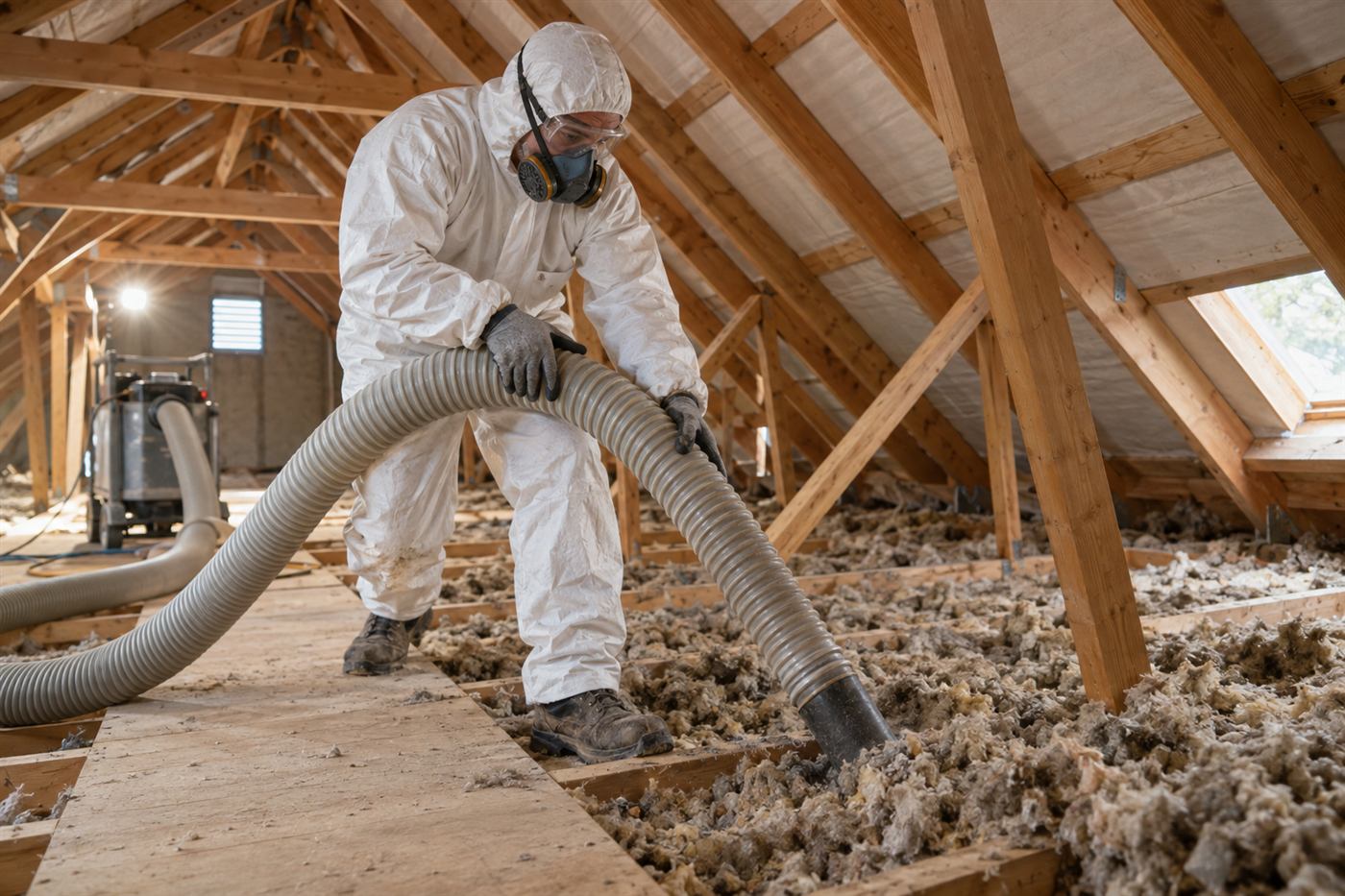
A visit to a Tamarac property usually covers the same core points, adjusted for the building. The technician looks at the attic from the access point, notes the material type, estimates how evenly it covers the ceiling, and looks for compression, gaps, wet spots, rodent damage and signs of past leaks. They check around penetrations such as bathroom fan ducts, recessed light housings, plumbing stacks and wiring, because those are the places where air and heat move around insulation.
They also look at the ductwork if the air handler is in the attic. Ducts in a hot attic lose cooling before it reaches the room, and ducts that sweat can wet the insulation around them. That connects to a few of the problems we see in this area, such as sweating ductwork in the attic.
If the roof is shared, the technician will point out which findings they can address from inside your unit's ceiling area and which belong to the building as a whole. Some conditions, such as a stained roof deck or a damaged vent, are association matters and the right step is to report them to management, not to cover them over with new material.
- Arrival and review of access: where the hatch is, who controls it, and whether the space is safe to enter.
- Visual survey of the existing layer: type, depth, evenness, compression and disturbance.
- Check of moisture signs, stains, rodent activity and ventilation.
- Look at ducts, the air handler and any penetrations that allow air movement.
- A plain explanation of the findings and what each option would do.
Humidity, salt air and aging materials
Tamarac sits inland from the beach, so salt exposure is lighter than in coastal towns, but humidity is a constant in this part of Broward County. Summer rain, afternoon storms and warm nights keep moisture in the air for most of the year. Older attic insulation that has been in place for decades often shows the effect: it may be compressed, matted, stained at the edges or carrying a stale smell.
Fiberglass batts and blown fiberglass tend to lose some of their loft over time. Cellulose holds moisture more readily and can settle. Neither is a failure on its own, but when the layer is visibly thin, patchy or discolored, it has stopped doing what it was installed to do. A technician can tell the difference between an old layer that is still doing a reasonable job and one that is worth replacing or adding to.
If you have had a roof leak in the past, an air conditioner drain overflow or a plumbing problem above the ceiling, mention it. Wet insulation does not dry well in a humid attic, and it can hold water against drywall. Where moisture is present, the right step is to identify the source first. Adding new material over a damp layer hides the problem and invites mold. Our page on moisture in attic insulation explains what to look for.
Retirement-community realities: access, schedules and rules
Many Tamarac communities have posted rules about contractor hours, parking, gate access, elevators and deliveries. Some require proof of insurance from any contractor entering the property, and some ask for a work notice to be filed in advance. None of this is unusual, but it affects timing. A visit that looks simple on paper can stall at the gate if the contractor is not on the list.
If you are not at home during the day, or if you spend part of the year elsewhere, tell us when you call. We can discuss how access to the attic will be handled and who will be present. Many owners ask a neighbor or a property manager to be on site, and that works best when it is arranged before the visit, not on the morning of it.
It also helps to think about comfort during the work. Attic work is dusty and noisy above the ceiling, even if the living space stays clean. Owners with breathing sensitivities, pets or a need for quiet should say so, and the plan can be adjusted around that.
- Check whether your community needs a contractor application or proof of insurance on file.
- Confirm gate and parking arrangements for a work vehicle.
- Ask whether elevators or common corridors need protection.
- Decide who will be present to open the unit and attic hatch.
Which services people in Tamarac ask about most
The most common request is simply a review of the attic layer, either because of high cooling bills, an uncomfortable room, or a recent roof or air conditioner project. From there, owners ask about adding material over what is already there, replacing damaged sections, or sealing air leaks around penetrations before covering them. Sealing and insulating work well together, and our page on air sealing explains why gaps matter even when the insulation looks thick.
Some owners ask about radiant barriers. In a single-story building under a hot roof, reflective material is sometimes considered alongside insulation. Whether it is right depends on the roof type, the shared attic and what the association permits. A technician will explain the pros and limits, not push it as a universal fix.
Garage conversions and enclosed porches are another category, especially in older villa communities where owners have added space. Those areas often have thinner ceiling and wall layers than the main living space. If you have an addition, tell the technician so it can be checked as a separate zone.
How an on-site visit and a quote work
Quotes are given only by phone. When you call, we ask about the building, the age of the roof and attic, the problem you are seeing and who controls access. For straightforward questions, that phone conversation is enough to describe the options. When the job is more involved, a shared attic, a possible moisture source or an unusual building, an on-site visit is the next step.
A service call charge applies to an on-site visit, and it is explained on the phone before anyone is dispatched. That way there are no surprises at the door. We do not publish prices on this site because the right answer depends on the building and what is in the attic.
Before the visit, it helps to have the unit number, a description of the problem, photographs if you can take them safely from the hatch, and any association paperwork about attic access. If you can stay out of the attic yourself, do so. The space is hot, the framing is hard to see, and the ceiling boards in many units cannot take a person's weight.
Permits, approvals and what the building controls
Insulation work is usually less regulated than structural work, but it is not always exempt from review. Some jobs, particularly those that involve changing the building envelope, ventilation or roof components, may need a permit from the municipal building office. In a condominium, there is also the association layer, which can be stricter than the city.
The practical approach is to ask first. A short note from the association confirming that attic work above your unit is allowed saves trouble later. If the answer is that it must be done by the building's own contractor, you will at least know before spending money on a plan.
Our guide to permits for insulation work covers the general picture, and our page for insulation for condos goes further into the ownership questions that come up in buildings like those in Tamarac.
Ready to talk it through
If you own or manage property in Tamarac and you are not sure where to start, the easiest first step is a conversation. Describe the building, the room that bothers you most and what the association has told you. We will explain what is likely involved and whether an on-site visit makes sense.
You do not need to know the type of material in your attic or the right terms. Photos of the ceiling, the hatch and any stains help, and a note about when the heat is worst helps even more. Call when you are ready, and we will walk you through the next step.
Questions people ask
Can I add insulation to my condo attic without the association?
Usually not without checking first. In many Tamarac buildings the attic space above your unit is a common element or is shared with neighbors, so changes may need board approval. Ask your property manager what is permitted, and whether a contractor must be on an approved list or provide proof of insurance before entering the building.
Why is my single-story villa so warm in the afternoon?
In a one-floor unit, every ceiling sits directly under the roof, so attic heat has a short path into the rooms. A thin, uneven or compressed layer lets that heat through. Air leaks, ducts in the attic and system size can also contribute, which is why a technician looks at the whole picture, not just the material.
Is old insulation in my attic a problem by itself?
Not always. Older material can still perform reasonably if it is dry, even and has not been disturbed. Problems appear when it is compressed, stained, matted, wet or contaminated by rodents. A technician can tell the difference on a visit and explain whether adding to it, repairing sections or replacing it makes sense.
Do you give quotes over the phone?
Yes, quotes are given only by phone, after we hear about the building, the attic and the problem. Jobs that are more involved, such as shared attics or possible moisture, need an on-site visit. A service call charge applies to that visit and is explained on the phone before dispatch.
What should I have ready before I call?
Know your unit or house type, roughly how old the roof and air conditioner are, and what you notice, such as hot rooms or high cooling bills. Have your association contact available, photos of the ceiling or hatch if possible, and any past records of attic work or roof leaks.
Will a technician go through my whole attic?
The technician surveys the part of the attic above your unit and the areas needed to judge coverage, moisture and ducts. In a shared attic, they stay within the access you are entitled to and report anything that belongs to the building, such as a damaged vent or a roof stain, so you can pass it on to management.
Describe the situation by phone and we will tell you what the job involves. Quotes are given by phone. Jobs that cannot be quoted without seeing them need a technician on site, and the service call charge is explained on the phone before anyone is dispatched.
(561) 854-1888