Why insulation work needs a few precautions
Most insulation materials are made of tiny fibers, cellulose particles or reactive chemicals. Once they are sealed away in an attic, wall or floor cavity, they do their job quietly. The moments that call for care are the ones when material is moved, cut, removed or sprayed: during installation, during removal of old insulation, and any time someone enters an attic and disturbs what is there.
The typical effects of disturbing insulation are mild but real. Fibers and dust can irritate skin, eyes, nose and throat. Some people notice itching or a scratchy feeling after contact, and people with asthma or other breathing sensitivities may react more strongly to airborne dust. In an old attic, the dust may include far more than insulation: decades of dirt, droppings, mold spores and debris that you would not want in the lungs either.
None of this is a reason to avoid insulation. It is a reason to treat attic and wall work as a job for people with the right gear and a plan, and to understand which tasks homeowners can safely do and which they should leave alone. A technician will describe the specific precautions for your job when you call.
What installers typically wear and why
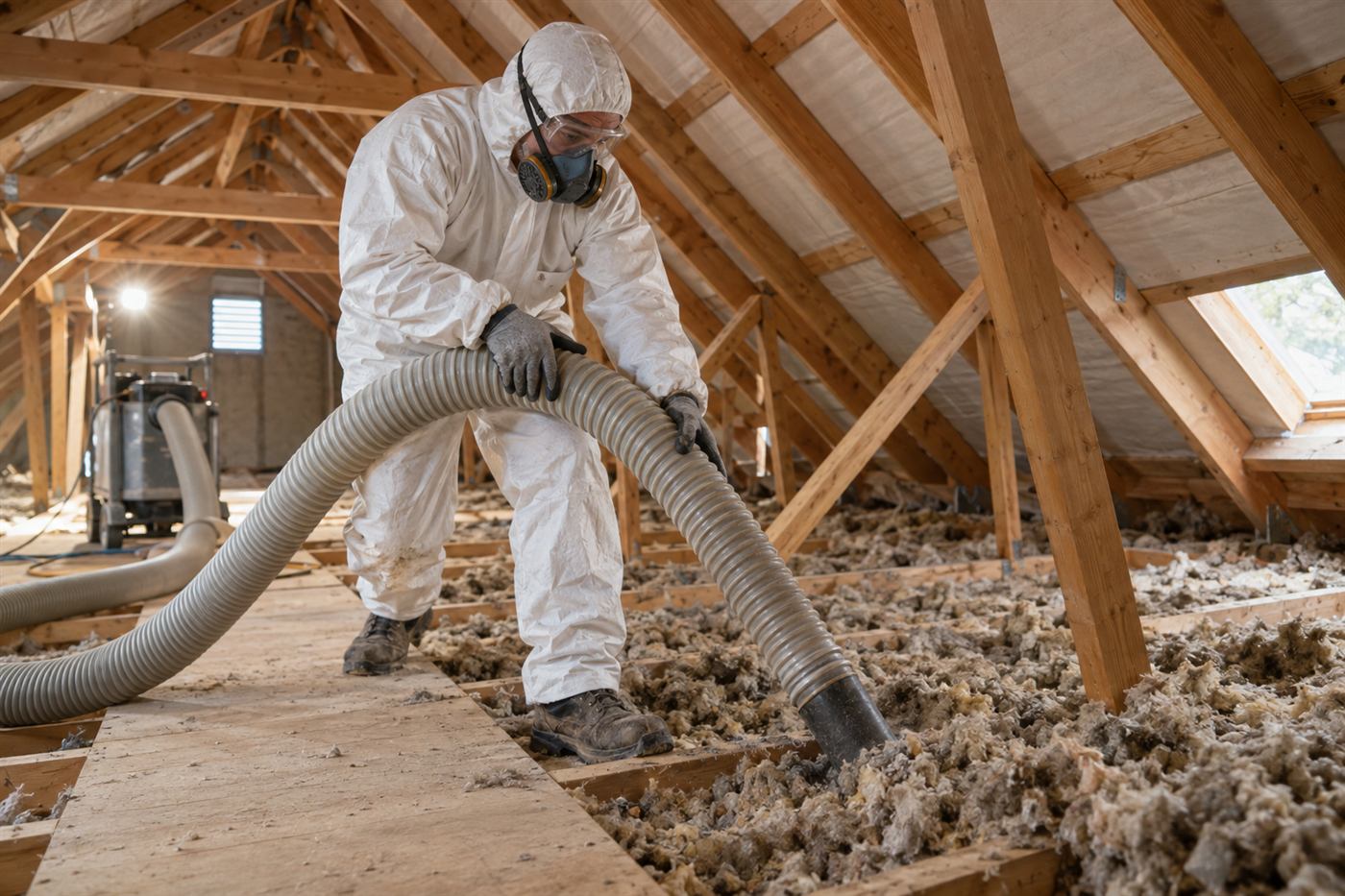
Crews working with insulation generally wear protective equipment suited to the material and the job. For blown-in and batt work, that usually means a respirator or dust mask rated for fine particles, eye protection that seals around the face, gloves, long sleeves and long pants, and sometimes disposable coveralls. For spray foam, the gear is more extensive, because the chemicals are applied as liquids that react on the surface: a fitted respirator suitable for the product, full coverage clothing, and eye protection.
In a Florida attic, heat is also a safety issue. Attic temperatures in summer can climb far above the outdoor air, and installers pace themselves, take breaks, drink water and often schedule attic work for cooler hours. Heat illness is one of the most real hazards in this trade, and it is the main reason you should not treat an attic as a casual place to poke around in July.
You do not need to wear gear to be at home during most jobs, but you should be kept out of the work area, and you should expect the crew to cover floors, protect finished surfaces, and seal doorways with plastic when dust is likely. If you ever see installers working without eye protection or breathing protection in a dusty attic, it is reasonable to ask about it.
What homeowners should avoid doing
The simplest rule is to stay out of the attic unless you have a clear reason and a safe way to move. Beyond the heat, attic framing is only partly floored. Stepping between joists can mean putting a foot through a ceiling, and insulation can hide wiring, junction boxes and low spots. A guide on safe movement is in our page about attic access and walkway boards.
Do not compress, cut or rearrange insulation around recessed lights, bath fans, or wiring unless you know what you are doing. Some fixtures need clearance, and pushing insulation tight against something that gets hot can be a hazard. Do not disturb old, dusty or suspicious-looking material. If you are not sure what an older insulation product is made of, do not assume it is harmless. Leave it undisturbed and have a professional look at it.
Do not use the vacuum cleaner from the kitchen on insulation dust. Ordinary household vacuums can push fine particles back into the room air. And do not try to spray foam from hardware store kits across large areas indoors without ventilation and gear. Small can-foam jobs around a pipe gap are one thing, and the product label tells you the precautions. Large areas are different and should be done by trained crews.
Dust control during a job
Good crews work to keep dust where it belongs. That usually includes covering the attic hatch or door with protective sheeting, sealing the opening around the pull-down stairs, laying drop cloths on the path through the house, and using a hose arrangement so material goes up into the attic without being carried by hand through the living space. Vacuum systems with proper filters are used to pick up debris, rather than sweeping, which tosses dust into the air.
Inside the house, you can help by clearing the path to the attic access, moving items away from the area under the hatch, and covering anything delicate that cannot be moved. If your attic access is in a closet or hallway, take clothing and bedding out of the closet or seal it in bags before the crew arrives.
After the work, a quick wipe-down of surfaces near the access point is normal. If you notice dust in rooms away from the work area, tell the crew lead before they leave. A visible, lingering haze is not normal and should be addressed. Our guide on preparing for an insulation visit has a longer step-by-step list.
Children, pets and sensitive family members
Keep children and pets away from the work area for the duration of the job, and for a while afterward if the technician advises it. Children are curious, and attic hatches, ladders and hoses are attractive and unsafe. Pets can track dust around the house and may have more sensitive airways than adults.
People with asthma, allergies, immune conditions or other breathing sensitivities should think about where they will be during the work. Some households decide to spend the day elsewhere, particularly for removal of old insulation, which creates the most dust. Others keep the family in the farthest part of the house with a closed door. Your own physician is the right person to ask about conditions that matter to your health, not a contractor.
Pregnancy is another situation where cautious families often choose to be away from active spray foam or removal work. If someone in your home is in that category, say so on the phone so the technician can discuss the schedule, ventilation and which parts of the job produce the most dust or fumes.
- Keep young children and pets out of the work zone and away from ladders and hoses
- Arrange somewhere else for sensitive family members to be during the loudest, dustiest steps
- Remove food, toys and bedding from the area before the crew arrives
- Close vents and doors where the crew advises, and cover supply registers when asked
Spray foam: reentry and ventilation
Spray foam is a chemical process that happens in your home. Two components are mixed at the spray gun and expand into foam. While the material is curing, fumes are present, and the people doing the work wear respirators. Occupants should not be in the building during application, and should stay out for the period the installer and manufacturer advise before returning.
Ventilation is part of the plan. Crews often open windows, run fans, or ventilate the attic during and after application, and they will tell you when it is appropriate to come back. Do not shorten that waiting period out of impatience, and do not guess. A strong, lingering chemical smell after the stated waiting period is a reason to call the crew right away.
If your family has particular sensitivities, discuss them on the phone before scheduling. Other materials such as blown fiberglass or cellulose might suit your situation better. Our comparison of spray foam and blown-in insulation goes over how the two differ in the home during installation.
Old, damaged or unknown materials
Homes that have been around a long time can contain older insulation products that were common in their day and are not used the same way now. A few of those products can release harmful particles when disturbed. If your home predates the 1980s, or you have insulation that looks like loose gray or vermiculite-style granules, or old wrapped pipe insulation that is crumbling, do not handle or sweep it, and do not try to vacuum it.
The safe approach is to stop, keep people out of the area, and ask a professional how to identify the material before anything is moved. Sampling and identification for suspect materials is a separate field of work. A technician from our team can tell you when something looks like it needs that kind of evaluation before insulation work continues, and can schedule the job only after the question is settled.
Mold, rodent droppings and water-damaged insulation are different issues but call for the same caution. If you see dark growth on rafters, wet matted insulation, or rodent trails, avoid disturbing it. Our pages on attic mold smell and rodent damage in insulation describe what a technician looks for and how removal usually proceeds.
Electrical, fire and fixture safety around insulation
Insulation near electrical components needs thought. Recessed light fixtures that are not rated to be covered need clearance from insulation. Exhaust fans, chimney flues and gas vents need clearance specified by their manufacturers. Wiring that runs through attic joists can be buried, and a technician working there takes care not to damage it.
As a homeowner, never insulate over or around a fixture or flue without knowing the clearance rules, and never stack storage boxes against a vent pipe. If you notice scorched wood, melted wire coating, a burning smell, or flickering lights after any work, stop and call a qualified electrician. If there is smoke or fire, call 911 first and get everyone out.
Technicians will also keep an eye out for exposed connections, old wiring and damaged cable as they work. They are not there to repair electrical systems, but they can flag problems so you can have them reviewed by the right trade before the area is closed up.
After the job: living with new insulation
Once the work is done, you should be able to live normally. A little fine dust near the attic hatch may linger for a day or two. Some new products have a faint smell that fades with ventilation. If you notice sneezing, irritation or persistent odor beyond what the technician described, mention it, and open windows where practical to air the home out.
Do not walk on top of blown insulation in the attic, and do not store boxes directly on it. Compression reduces its performance. If you need storage space, ask about platforms that sit above the insulation on blocking, which is covered in our access guide. Keep the attic hatch closed and sealed, and avoid letting anyone treat the attic as a play area or hideout.
When to call and what to mention
If you have questions about safety on a specific job, the best step is a phone conversation. Tell the technician the age of the home, anything you know about the existing insulation, and whether anyone in the household has breathing or health sensitivities. Mention pets, children, an expected pregnancy, or anyone working from home who will be in the building during the work.
A technician will explain how the crew handles dust, what gear they use, what you should do to prepare, and how long you should stay clear. Complicated jobs need an on-site visit, and there is a service call charge, which is explained before anyone is dispatched. Quotes are given only by phone. Call when you are ready to talk it through and we will answer questions plainly.
Questions people ask
Is it safe to be home while insulation is being installed?
For many blown-in or batt jobs, occupants can stay in the home in rooms away from the work area, with the crew controlling dust. For spray foam and for removal of old material, it is common to leave the home for a period. Ask the technician about your specific job when you call, and mention any health sensitivities.
What should I do if I get itchy after touching insulation?
Rinse the area with cool water and soap, and avoid scratching or rubbing. Remove clothing that touched the material and wash it separately. If irritation is severe, you have trouble breathing, or symptoms persist, contact a doctor. For future work, wear gloves, long sleeves and eye protection, or leave handling to the crew.
Can I go into my attic to check the insulation myself?
You can look from the hatch with a flashlight in many cases, but entering is not recommended in hot weather or without safe footing. Attic heat is a real risk, and stepping off the joists can damage the ceiling or cause injury. A technician will inspect safely and show you photos of what they find.
What if I think my old insulation contains something dangerous?
Do not touch, sweep or vacuum it, and keep people out of the area. Some older materials can release harmful particles when disturbed. A professional can advise on identification and whether testing is needed before any work continues. Do not start removal yourself until the question has been properly answered.
Are pets at risk from insulation work?
Pets are more exposed because they live close to the floor and walk through dust. Keep them away from the work area, and preferably in a closed room or elsewhere during dusty steps and spray foam application. Wipe their paws if they walk through debris, and call your veterinarian if you notice unusual symptoms.
How do I know when it is safe to come back after spray foam?
The installer will give you the reentry time based on the product, ventilation and the size of the job. Follow that guidance, do not shorten it, and ventilate the house as directed. If a strong chemical smell persists beyond the stated period, call the crew promptly so they can check the work.
Describe the situation by phone and we will tell you what the job involves. Quotes are given by phone. Jobs that cannot be quoted without seeing them need a technician on site, and the service call charge is explained on the phone before anyone is dispatched.
(561) 854-1888Related pages
Setting up the house so the day goes smoothly
A few simple steps make insulation day calmer for everyone. Clear the path from the front door to the attic hatch or work area, cover or move items that dislike dust, and close closet doors in rooms near the work. Remove fragile pieces from shelves on walls that will be opened. These preparations take a short time and reduce the number of things the crew has to work around. Seal doorways with plastic if the crew recommends it, and keep that plastic in place until the work is done.
Think about airflow as well. Many crews ask that air conditioning be set according to the day's plan, and some work is easier with the system briefly off so dust is not pulled through the ducts. Ask what the technician prefers, and follow the guidance for spray foam and blown fill, which differ. Pets and young children should be kept in a part of the house away from the work zone. If you wear contact lenses or have allergies, plan to stay away from the work area.
Keep a way to reach the crew lead while they work and tell them about anyone in the household with breathing difficulties or sensitivities. If you feel uncomfortable at any point, step outside and talk to the lead. Before work begins, we explain the scope and any quote, and part of that conversation can cover how dust and fumes will be handled in your particular home. Hot weather matters too: crews work in attics that can be uncomfortable, so provide cold water and access to a bathroom, and let them take breaks. A rested crew works more carefully, and a calm household helps everyone stay focused on doing the job properly and safely from start to finish.
Cleaning up and checking things afterward
When the crew finishes, a cleanup pass should remove packaging, scraps, and loose material from around the work area. Look at the attic hatch seal, the floor below it, and any areas where hoses passed through. A quick vacuuming of nearby surfaces with a filter-equipped cleaner is far better than sweeping, which sends fine particles back into the air. Wipe down horizontal surfaces such as shelves, window sills and the top of the refrigerator with a damp cloth, since fine dust settles there first. Rubber-soled shoes on the stairs and a clear path help keep the cleanup safe as well.
In the days that follow, notice whether any smell lingers or whether dust seems to show up in unexpected places. A small amount of settling dust is normal after disturbance, but persistent odors or discomfort deserve a phone call. Describe what you notice and where, and the technician can tell you whether it is typical or worth a return look. Replace your air filter after the job if the crew suggests, because dust can collect in it. Note the date you first noticed anything, so a technician can match it to the work performed.
Keep fixtures that give off heat, such as recessed lights and exhaust fans, clear of covering material. If you see loose fill touching something it should not, tell us right away instead of moving it yourself. Keep a record of the work for your files, and ask any question about the materials used so you understand what is now in your home. Never sweep or blow dust, which only puts it back in the air. If you want a professional cleaning of ducts or vents afterward, consider timing it after all insulation work is complete, not before. Keep an eye on the attic hatch seal as well, since a poorly fitted hatch can let dust and hot air move down into the house.