Two very different products
Spray foam is a liquid mixture that expands as it is applied, then hardens into a solid layer. It sticks to the surface it is sprayed on, fills cracks and cures into a continuous blanket. In attics it is usually applied to the underside of the roof deck, which turns the attic into a space that sits closer to the temperature of the house. It can also be sprayed on the attic floor, in walls and in rim joists.
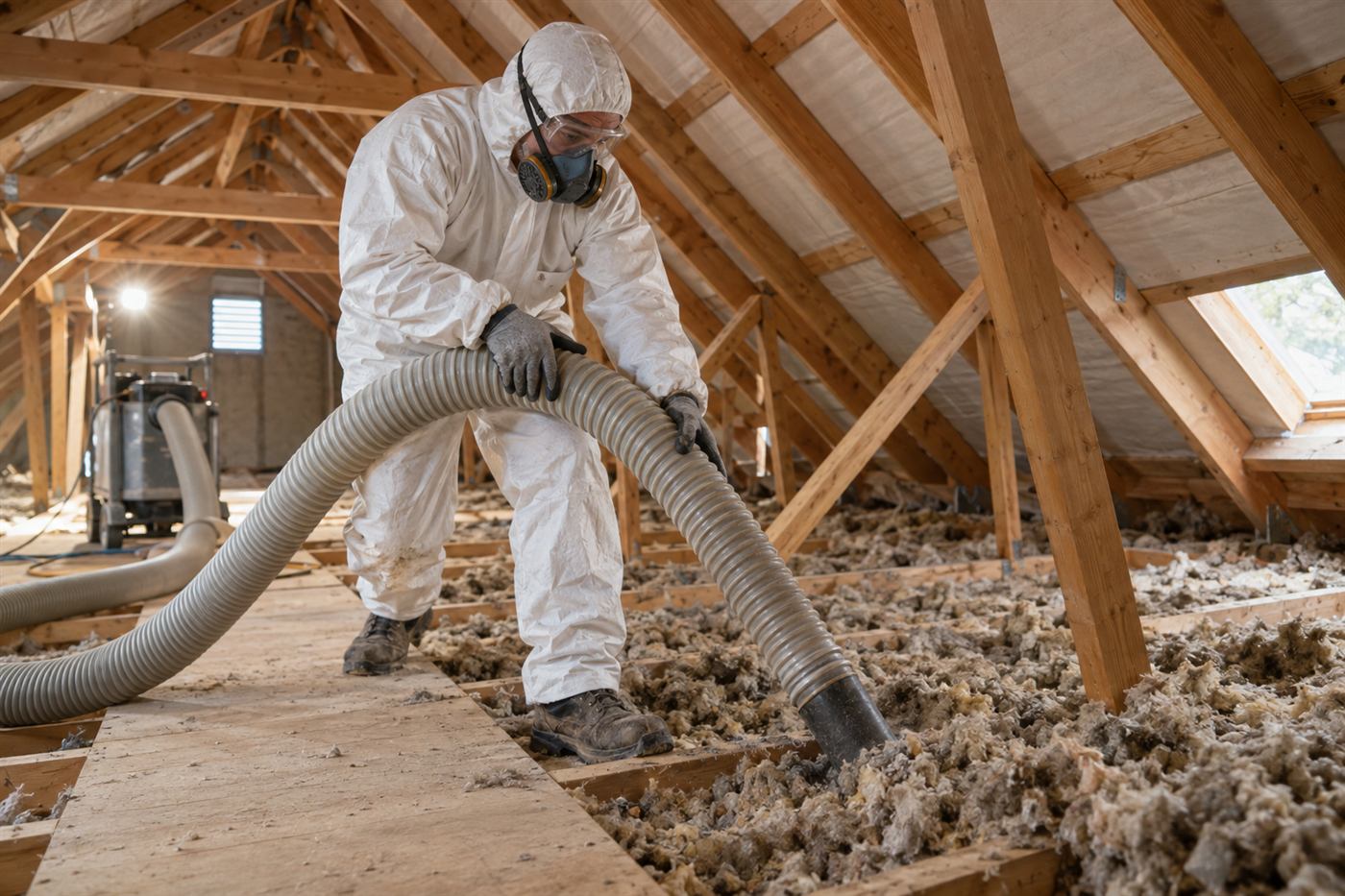
Blown-in insulation is loose material, usually fiberglass or cellulose, that is blown through a hose into the attic or into closed cavities. It lies on the attic floor like a blanket of fluff, covering the tops of the ceiling joists and everything between them. In walls it can be packed densely into a closed cavity through small holes. It is held in place by gravity or by being packed tightly, not by sticking to anything.
That difference explains almost everything that follows. A glued-in, continuous layer behaves one way, and a loose, breathable layer behaves another. Neither is automatically better. Each suits certain houses, budgets of effort and priorities, and a technician should be able to explain why one fits yours.
Air sealing: where foam has the edge
A house loses cooled air through many small gaps, and the attic floor is full of them. Foam, because it expands and sticks, seals as it insulates. Applied to the roof deck, it also seals the many penetrations and joints in the roof, and it brings the attic inside the building's thermal boundary. That is the main reason people choose it.
Blown-in insulation does not seal air movement on its own. Loose-fill slows heat, but air can pass through it, around it and under it. In the better approach, a crew seals the gaps in the attic floor first, using sealant, foam or covers, and then adds the blown-in layer. The air sealing is a separate step. The page on air sealing explains how that is done.
In practical terms, if your main complaint is leaky ceilings and humid air, foam does more of the work in a single visit. If your main complaint is thin insulation, blown-in does that well, and air sealing can be added as needed.
Moisture and humidity behavior
Humidity is the central issue in this climate. Closed-cell spray foam resists water and does not absorb it, and it acts as a vapor retarder. Open-cell foam is softer, absorbs more moisture and lets vapor pass, so it is chosen with more attention to where the water might come from. Both seal against air, which removes one important way humid air reaches cool surfaces.
Blown-in fiberglass does not absorb water into its fibers but can hold moisture between them if it gets wet. Cellulose is made of treated paper and absorbs water more readily. Both can dry out if wetted briefly, and both can be removed if they are badly soaked. They are breathable, which has advantages when the attic is ventilated and disadvantages if humid air reaches them.
The ventilation strategy differs. A vented attic with blown-in insulation relies on air moving through soffits and ridge to carry moisture out. A foam-sealed attic generally has no vents and relies on the foam to keep humid air out and on the house air conditioning to keep conditions steady. Mixing the two approaches, for example sealing the roof with foam while leaving vents open, can undo the benefit. The page on attic ventilation explains how to match the layout to the material.
Roof leak detection and roof repairs
This is the point many owners do not hear about until later. When foam is sprayed against the underside of the roof deck, it covers the wood. A small leak in the roof can let water run into the foam or along it, and the leak may not show until the damage is larger. Wet decking can hide behind foam for a long time. Open-cell foam can absorb a leak and mask it, and closed-cell foam can let water travel before it appears elsewhere.
Roof replacement and repair are also affected. Roofers sometimes need to remove or replace decking, and doing so with foam attached means the foam must be cut away and re-applied. Some roofers and some insurers have views on foam under the deck, and it is worth asking both before deciding.
With blown-in insulation on the attic floor, the underside of the roof deck stays visible. You can look up and see stains, wet wood, daylight at a penetration or a rusted nail tip. The insulation itself may show a darker, wetter patch where a leak lands. That visibility is a real advantage for a house in a storm-prone area, where the roof is the first line of defense.
Repairability, access and removal
Blown-in insulation is easy to disturb and put back. An electrician or plumber can move the material aside, do the work and level it again. If a section gets wet or contaminated, it can be vacuumed out and replaced. Adding more over time is straightforward, because new material goes on top of old.
Foam is much harder to work around. Once it has cured, working around it means cutting, scraping or removing it. Wires and pipes buried in foam are difficult to reach. Removing foam from a roof deck is labor-intensive and can damage the wood. That does not make foam a bad choice, but it means decisions made today are close to permanent.
If a house is likely to change, for example because you plan to replace the roof, add rooms or move the air handler, the flexibility of blown-in material is worth weighing. If you want a permanent solution and plan to stay, foam's durability may be the point.
Side-by-side summary
The table below summarizes the tradeoffs in plain terms. It is a general guide. The specifics depend on your attic, product and installer, and a technician should confirm them for your house.
| Topic | Spray foam | Blown-in |
|---|---|---|
| Air sealing | Seals as it insulates | Needs separate sealing first |
| Moisture | Closed-cell resists water, open-cell absorbs | Breathable, can hold water if wet |
| Roof leak visibility | Can hide leaks behind the foam | Roof deck stays visible |
| Repairs and access | Hard to remove or work around | Easy to move and replace |
| Adding more later | Difficult | Simple |
| Attic ventilation | Usually unvented design | Usually vented design |
| Placement | Roof deck, walls, floors | Attic floor, closed wall cavities |
Heat control: how each one handles a hot roof
Heat moves three ways: by conduction through materials, by convection in moving air and by radiation from hot surfaces. Insulation mainly slows conduction. A hot roof deck radiates heat down toward the attic floor, and a vented attic with a loose layer on the floor handles that by letting hot air rise out through the ridge while the floor layer slows what passes into the ceiling.
Foam on the roof deck stops conduction and air movement at the source. The deck can still get very hot, but the heat is largely stopped before it enters the attic volume. That keeps ducts, the air handler and stored items in a milder environment. In many homes, ducts that were baking in a very hot attic work better inside the sealed envelope.
Blown-in on the floor leaves the attic hot but keeps the ceiling cooler. Ducts in that attic still sit in extreme heat unless they are buried or well wrapped. A radiant barrier on the underside of the roof deck can reduce the radiant load in a vented attic, and it pairs naturally with floor insulation. The page on radiant barrier explains how it works and where it helps.
Neither approach removes the need for a working air conditioner. Both reduce the load on it, and the better the match between insulation, ducts and system, the steadier the house feels.
Noise, pests and long-term behavior
Foam adds some sound dampening where it fills cavities and seals gaps, though it is not a soundproofing product on its own. Blown-in material, when dense-packed in walls, can reduce sound transmission more noticeably. If noise between rooms or from outside is a concern, the wall treatment matters more than the attic layer.
Pests behave differently around each material. Rodents burrow in loose-fill and leave tunnels, droppings and odor, which may require cleaning and replacement later. Foam is harder for most pests to nest in, though they can chew it and leave gaps. Neither is pest-proof, and the entry points, usually at the eaves and soffits, need to be sealed whichever you choose.
Over time, loose-fill settles and may need topping up. Cured foam keeps its shape, but poor application or movement in the structure can create gaps or shrinkage. Open-cell foam can degrade if it is repeatedly wetted. Good installers describe these points plainly and tell you what to watch for.
Combining the two
The choice is not always either or. Some homes do best with a sealed and insulated roof deck over the main attic, and blown-in insulation in a flat ceiling area or a detached garage. Others use a thin layer of foam to seal the attic floor and top it with blown-in for depth. This hybrid approach gets air sealing and thickness without foaming the whole space.
Rim joists and certain walls may suit foam, while the attic floor suits loose-fill. A technician looks at each area of the house and may recommend different products for different places. That is not upselling, and it is usually a sign that the plan has been thought through. A single product for the entire house is a simplification that may not fit your building.
If a contractor will only offer one material and cannot explain why, ask for a second opinion. The choice should follow the house, not the truck.
Fire safety, health and installation conditions
Insulation choices should account for fire safety. Foam is combustible in some forms unless covered by an approved thermal barrier, and installers follow rules about when a barrier is needed. Fiberglass and rock wool are not combustible, and cellulose is treated with fire retardant. Ask what the product is rated for and where it will be exposed.
Installation conditions matter. Foam should be applied only by trained crews in suitable temperature and humidity, with the home vacated during application and for the period the manufacturer specifies. Poorly mixed or poorly applied foam can smell, shrink or fail to bond. Blown-in installation is dustier at the time but less sensitive to weather and has fewer chemical considerations.
If anyone in the home has respiratory conditions or chemical sensitivities, tell the technician before any choice is made. Both materials can be installed safely, but the timing, ventilation and precautions differ.
Which fits which kind of home
A newer home with a complex roofline, many penetrations and ducts in the attic may benefit most from foam on the roof deck, because it brings the ducts into a milder space and seals the roof planes. A home with a limited attic height may get more usable R-value per inch from foam.
An older home with a simple attic, a roof that may need work in the next few years and enough floor depth for a proper layer may be better served by air sealing and blown-in insulation. A home on the coast, where the roof takes a beating, may want the roof deck visible for inspection. A house with a lot of attic storage may prefer a layer that can be moved as needed.
Condominiums and townhomes may have rules about changes to roof assemblies or common elements, and the attic space may be shared. Ask your association. The page on insulation and hurricane roofs covers how roof design and insulation interact in storm country.
Questions to ask before choosing
A few questions tell you a lot about an installer and about the choice. What material are you proposing, and what is its type and rating? How will the attic be ventilated or sealed after the work? What happens to roof inspection and repair? What preparation and air sealing are included? How will wiring, ducts and recessed lights be handled? How do you protect the home during the work?
Ask also about the long term: what happens if the roof leaks, how would the material be removed, and what do you need from me before and after the job? A good installer answers plainly and puts nothing in writing that you do not understand. Never agree to a choice you cannot explain to someone else.
The page on questions to ask an insulation contractor has a fuller list. Quotes here are given only by phone, and complicated jobs need an on-site visit. Call the number on this page to talk through the choice for your attic.
Bring a few facts to that call. Roof age and type, whether the roof has ever leaked, what insulation is in the attic now, whether ducts run through the attic and whether you plan any roof or air conditioning work in the next few years. Those answers often decide the question before any material is discussed, and they help the technician explain the tradeoffs in terms of your own house rather than in general terms. If you have photographs of the attic, share them; they make the conversation more concrete.
Questions people ask
Which one is better for a Florida attic?
Neither is better in every case. Foam seals air and works well when the roof deck is sound and the design is unvented. Blown-in is simpler, easier to repair and keeps the roof deck visible. The right choice depends on the roof condition, attic layout and your priorities.
Can spray foam hide a roof leak?
It can. Foam applied to the underside of the roof deck covers the wood, so a small leak may not show until damage has spread. Some owners choose blown-in insulation on the floor so the deck can be inspected. Ask your roofer and insurer for their views before choosing foam.
Do I still need attic vents with spray foam?
In an unvented design, where foam is applied to the roof deck, the attic is not ventilated in the usual way. The design has to be done correctly and, in some places, approved. Mixing foam with open vents can undo its advantages, so the plan should be settled before work starts.
Is blown-in insulation messy?
It creates some dust during installation, but crews contain it with hoses, covers and protective measures. Insulation goes in through a hose from outside, so the work is mostly in the attic. Spray foam has its own preparation and clearing of the home during application.
Can I switch from one to the other later?
Blown-in can be vacuumed out fairly easily. Foam is far harder to remove and may damage the surface it is stuck to. If you think you may want to change later, or if roof work is coming, ask about that before deciding.
How do I get a quote?
Quotes are given by phone after you describe the attic, and complicated jobs need an on-site visit first. A service call charge applies and is explained on the phone before dispatch. Share roof age, current insulation and your main concern, whether comfort, humidity or repairs.
Describe the situation by phone and we will tell you what the job involves. Quotes are given by phone. Jobs that cannot be quoted without seeing them need a technician on site, and the service call charge is explained on the phone before anyone is dispatched.
(561) 854-1888