How heat gets through a South Florida ceiling
On a bright summer afternoon, the roof surface can become much hotter than the air around it. That heat travels into the attic by conduction through the roof deck and by radiation from the underside of the roof onto everything below. By mid-afternoon the attic air is often far hotter than the outdoor temperature. Between that hot space and your cooled rooms there is a ceiling made of drywall and whatever insulation lies on top of it.
Heat moves from hot to cold, and it takes every path available. Through the insulation itself, through gaps and thin spots, through the framing, and through small air leaks around lights, vents and wiring. The job of insulation is to slow the first path. The job of air sealing is to close the last. Neither works fully without the other.
In Boynton Beach, where houses are mostly one story, the ceiling is the largest single surface exposed to this heat. A well-covered ceiling slows the transfer, and the air conditioner has less to do. A ceiling with a thin or settled layer lets more heat in, and the system works longer to keep up. This is why a ceiling check is often the first step when residents say the house never quite cools in the afternoon.
Age-restricted villages and the housing they contain
Boynton Beach has a number of age-restricted communities, many built in the 1980s and 1990s with villas, attached homes and small single-family houses. They share traits that matter for insulation. Roofs are usually low and wide. Attics are long and shallow, and in attached buildings they may be continuous across several units. Many owners have lived in the same unit for decades and have never looked above the ceiling.
Because residents are often at home during the day, afternoon heat is felt directly. Many describe the same pattern: comfortable in the morning, stuffy by three, and a cooling system that runs steadily. In that kind of unit, the layer above the ceiling and the sealing around it are the first things to check.
Communities like these typically have boards and rules. If you live in one, find out who controls the attic space and whether contractors need to register. Our page on insulation for condos goes through the questions to ask before scheduling anything.
- Ask whether the attic above your unit is shared with neighbors.
- Check whether your community requires a contractor application or proof of insurance.
- Note which rooms are warmest in the afternoon.
- Find any records of earlier insulation or roof work.
1980s concrete block homes
Concrete block construction is the norm in this part of Florida, and many Boynton Beach homes built in the 1980s follow a similar pattern: block walls, a trussed roof, a low attic and a ceiling of drywall. The walls hold heat well and release it slowly into the evening. The roof does most of the heating during the day.
Houses from this era were built when energy rules were lighter. The original attic layer may have been a few inches of fiberglass batts or blown material, and that is what many houses still have, perhaps with later additions. Over forty years, the material has seen heat, humidity, roof repairs and in many cases a second air conditioner installation, and it shows.
A technician looking at such an attic will check what the original layer was, how much of it remains and what has happened since. The answer shapes whether the sensible plan is to add material, repair damaged sections or remove and start again. Our page on insulation for concrete block homes explains how block walls and attic layers interact.
Settled blown-in material: what it looks like and why it matters
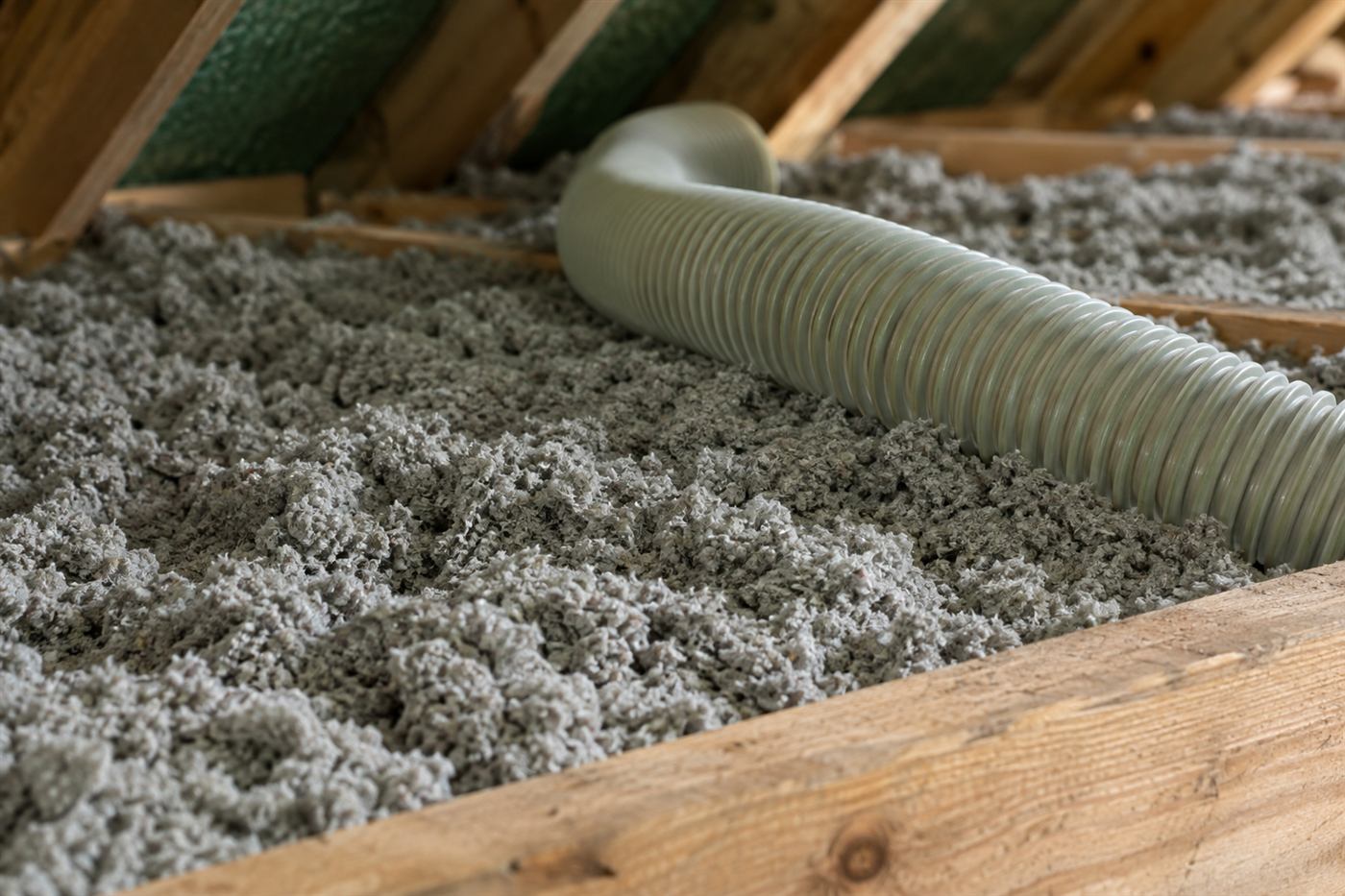
Blown-in insulation, whether fiberglass or cellulose, is installed fluffy and light. Over time it settles. The fibers compress under their own weight, humidity and vibration. A layer that was deep when installed may be noticeably shallower today. Because the material traps air to do its job, a flattened layer insulates less.
Settling is not always obvious from the hatch. Depth markers, where they exist, show the current level, but many older attics have none. A technician will measure at several points and compare the numbers. They also look at texture: a layer that looks matted or crusted, or one that feels dense and flat, has lost loft.
Some blown-in layers also show disturbance. Walkways flatten material along a path. Past work creates trenches. Rodents tunnel through it. Moisture clumps it. Each of these reduces performance in a particular spot, and the technician maps them as part of the survey. Our page on blown-in insulation describes how fresh material is installed and how it differs from older layers.
- Measure depth in several places, not just near the hatch.
- Look for flattened paths and trenches left by other work.
- Check for clumping that suggests past moisture.
- Note areas that look thin compared with the rest.
- Compare the current layer with what the building was likely built with.
Signs of heat gain you can notice without opening the attic
You do not need to climb into the attic to get clues. Ceiling surfaces that feel warm to the touch in the afternoon, rooms that feel stuffy near the ceiling, and long air conditioner run times in the late day all point toward heat coming down. A room with a bare patch above it may feel warmer than its neighbors, and the cooling system may seem unable to catch up.
Another sign is temperature difference between rooms. If one room is consistently hotter than another with the same exposure, the attic layer above it is a candidate. So is a room where the thermostat reading is fine but the corners feel warm.
These clues do not prove a problem. Windows, doors, ducts and system size matter too. But they give the technician a place to start. Write down what you notice and when. Our page on uneven room temperatures describes the other causes that can look similar.
Air leaks that make a thin layer worse
In an older house, the ceiling is rarely a clean barrier. There are holes for recessed lights, vent fans, wires, plumbing stacks and sometimes old attic stairs. Gaps around these holes let attic air move into the living space. Warm, humid air entering through a leak is harder on a cooling system than heat conducted through a layer, because it brings moisture with it.
A technician looking at heat gain will check these points and note which need sealing. Sealing is usually done before new material goes down, so the leaks are closed instead of buried. It is often a modest job compared with the insulation itself, but it changes how well the layer works.
For more on this, see our page on air sealing. In many homes, a combination of sealing and added depth makes more sense than either alone.
Planning an upgrade step by step
A sensible plan follows a clear order. First, resolve any moisture or pest issues, because new material over a wet or contaminated layer hides the problem. Second, seal the gaps around penetrations and the hatch. Third, decide whether to add to the existing layer or replace it. Fourth, install material evenly and keep it clear of soffit vents and equipment that needs clearance.
Timing matters too. Work done before the hot season gives you the benefit sooner, and work done during hurricane season should account for the chance of storm interruption. Our page on the order of energy-saving upgrades explains why attic work is often early on the list.
Throughout, a technician should explain what is being done and why. If a recommendation sounds like a blanket answer applied to every house, ask what they saw in your attic that led to it.
What to ask before work starts
Good questions protect you. Ask what material will be used and why. Ask how the existing layer will be handled and where it will end up. Ask how the technician will keep soffit vents clear and protect the hatch. Ask what the plan is if a hidden problem turns up.
Ask about access, too. Who needs to be present, how long the work will occupy the attic, and what the technician will need from you. And ask how any concerns about permits or community rules will be handled. Our guide on questions to ask an insulation contractor lists more.
You should leave the conversation with a clear picture of what will be done in your attic. If you do not, keep asking.
Humidity, rain and what older attics collect
Boynton Beach sits close enough to the coast that humidity runs high for much of the year, and summer storms bring heavy rain in short bursts. Older attics collect the effects. Roof vents let in moist air. Small leaks around flashing leave faint stains. Cooling ducts sweat in the heat. Insulation that has lived through decades of this may carry a musty smell, dark spots or a compressed texture where moisture has been.
A technician looking at heat gain through the ceiling will also note whether the material shows these signs, because damp or stained insulation does not perform as it should. The recommended path depends on the cause. A one-time leak that was fixed years ago may have left a stain on otherwise sound material. A continuing source needs to be found and stopped first.
If you have noticed a smell in the house when the air conditioner starts, or a ceiling stain that has changed over time, mention it when you call. Our page on mold smell from an attic explains why that matters and what not to try on your own.
Ventilation and the hatch
An attic needs to breathe, and the way it breathes affects how hot it gets. Soffit vents at the eaves let air in, and ridge or gable vents let it out. When insulation is pushed against the eaves, it can block the soffit vents and reduce airflow. When the hatch is thin, uninsulated or unsealed, it becomes a weak point in an otherwise covered ceiling.
A technician checks both. They look at whether baffles or other means keep the soffit openings clear, and whether the hatch cover has insulation and weatherstripping. These small items are often the simplest gains in the whole job, and they are easy to forget.
You can read more on our page about attic ventilation, which explains how venting and insulation interact in a Florida roof.
Getting a quote for a Boynton Beach home
Quotes are given only by phone. Describe the home, the age of the roof and attic, the rooms that bother you and any association rules that apply. If the job needs a closer look, an on-site visit comes next, and a service call charge applies, explained on the phone before dispatch. We do not publish prices because they depend on what the attic shows.
When you are ready, call and tell us what you notice. Have photos of the hatch and ceiling, and know who can let the technician in. We will explain the next step.
Questions people ask
How do I know if my blown-in insulation has settled?
Compare the depth you see with what is expected for the building, and check several places in the attic, not just near the hatch. Matted, flat or crusted material has lost loft. A technician measures at multiple points, notes disturbed areas and tells you whether adding to it is enough or replacement is wiser.
Is it safe to add new insulation over old settled material?
Often yes, if the old layer is dry, clean and not hiding a problem. If it is damp, moldy, contaminated by pests or sitting over a leak, adding on top is a mistake. A technician checks for those conditions before recommending adding over the existing layer.
Why does my villa get hot in the afternoon?
A single-story villa has all of its ceiling under the roof, so attic heat has a short path into the rooms. A thin or settled layer and air leaks around lights and vents make it worse. Ducts in the attic and window sun can contribute, which a technician takes into account.
Do age-restricted communities have their own rules for contractors?
Many do, such as contractor registration, proof of insurance, set work hours and gate procedures. Rules vary by community, so ask your management office before scheduling. If the attic is shared or controlled by the association, approval may be needed before any work begins.
Does sealing air leaks really matter if I add insulation?
Yes. Gaps around lights, fans, wires and plumbing let attic air enter the rooms, and insulation alone does not stop that. Sealing first closes the leaks so the new layer works better. A technician will point out where leaks are and whether sealing is a small or larger part of the job.
How do I get a quote?
Call and tell us about the house, roof age and the rooms that bother you. Quotes are given only by phone. If an on-site visit is needed, a service call charge applies and is explained before anyone is dispatched. Prices are not listed on the site because they depend on the attic.
Describe the situation by phone and we will tell you what the job involves. Quotes are given by phone. Jobs that cannot be quoted without seeing them need a technician on site, and the service call charge is explained on the phone before anyone is dispatched.
(561) 854-1888Related pages
Reading what settled material says about the house
Old blown-in insulation tells a story. When it has settled evenly, the surface looks flat and matted, and the depth is less than it was at installation. When it has been disturbed, you see trenches where someone worked, bare patches near the hatch and piles pushed against the eaves. Dust-colored staining on the underside suggests air has been moving through the material, carrying fine particles, often near leaks in the ceiling below. A pattern of dark lines above joists can mean warm air is escaping through the drywall seams and depositing dust in the insulation above.
These clues help the technician decide what to do. Even settling may be addressed by adding a new layer after air sealing. Disturbed areas may need to be leveled or refilled. Dark staining marks leak points that can be sealed before material is added. If the material is mixed with debris, pests or moisture, removal may be better. The crew should explain what each clue means in plain terms, and show you photographs. Seeing the evidence helps you decide with confidence, rather than relying on a bare recommendation.
Mention what you know about the history of the attic. If a previous owner added insulation, or if a roofer worked on the house, those events leave traces. Tell us if the attic has ever had water, animals or heavy storage. Note any changes in your comfort or air conditioning use over the years. The scope and any quote are explained before work begins. Over time, the combination of your memory and the material in the attic gives a rich picture, and helps the plan fit the house as it really is.
Preparing a Boynton Beach home for attic work
A bit of preparation makes the day smoother. Clear the area under the hatch, whether it is in a hallway, a closet or the garage, and remove anything fragile from shelves nearby, since vibration can shift items. Cover or move furniture if the hatch sits above a living area. Make sure the crew can park and unload close to the entrance, and that there is power available if needed. Tell family members and neighbors about the work so no one is surprised by equipment, hoses or sounds.
Think about pets, children and people with sensitivities. Dust can be stirred up during any attic work, even with careful practices, so keep pets in a closed room and consider having young children and anyone sensitive to dust elsewhere for part of the day. The crew will use protection and take steps to limit dust entering the living space, but a prepared household helps. Turn off ceiling fans near the hatch, and ask about whether the air conditioner should run or be paused during certain steps.
After the crew finishes, walk through together. Look from the hatch at the finished surface, ask where depth markers are, and confirm that the hatch is sealed and the area is clean. Take your own photographs for your records. Ask for care instructions, such as what not to store on the surface. If you notice anything afterward, such as a smell or change in comfort, call us and describe it. A good project ends with a clear understanding on both sides and a home that is tidy and ready to use.