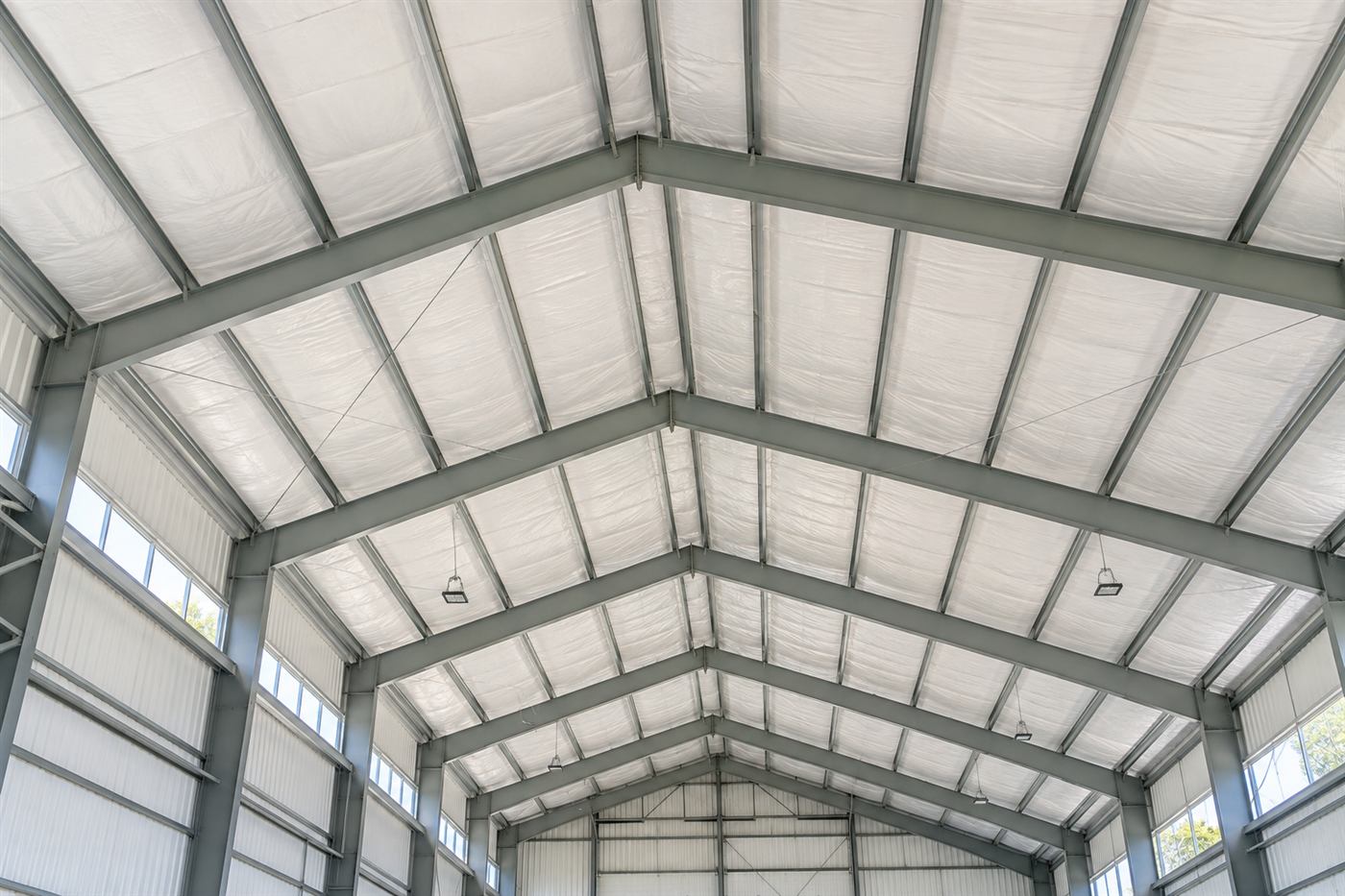
Three building types, three different roof cavities
A call from Pompano Beach could be about a block bungalow a few streets from the ocean, a manufactured home in a residential park, or a warehouse near the industrial corridor. They share the same sun and salt, but what lies above the ceiling is very different in each.
Bungalows tend to have small attics with modest pitch and limited height. Manufactured homes often have a shallow roof cavity built into the structure, with a thin layer of insulation from the factory and a metal or shingled roof over it. Warehouses have large open spaces under metal or membrane roofs, sometimes with insulation under the deck and sometimes with none.
The right first step depends on which one you have. We ask about the building type at the start of the call, because it determines what can be inspected, how, and what the realistic options are.
Salt air and the metal in your roof space
Salt in the air settles on every surface near the coast. In a roof cavity or attic, it lands on nails, straps, electrical boxes, duct clamps, equipment housings and metal roof panels. Combined with humidity, it speeds corrosion, which is why rusty fasteners and stained metal are such common sights in coastal attics.
For insulation planning, salt exposure matters in two ways. First, corrosion tells you something about moisture history: heavy rust usually means long exposure to damp air or leaks. Second, any material added should tolerate a humid, salty environment and not trap moisture against metal.
A technician will look at fasteners, hangers and boxes during the visit and note anything weakened. If wiring boxes or connections show corrosion, an electrician should look at them. If roof fasteners are failing, a roofer should. Insulation should not cover problems that need repair.
- Rust streaks on nails and decking point to repeated moisture.
- Corroded junction boxes and clamps need attention from the right trade.
- White or gritty residue near vents can signal salt-laden air coming in.
- Metal roof panels with rust spots may leak and wet the material below.
Low-slope roofs and shallow cavities
Roofs with very little pitch drain slowly and are more prone to ponding and slow leaks. The cavity under them is often shallow, sometimes only a foot or less of working height. In such spaces, the technician may have to crawl, work from limited access points and use hoses to reach distant areas.
Shallow cavities also limit how much material can be added. A cavity that is nearly full of insulation leaves little room for ventilation, and ventilation matters for moisture control. The plan must balance depth against airflow, and the solution may be different from a tall attic.
Low-slope roofs are also tied closely to the roofing system. If the insulation is part of the roof assembly, work from the interior may not be the right approach, and the roofer needs to be part of the conversation. Describe your roof type and age when you call.
Beach-adjacent bungalows: what we often see
Smaller older houses near the water often have attics that have been modified many times. Wiring from several eras, plumbing vents, duct runs added later and patches of insulation from different years are common. The roof may have been replaced more than once, sometimes without attention to what was happening below.
These attics also see more moisture than inland ones. Humid air, occasional wind-driven rain and the occasional flooding of the neighborhood all leave marks. A technician looks for stains, rusted fasteners, damp material and any sign that water has entered from the roof or the walls.
Because these homes are modest in size, the attic floor is a significant share of the whole envelope. Improving it can make a visible difference, provided leaks and moisture are addressed first. Owners should be prepared for the possibility that the visit turns up something that needs a roofer or an electrician before insulation work begins.
Manufactured and park homes
Manufactured homes are built differently from site-built houses. The roof is part of the factory structure, often with a shallow cavity and lightweight framing. Insulation may be a thin batt or blown layer, and the ceiling may be a lightweight panel. Access may be through a small panel or by removing a section of ceiling or fascia.
Because the structure is lighter, some work that would be simple in a site-built home needs more care. Weight, ventilation paths and attachment methods all matter. Park rules may also restrict contractors and modifications, and some parks require approval.
If you live in a park home, tell us the manufacturer and approximate year if you know them, and describe the roof type. We will explain whether a ceiling-cavity approach, a roof-over system or another option is realistic. Some changes belong to the roofer or the park management rather than to an insulation contractor.
Warehouses and light industrial buildings
Industrial buildings in the Pompano Beach corridors often have metal roofs over large open floors, sometimes with a ceiling grid and tile and sometimes with exposed structure. Heat from the roof reaches the working space directly, and condensation can form under metal panels when warm humid air meets a cooler surface.
Insulation in these buildings may be a faced blanket under the roof panels, a spray-applied layer, or rigid board. Where there is none, adding it can change comfort and moisture behavior, but it must be planned around lighting, sprinklers, equipment and access for maintenance.
Commercial jobs begin with an on-site visit. Describe the building size, use and roof type when you call, and we will explain the service call charge, which is covered on the phone before dispatch. A short walk through the space with a facility manager is usually the best way to understand what is needed.
How to read an attic safely and what to note
If you decide to look at your attic, do it carefully. Open the hatch, shine a strong light across the space and take pictures. Notice depth, color, cleanliness and evenness. Look for light coming through at the eaves, which shows an open vent path, and for signs of damp or stains on the wood.
Stay on the ladder or the access platform. Joists are narrow and the ceiling will not bear weight. Do not go up in the middle of the day, and do not go alone. If the space is very low, do not crawl in without a technician.
Write down what you see and when you saw it. A simple note with the date, the location and a photograph is useful later. Include any smells, such as musty, sweet, sour or animal odors, since they help identify the cause.
- Open the hatch and look with a flashlight from the access point only.
- Photograph the surface of the material, the edges and any stains.
- Note smells, light at the eaves and any visible wiring.
- Write down the date and which rooms run hot.
- Call and describe what you saw.
A worked example: a block bungalow a few streets from the water
An owner calls because the ceiling in the back bedroom has a faint stain and the room smells slightly musty after rain. The house is a small block bungalow with a low-pitch roof and a hatch in the hall. From the hatch, the material looks gray and thin, and a rusty nail tip glints near the back wall.
The technician finds that the stain lies beneath a plumbing vent, where the flashing has corroded. The material around it is damp and matted, and the deck has a dark ring. Elsewhere the attic is dry. The air handler duct passing nearby is sweating slightly, because the insulation around it is thin and the attic air is humid.
The recommended order is clear. The roofer repairs the vent flashing first. The damp section is removed and the deck is allowed to dry and be checked. The duct is wrapped or repaired. Ceiling penetrations are sealed and the soffit vents are cleared. Then material is added across the attic to an even depth. The owner is told which parts belong to which trade and why the order matters.
Questions worth asking before work begins
Ask who will be in the attic and how access will be protected. Ask what will be done about moisture, leaks or corrosion if they are found, and who is responsible for each repair. Ask how the vent path will be kept open and how the finished depth will be checked.
Ask what the scope includes and what it excludes, and whether sealing, baffles and hatch treatment are part of it. Ask how the work area will be cleaned and how you will be shown the result. In a manufactured home or park, ask whether any approvals are needed and who will obtain them.
Plain, specific answers are what to expect. If an answer is a slogan rather than an explanation, ask again. We aim to give the first kind whenever you call.
Moisture control in a humid coastal climate
The aim in Pompano Beach is not to eliminate humidity but to prevent it from collecting where it can do harm. That means a roof that sheds water, ventilation that moves air through the cavity, a ceiling that is sealed against moist air from below and ducts that do not sweat. Any one of these failing can cause trouble.
Insulation works within that system. Installed well, it keeps ceiling surfaces warmer and reduces condensation risk. Installed badly, it can block ventilation or trap moisture. A visit should therefore review ventilation and sealing, not only depth.
If you have noticed musty odors, mildew on ceilings or closets, or sweating on ducts, say so. Those are practical clues that help the technician decide what to look at first and in what order to proceed.
Choosing materials for coastal conditions
In an open attic, blown fiberglass is common because it does not absorb water readily and tolerates humidity better than some alternatives. Cellulose can work but holds moisture longer and needs careful attention to leaks and ventilation. Spray foam can suit shallow or irregular cavities but must be planned around roof ventilation and inspection access.
In manufactured homes, thin cavities may limit the options to blown material or batts. In warehouses, faced blankets, board or spray products may be appropriate depending on the roof. Reflective materials may also be considered where radiant heat from a metal roof is the main concern.
The material is less important than the reasoning. Ask why a product is suggested, how it handles moisture, and what happens at the eaves, hatch and penetrations. A thoughtful explanation is a better guide than a brand name.
Visit, quote and next step
Call, describe the building and what you are noticing and share any photos. We explain whether a phone quote is possible. Complicated jobs, such as low-slope roof cavities, manufactured home roofs and commercial buildings, need an on-site visit first. There is a service call charge for that visit, explained on the phone before dispatch. We do not quote numbers before we know the facts.
At the visit, the technician inspects the space above the ceiling as far as it can be safely reached, notes what is there and explains it. Any recommendation is given in a sensible order, starting with leaks and moisture, then sealing and ventilation and finally insulation.
When you are ready to read the space above your ceiling in Pompano Beach, call, describe the building and we will explain the first step in plain language.
Questions people ask
Does salt air damage attic insulation?
Salt mostly attacks metal parts like fasteners, boxes and straps, while humidity affects some insulation materials more than others. A technician checks the metal and moisture condition and recommends products suited to humid coastal conditions.
Can insulation be added to a low-slope roof cavity?
Sometimes, depending on the construction. Shallow cavities limit working space and the depth of material that can be added without blocking ventilation. If insulation is part of the roof assembly, a roofer may need to be involved. A description of the roof helps us advise.
Do you work on manufactured homes?
We discuss them case by case. The roof structure, access and park rules matter, and some work belongs to a roofer or the park. Tell us the approximate age and roof type when you call and we will explain what is realistic.
What about warehouses?
Commercial buildings need an on-site visit first because roof type, access and equipment vary. We cover the service call charge on the phone before dispatch. Describe the size, use and roof when you call so we can prepare.
Is rust in my attic a problem?
It tells you about moisture history. Light surface rust may be old and harmless, while heavy corrosion suggests ongoing damp or leaks that need attention first. Report it, and let the technician decide what should be fixed before insulation.
How do I get a quote?
Call and describe the building and what you are noticing. Simple jobs may be quoted by phone, and complicated ones need a visit with a service call charge explained in advance. No numbers are given before the facts are known.
Describe the situation by phone and we will tell you what the job involves. Quotes are given by phone. Jobs that cannot be quoted without seeing them need a technician on site, and the service call charge is explained on the phone before anyone is dispatched.
(561) 854-1888Related pages
Fasteners, straps and hardware in a salty attic
Roof framing in a coastal area depends on small metal parts: nails, staples, straps, brackets and clips. Salt in the air attacks these over time, and an attic that sees damp mornings can show corrosion earlier than an inland one. A technician looks at the hardware near the roof edges and at joints where the roof frame connects to the walls. Heavy rust, flaking or loose pieces are noted, because they are not about insulation but they do matter for the building. It is perfectly reasonable to ask the technician to show you a photo of any area you cannot see yourself, and a good crew is glad to do it.
The crew does not try to repair structure; their job is to read and report. If a strap looks badly corroded, they photograph it and suggest a roofer or builder take a look. They also avoid burying questionable hardware under new material, since that would hide it from the next person who checks. Leaving it visible until it is addressed is the safer choice and costs nothing but a small gap in coverage. Hurricane season is worth keeping in mind when planning, since heavy rain and wind can expose weak spots in a roof that were quiet during dry months.
Mention any storm damage or repairs from previous seasons so the crew knows where to look. If the roof was replaced, ask whether the hardware was inspected at that time. We explain what we find and what it means for the work we do, and any quote is reviewed with you before work begins. You get a clear picture of both the insulation and the metal parts holding the roof together. Older and newer homes in this region age differently, so the same symptom can have a different cause depending on when and how the building was put together.
What to photograph on the first look into the attic
When the hatch opens, there is a lot to see and it is easy to miss the important details. A sensible approach is to photograph in a set order. Start with a wide shot from the opening to show the general layout. Then capture the floor in each direction, then the air handler and duct junctions, then plumbing stacks and electrical boxes, and finally any stains or damaged areas. The order matters because it makes the pictures easy to compare later. Taking a little time at the start usually prevents repeat visits later, which is easier on your schedule and on the household.
Close ups should be sharp and well lit. A technician uses a bright light held at a low angle, which shows the texture and depth of the material and reveals dust, mold-like marks or compressed spots. A ruler placed next to the material gives scale. Any area that looks odd gets two photos: one wide and one close, so you can see where it sits and what it looks like. Pets and children should stay clear of the work area, and it helps to arrange for someone to be home who can answer questions as they come up.
These pictures are for you as much as for us. They help you talk to a roofer, an air conditioning professional or an insurance agent if the need arises. Ask for copies when the visit ends. We walk through what each photo shows, and any quote is reviewed with you before work begins. With good images in hand, you can make decisions without needing to climb into the attic yourself. Nothing here needs to be decided on the spot, and you can take the notes away, talk with family or your association, and call back when you are ready.