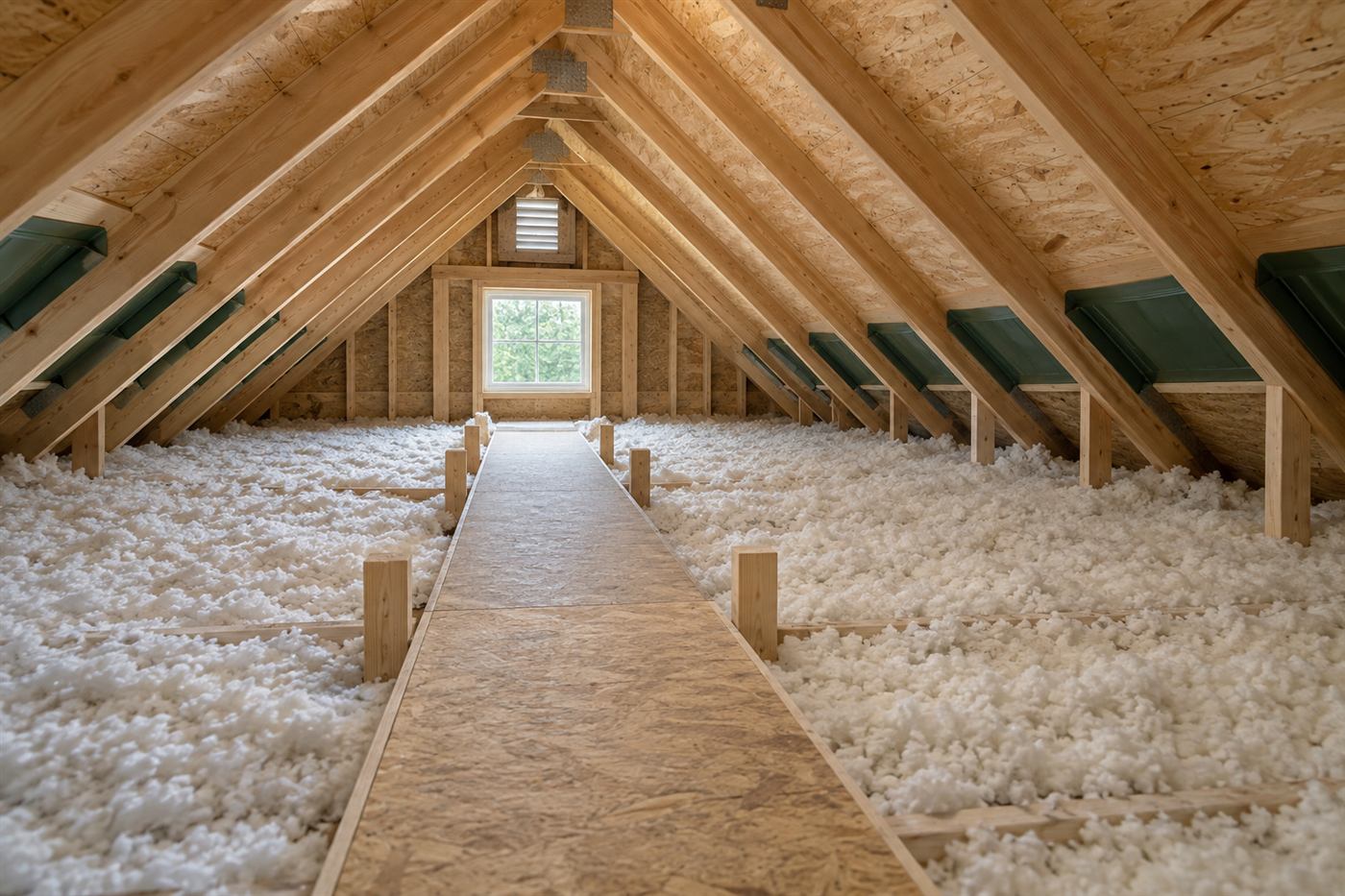
A smell is a clue, not a diagnosis
A musty smell tells you that moisture is present somewhere and that something organic, such as wood, paper, dust or insulation, is staying damp enough to give off odor. It does not tell you what kind of growth, if any, is present, how much there is or whether it is harmful. Treat the smell as a reason to investigate, not as proof of a specific problem.
The same smell can come from several causes. A slow roof leak, a sweating duct, a humid attic with poor ventilation, a bath fan venting into the space, old water damage that has dried and left residue, or even animal activity can all produce a musty odor. Some cause the smell constantly, while others only after rain or on humid days.
That is why evidence comes first. Look at where the smell is strongest, when it appears and what is nearby. Photograph stains. Note the weather. Do not rush to spray anything over it, because masking an odor hides the clue. We also do not diagnose health effects, and anyone concerned about symptoms should speak with a medical professional.
Humidity as the underlying driver in South Florida
Humid air is the common thread in this region. Outdoor air often carries a lot of moisture, and some of it finds its way into the attic through vents and gaps. When that air meets cooler surfaces, it releases water. Over time, damp conditions give dust and organic material a chance to hold moisture and produce odor.
An attic is a particularly easy place for this to happen, because it is out of sight, hot during the day and cooler at night. The shifting temperatures mean surfaces cycle above and below the dew point, creating repeated condensation. Poor air movement keeps the moisture from clearing.
In a house that is air conditioned, leaks from the living space into the attic can add to the moisture. Cold air carries moisture differently, and conditioned air escaping upward can cool attic surfaces, making them more likely to collect condensation. Closing those leaks reduces the problem. Our air sealing page explains how.
Common sources to look for
Start with leaks. A slow roof leak can wet insulation and wood in the same spot repeatedly, building up odor over time. Look for stains on the underside of the roof deck, on rafters and on the ceiling below. A stain with a ring pattern suggests repeated wetting and drying.
Next, look at ducts and the air handler. Sweating ducts drip onto insulation and ceilings, and a clogged condensate drain can wet the area under the air handler. Look for damp or compressed insulation along the duct paths, wet drywall around registers and rust on the air handler pan.
Then look at exhaust fans and vents. A bath fan or dryer vent that terminates in the attic delivers steam directly into the space. Look for the duct end: if it is open in the attic rather than connected to a roof or soffit vent, that is a probable source. Also check whether the attic vents are blocked by insulation or debris. Our attic ventilation page explains why airflow matters.
- Stains or rust on the underside of the roof deck
- Wet, flattened or darkened insulation
- Damp spots along duct runs and under the air handler
- Bath fans or dryer vents that end inside the attic
- Blocked soffit, ridge or gable vents
- Stained ceiling drywall below the attic
What you can safely do first
Keep it to simple, safe checks. Look into the attic from the access opening with a flashlight rather than stepping onto the ceiling. Note what you see and smell. If you are comfortable and the attic is not too hot, notice whether the smell is stronger near particular areas. Take photos.
Check the air filter and make sure the condensate line drains. Run bath fans and confirm that air actually exits outdoors. Look at the outside of the house to see whether the vents are clear and whether the roof shows damage. Make sure gutters and drainage move water away from the house.
Do not disturb suspect material, scrub or spray it. If you see widespread dark growth, stained insulation or an area that feels damp, avoid disturbing it and call a professional. Dust that you stir up can spread around the house. If anyone in the household has respiratory concerns or a weakened immune system, take extra care and keep them away from the work area.
What a technician looks for at the visit
A technician approaches the attic as an investigation. They look at the insulation, the roof deck, the framing and the ducts. They note any visible staining, matting or discoloration. They look at the vents and fans. They may use a moisture meter to check whether wood and material are damp, and may take photos for you to review.
They also pay attention to the pattern. Is the damp area near a roof penetration? Along a duct? Near the eaves? Evenly spread? The pattern separates a leak from condensation and from ventilation problems. They ask about the timeline: when the smell started, whether it changes with the weather and whether there was a recent storm, repair or renovation.
We are an insulation company, not a mold testing or remediation firm, and a technician will not claim to identify a specific organism by sight. If the evidence suggests that growth may be present, we will say so and suggest that you consult a qualified mold professional. We can describe what we see and what we would do from the insulation side.
Fixing the source before touching the insulation
Treating an odor without fixing the source only delays the return. A leaking roof needs a roofer. A sweating duct or blocked drain needs an air conditioning professional. A bath fan that ends in the attic needs to be connected to the outdoors. Poor ventilation may need additional vents or the clearing of blocked ones.
Once the source is addressed, the damp material has a chance to dry. If the insulation has been wet for a long time, is stained or smells strongly, it is often best to remove it. Layering new insulation over damp or odorous material tends to trap the problem, and the smell can persist.
If wood is affected, the extent should be assessed. Light staining may be cosmetic, but soft or damaged wood may need repair by a carpenter or roofer. Our damp attic insulation page covers the signs of wet material in more detail.
When removal and cleaning make sense
If insulation is wet, stained or has been contaminated, removal may be the sensible step. The crew works with protective equipment and vacuum systems that capture debris. The area is then cleaned, and the framing and deck are inspected. In some cases, a professional may apply a treatment to the surfaces, depending on what is found.
Large or widespread growth is a job for a specialist. Remediation involves containment, protective equipment and specific procedures that go beyond insulation work. If you are told that you have a significant problem, consider getting a second opinion and a written scope. We do not make claims about health outcomes or about how any treatment performs.
After cleaning and drying, new insulation can be installed, with air sealing and ventilation corrected as needed. Our removal and replacement page describes the process. A clean, dry, well-ventilated attic with a sealed ceiling is the goal.
Ventilation, sealing and dehumidification
Keeping the attic dry is a matter of moving air properly and keeping humid air out. Adequate intake and exhaust vents allow moisture to leave. Sealing the ceiling keeps humid, conditioned house air from leaking up. Properly vented exhaust fans keep steam out of the attic.
In some homes, a different approach is appropriate: making the attic part of the conditioned space with foam at the roof deck. That reduces the temperature swings that cause condensation, but it must be planned carefully, with a sound roof and a system that handles the added load. See our spray foam page for how that works.
Whatever the approach, have the air handler, ducts and drain checked. A dry, well-sealed system is part of keeping the attic dry. Do not assume that a dehumidifier in the attic is a fix. It can help in specific cases, but it does not replace repairing the source.
Planning the call
When you call, tell us where the smell is strongest, when it appears and whether there has been any rain, leak or repair. Tell us whether you have seen stains, how old the roof is and whether the air handler is in the attic. If you have already had a roofer or air conditioning technician look at it, tell us what they found.
We will talk through what is likely and what to check next, and tell you honestly if another trade should come first. Quotes are given only by phone. For an attic that needs inspection, an on-site visit is required, and there is a service call charge that is explained on the phone before dispatch.
A musty smell is a sign to investigate, not a reason to panic. Take photos, avoid disturbing anything and call when you are ready. We can help you decide what to do and in what order.
Two example attics and how the evidence differs
Picture an older block house with a bath fan whose duct was disconnected during an earlier repair and now ends a few inches from the roof vent. The owners notice a damp smell in the hallway closet whenever someone showers. In the attic, the insulation around the fan is darkened and compressed, and the underside of the nearby roof deck shows a ring of staining. The pattern points to steam from the fan, not to a roof leak, and reconnecting the duct to the outdoors addresses the source.
Now picture a newer home with a clean, dry attic floor but a faint odor near the air handler. The technician finds a stain on the platform and a line of damp insulation under a duct that has lost part of its wrap. Here the issue is condensation from the duct and perhaps a slow drain, which is an air conditioning repair.
These examples are only illustrations. Both houses had the same complaint, a musty smell, and different causes. That is why the pattern of evidence matters more than the smell itself, and why we look before recommending anything.
Questions to ask before any cleaning or removal work
Ask the contractor how they identified the source of moisture and what they will do to correct it. If the answer is only to remove and replace material, the problem may return. Ask how dust and debris will be contained during the work, and how the home will be protected.
Ask what happens to the material that is removed and what protective equipment the crew uses. Ask whether the scope includes air sealing, ventilation corrections and duct wrap repairs, or whether those are separate trades. Ask for the scope in writing so you can compare it with any other quote.
Be cautious of anyone who promises that a treatment will eliminate a problem permanently or who makes health claims. Moisture control is what keeps a problem from returning. A careful contractor explains the cause, the steps and the limits of what the work can do.
Questions people ask
Does a musty smell mean I have mold?
Not necessarily. A musty smell means moisture is present and something is staying damp. It could be mold, but it could also be old water residue, damp insulation or dust. Only proper investigation can say. We describe what we see in the attic, and suggest a qualified mold professional if evidence points that way.
Can I spray or clean the area myself?
We advise against it. Spraying can mask the clue and disturbing material can spread dust through the house. Fix the moisture source first, then have damaged material assessed. If you must look, use the access opening with a flashlight and wear protection. Leave cleanup to professionals.
Why does the smell get worse after rain?
Rain can drive moisture through small roof defects, and humid air entering the attic can condense on cool surfaces. A smell that worsens after rain suggests a leak or humid air getting in. A technician looks for stains and wet material and traces the pattern to a likely source.
Do I need to remove the insulation?
If it is wet, stained, matted or strongly odorous, removal is often the sensible step. If it is dry and clean, it may stay. The decision depends on what the technician sees. Always fix the source first, since new insulation over a damp area risks trapping the problem.
Do you test for mold?
No. We handle insulation and related attic work. We describe visual evidence and suggest involving a qualified mold professional if appropriate. We do not make health claims. For concerns about symptoms, speak with a medical professional.
How do I get a quote?
Quotes are given only by phone. Tell us what you smell, where and when, and what you have seen in the attic. A musty attic usually needs an on-site visit, and there is a service call charge that is explained on the phone before anyone is dispatched. You receive a written scope afterward.
Describe the situation by phone and we will tell you what the job involves. Quotes are given by phone. Jobs that cannot be quoted without seeing them need a technician on site, and the service call charge is explained on the phone before anyone is dispatched.
(561) 854-1888Related pages
What the smell can tell you before anyone opens the hatch
Odors carry more information than people expect. A damp, earthy smell that gets stronger when the air conditioner starts usually suggests moisture moving through ducts or a leak at the return. A sharper, sour smell that is worse after rain points more toward a roof or flashing problem. A sweet, heavy smell may involve animals, and a smell like old paper can come from long-wet insulation that has dried and been wet again. None of these identify a cause on their own, but noting the character, the time of day, and the location narrows the search.
Map the smell around your house. Walk slowly and note the rooms where it is strongest, near the hatch, a closet, a bathroom exhaust, or the air handler closet. If it follows the airflow from vents, the duct system may be pulling attic air into the living space through gaps. If it stays near one wall or ceiling spot, a local leak is more likely. Smells can also travel along a chase or through a gap around a pipe, so the loudest place is not always the nearest source.
Keep expectations realistic about what a smell investigation can accomplish. We can look at the visible materials, the ducts, the roof deck and the penetrations, and we can explain what we see. We are not a substitute for a specialist if testing or remediation is needed. What we can do is help find the moisture source and explain whether the insulation should be left, cleaned or removed. The scope and any quote are explained before work begins, so you can decide calmly and without pressure from anyone, including us.
Separating humid air from true water intrusion
In this region, almost every attic has some humidity, so the question is whether the amount is unusual. Signs that something beyond normal humidity is happening include darkened wood near the vents, damp patches on duct wrap, droplets on the underside of the decking, and insulation that feels cool and clammy to the touch. Dry dust and a faint stale scent often indicate a long-standing minor condition, while fresh wet staining indicates something active. The difference determines how urgent the response should be, and it helps avoid both overreaction and neglect.
Air movement is the common thread. Warm outdoor air that leaks into a cool attic space can condense on cold ducts or the underside of insulation, especially around ceiling penetrations and the air handler. Bath fans venting into the attic instead of through the roof are another frequent contributor, and so are disconnected or crushed flex ducts. Each of these can be corrected, but only after they are found. Adding more insulation on top of an active moisture path usually fails to solve the issue and can make future inspection harder.
If you can safely view the attic from the hatch, look for a pattern rather than a single spot. Is the staining concentrated along one side of the roof, near a duct trunk, or around a vent stack? Take photos from two or three angles, and note whether the air feels stagnant or breezy. Share those notes when you call. A good description helps the technician bring the right tools and plan the right amount of time, which makes the visit more useful and the explanation of options clearer.