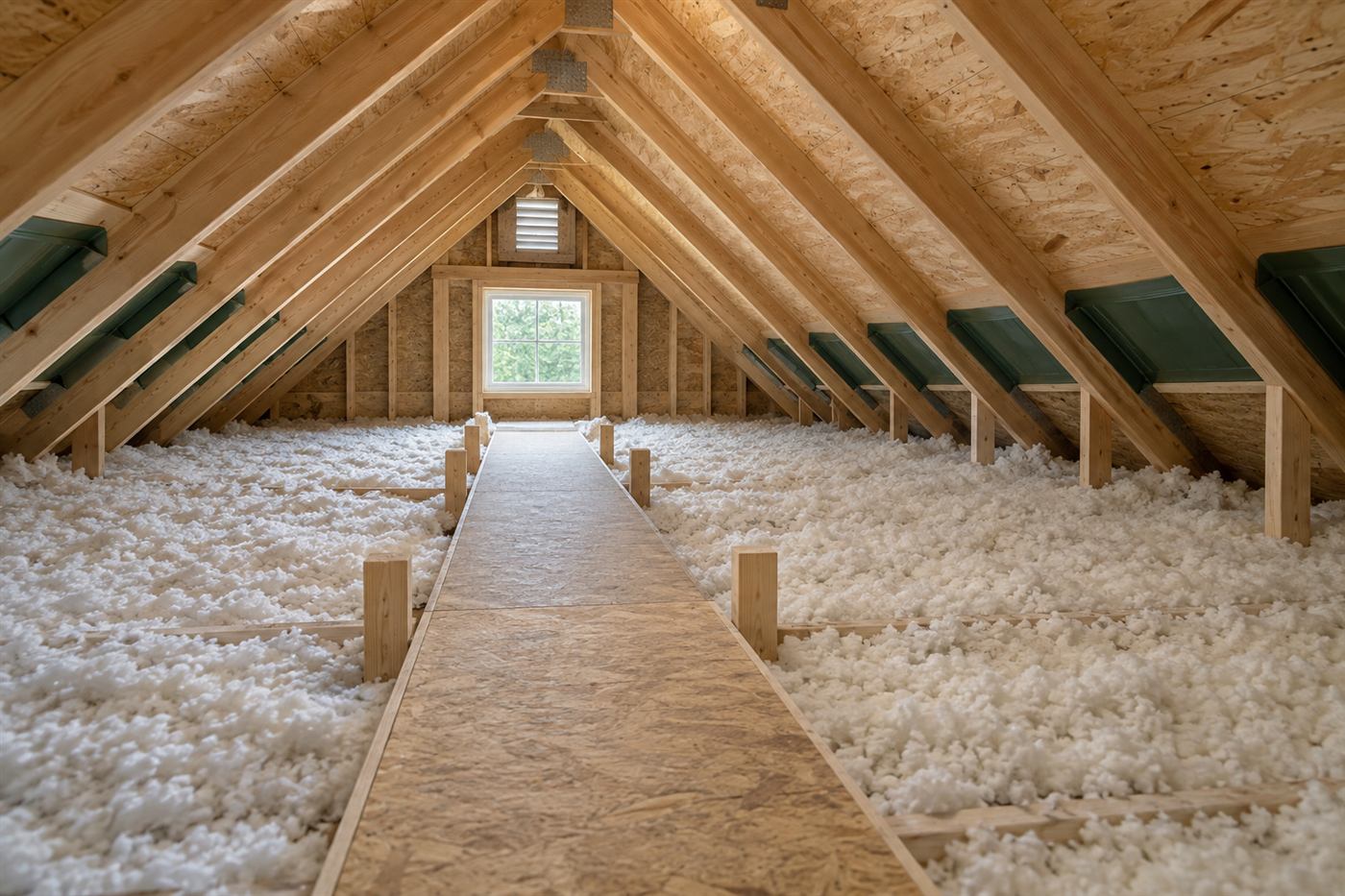
What a Florida attic is really like
On a summer afternoon, the air in an attic can be dramatically hotter than outdoors, because the roof absorbs the sun and the space has little airflow. Even in cooler months it can be stuffy and dim. There is dust, insulation fibers and sometimes pests. There is rarely a floor in the sense you imagine: most of the surface is ceiling drywall lying between the joists, with insulation on top, and it is not made to carry a person.
Trusses, the triangular framing that holds up most modern roofs, make the space a maze. Diagonal braces cross where you would want to walk, nails and roofing staples poke through from above, and low clearance forces you to crouch or crawl. Ducts, wires and pipes cross the space and are easily stepped on or snagged.
These are reasons most homeowners should treat the attic as a place for professionals unless there is a clear need. That need might be getting to a storage platform you already have, or retrieving something from near the hatch. Checking the insulation, finding a leak or testing equipment is better left to people with the gear and training. A technician who visits will do that safely and show you photos.
The heat problem
Heat is the first hazard. Spending even a short time in a very hot attic can cause heat exhaustion, dizziness, confusion or fainting, and an attic is a hard place to be rescued from. People have been seriously harmed by going up to fix a small problem on a hot day.
If you must go up, choose the coolest part of the day, usually early morning, and only for a short time. Drink water first. Tell someone at home that you are going up and have them check on you. Do not go alone if you have a heart condition, are elderly, or are not used to heat. Come down at the first sign of dizziness, headache or nausea, and cool down in air conditioning.
Never go up during a summer afternoon, during or just after a storm, or when air conditioning equipment is acting up and you are hoping to look at it. If you are not sure it is safe, it is not. Our page about summer heat and attic temperatures shows how hot these spaces can get and why.
Trusses, joists and where to step
Most attics have a ceiling made of drywall hanging from joists or the bottom chords of trusses. The drywall is thin and cannot support a person. Stepping on it between the framing means a leg through the ceiling and a fall, which can mean injury and a damaged room below.
Safe movement means stepping only on the framing members, which are usually two inches wide, hidden under insulation. That is hard to do in dim light while crouching. Insulation hides where the joists are, and loose-fill looks the same everywhere. This is why a proper walkway, with boards laid across the framing, is the safest way to move in an attic you must enter.
Do not cut, notch or remove any truss member or brace. Trusses are engineered, and altering them can weaken the roof. If something is in your way, work around it. Do not hang heavy objects from trusses, and do not use them as anchor points for storage shelves unless a qualified person has approved it. Questions about structure belong with a structural professional or the truss manufacturer.
Walkway boards and platforms over insulation
A walkway is a set of boards or sheet material laid across the joists, creating a continuous path from the hatch to the equipment or storage area. A platform is a larger surface for storing items. Both are meant to sit above the insulation so that no one steps on it and nothing compresses it.
The key is to raise the walkway above the insulation using blocking or risers fastened to the joists. Boards laid directly on blown insulation squash it, and compression reduces its insulating value. The platform should sit high enough that the insulation stays at full depth beneath it. A technician can tell you what height works with the insulation depth you have or are adding.
Platforms must be fastened securely to the framing, spread the load across several joists, and stay within what the ceiling framing can support. Ceiling joists in many homes are not designed for storage loads. A small platform with light items is very different from a room full of boxes. If you are unsure, ask a qualified contractor before building. Our page on insulation safety and dust explains why moving or compressing insulation yourself is not a good idea.
Storage in the attic: what is and is not wise
Florida attics are a poor place to store many things. Heat and humidity damage paper, photographs, books, electronics, candles, fabrics, and anything made of glue or plastic. Stored boxes can collect moisture, mold and pests. Cardboard attracts rodents and insects, and stored items near the roof may be exposed to leaks.
Items that tolerate heat, like some tools or holiday decorations in sealed plastic bins, are more suitable than documents or keepsakes. Keep items away from air conditioning equipment, vents, wiring and recessed lights. Never stack boxes against a flue or vent pipe. Keep walkways clear so access to equipment remains open for service technicians.
Heavy items should not go in an attic at all unless the framing is rated for them. The weight can crack ceilings below and harm the structure. Do not store flammable items, fuel, paint or chemicals in the attic. If you keep anything there, label it and keep a list so you do not have to go up often.
- Use sealed plastic bins, not cardboard boxes
- Avoid documents, photos, electronics, candles and fabrics
- Keep boxes away from vents, flues, wiring and lights
- Keep a clear path to the air handler and attic hatch
- Never store fuel, paint or flammable products
Hatches, pull-down stairs and ladders
Access itself carries risks. Pull-down attic stairs are often flimsy, installed with undersized parts, or left with cut-out framing that weakens the opening. A ladder that slips or stairs that fail under load can cause a serious fall. Check that hinges, springs and screws are present and tight, and that the stairs open fully and rest on the floor squarely.
Do not carry heavy items up stairs designed for light use. Use a ladder rated for the load, set on a firm, level surface, and have someone hold it. Wear closed-toe shoes with grip and long clothing. Bring a headlamp, not just a handheld light, so both hands stay available.
Hatches also leak air. A poorly sealed attic hatch lets conditioned air escape into the attic, and hot attic air into the home. Sealing and insulating the hatch is a simple improvement that a technician can carry out, as part of air sealing. Ask about it during a visit.
Electrical, ducts and recessed lights
Attics hold wiring, junction boxes, air handler connections and sometimes live electrical equipment. Wires may be buried under insulation and easy to step on or snag. Contact with damaged wiring can cause shock or fire. Do not move or pull on wires. Do not work around electrical equipment unless you are qualified.
Duct systems are fragile. Flexible ducts can be crushed, torn or disconnected by a heavy step. A disconnected duct dumps cold air into the attic and wastes cooling. If you notice a loose or damaged duct, do not try to fix it by pushing it back in place without knowing how it connects. Call an air conditioning contractor.
Recessed light fixtures in the ceiling push up into the attic. Some require clearance from insulation and generate heat. Do not cover them with boxes or insulation unless they are rated for contact. If you smell burning, see scorched wood, or notice flickering lights, switch off power at the breaker if you can do so safely, leave the area, and call a qualified electrician. If you see smoke or flames, call 911.
Pests, stings and animals
Attics host wasps, bees, rodents, snakes, lizards, bats and other animals. They nest in insulation and corners and may be defensive. Never reach into dark spaces. A wasp nest near the hatch can be dangerous, especially if anyone in the family is allergic. A rat or opossum cornered in an attic may bite.
If you hear scratching, see droppings, smell ammonia, or notice chewed material, stay out. Pest control professionals can handle removal safely, and a technician can then evaluate and replace damaged insulation. Our page about rodent damage in insulation describes how that works.
If you are stung and have trouble breathing, swelling of the face or throat, or fainting, call 911 immediately. Do not wait to see if it gets better.
When not to go up at all
There are clear situations where you should not enter the attic. After a storm or leak, when ceilings may be saturated and ready to fall. When there is a smell of burning or gas. During hot afternoons. When you are alone and not in good health. When you suspect mold, animal nests or damaged old insulation. When the area is full of stored items blocking safe movement. When the hatch or stairs look unsafe.
In each of those cases, call a professional. A technician has the equipment, protective gear and experience to inspect safely and can photograph what they find. That is often more useful than anything you could see on your own.
If someone has fallen or been overcome by heat, call 911 first. Do not enter to rescue them unless you can do so safely, and do not move someone who may have a serious injury unless there is immediate danger.
- Check weather and temperature before any plan to go up
- Tell another person and keep a phone with you
- Use a headlamp and sturdy shoes
- Step only on solid walkway boards or the framing, never on drywall
- Leave at once if you feel unwell, hear animals, or smell burning
Looking from the hatch: what you can safely learn
You can learn a lot from the attic opening without stepping inside. Open the hatch slowly, because hot air and dust may come down. Stand on a stable ladder or step, keep your head and shoulders out of the hottest air as much as possible, and shine a bright light across the space. Look for the depth of insulation relative to the joists, any wet or stained patches, daylight where there should be none, tunnels or droppings, and disconnected ducts.
Take photos with your phone held up into the opening, using flash. Several shots from different angles give a technician a useful picture over the phone. Do not lean far in, and do not lower your whole body through the opening. If you see something that worries you, such as dark staining, sagging, or active dripping, close the hatch and call.
A short look and a few photographs will usually answer the first questions: is there insulation, is it deep or thin, and does anything look wet or damaged? Everything beyond that is the technician's job, and it is why an inspection visit exists.
What a technician can do for you
If you need your attic inspected, insulation measured, access improved or a walkway planned, a technician can do that as part of a visit. Complicated jobs need an on-site visit, with a service call charge explained on the phone before anyone is dispatched. Quotes are given only by phone.
Call and describe what you want to reach or fix. We will explain what is safe to do yourself, such as looking from the hatch, and what is best left to professionals.
Questions people ask
Can I walk on the attic insulation?
No. Insulation is not a floor, and it hides ceiling drywall that cannot support your weight. Walking on it also compresses it. If you must enter, step only on the framing or on proper walkway boards, and think twice before going up in hot weather. A technician can inspect safely for you.
How can I make a safe storage platform in my attic?
Use boards or sheet material fastened across several joists on raised blocking so they sit above the insulation. Keep loads light and spread out, and check whether the framing can support them. If you are unsure, ask a qualified contractor before building. Avoid storing heat-sensitive items.
What time of day is safest to go in the attic?
Early morning, before the roof has absorbed heat, is generally best, and only for a short time. Avoid afternoons in summer. Drink water, tell someone, and leave at once if you feel dizzy or ill. For many tasks, it is safer to have a professional do the work.
Can I add boards over insulation myself?
It is possible, but it needs care. Boards must be raised above the insulation, attached to framing, and kept clear of wiring and ducts. Do not cut or alter trusses. If you are not comfortable working in a hot, tight space, ask a contractor to build a walkway for you.
Is it safe to store boxes in a Florida attic?
Not for many items. Heat and humidity damage paper, photos and electronics, and cardboard draws pests. Sealed plastic bins with tolerant items are better, kept away from vents, wiring and flues. Heavy items should not be stored unless the framing is rated for them.
Who should I call if I see damage in the attic?
Call the right trade for the problem: a roofer for roof leaks, an electrician for wiring, an air conditioning contractor for ducts, pest control for animals, and an insulation technician for wet or damaged insulation. If there is fire or an immediate danger, call 911 first.
Describe the situation by phone and we will tell you what the job involves. Quotes are given by phone. Jobs that cannot be quoted without seeing them need a technician on site, and the service call charge is explained on the phone before anyone is dispatched.
(561) 854-1888Related pages
Planning a safe route before you ever lift the hatch
Safety in an attic begins on the ground. Before opening the hatch, decide whether going up is truly necessary. If your goal is only to look, the hatch opening often gives a good view without stepping in. If you must enter, choose a cooler part of the day, tell someone at home, bring a bright flashlight, a phone and water, and wear long sleeves, long pants, gloves, closed shoes and a dust mask. Tell someone in the household where you are going and when you plan to come back, and take your phone so you can call for help if something goes wrong while you are above the ceiling.
Next, study the layout from the opening. Find the joists, note where the ceiling is only drywall, and locate any wiring or ducts in your path. Sketch the route in your head, moving from joist to joist and using sturdy boards if available. Never step between the framing, since a foot through the ceiling is expensive and dangerous. Keep three points of contact whenever you climb the ladder or move at the opening. Never rush when your eyes are adjusting to the dark, and pause to let your sight settle at the top of the ladder before you commit weight to the framing or take your first step.
Plan your exit as carefully as your entry. Know how you will get back, and set a time limit, because heat builds quickly. If you feel dizzy, nauseated or unusually tired, stop and leave at once. If anything unexpected appears, such as animals, exposed wiring or wet material, back out and call a professional. We are glad to talk through what is safe for you to do and what is better left to a technician. If this sounds like more than you want to handle, it is perfectly reasonable to let a technician do the climbing, and you can still ask for photos and a plain explanation of what was found.