Living with the ocean next door
Deerfield Beach has one of the most recognizable beachfronts in Broward County, and the city's housing reflects it. Along the ocean and the Intracoastal are condominium buildings of many ages. Inland, toward the Hillsboro corridor, are older concrete block homes, many built in the middle of the last century and since modified. The common thread is proximity to salt, wind and moisture.
Coastal living is wonderful, but it is hard on buildings. Salt in the air corrodes metal. Humidity is high and often persistent. Storms push rain sideways, finding gaps that ordinary rain would never reach. Roofs, vents, windows and the places where they meet walls are tested every season.
All of this has implications for attic insulation. Insulation does its job only when it stays dry and in place. In a coastal setting, the attic is not just a thermal buffer; it is a space where moisture can accumulate or escape depending on how the house is built and maintained. This guide explains how that affects the planning and what to check. For the broader background, see our page on attic insulation.
Coastal moisture: the first thing to rule out
Before any insulation goes into a Deerfield Beach attic, the question is whether the attic is dry. A technician will look for signs of present or past moisture: stains on decking, rust on nails and metal straps, discolored or matted insulation, a musty smell, and condensation on ducts or pipes. Any of these suggests that something is letting moisture in or failing to let it out.
Common causes include roof leaks around penetrations, blocked or insufficient ventilation, bath fans venting into the attic rather than outdoors, and leaking or sweating ductwork. Each has a different remedy. Some are roofing issues, some are mechanical, some are simply a matter of rerouting a fan.
Adding insulation to a damp attic is rarely a good idea. The material can trap moisture against framing and ceilings, and damp insulation performs poorly. So the first step may be repair rather than installation. Our page on the rainy season moisture checklist lists the usual signs, and insulation after water damage explains what follows when moisture has already done harm.
- Stains on roof decking or ceiling drywall
- Rust on nails, straps or metal fasteners
- Musty smell near the attic hatch or closets below
- Condensation on ducts, pipes or the underside of the roof deck
- Bath fans that end in the attic rather than outdoors
Wind-driven rain and where it gets in
Ordinary rain falls down. Wind-driven rain, common during tropical systems and strong frontal storms, arrives at an angle and can be forced into places that stay dry in a normal shower. Gable vents, soffit vents, roof vents, the edges of flashing, and the gaps around chimneys and skylights are all possible entry points.
When wind-driven rain gets into an attic, it often wets the insulation near the eaves or beneath a vent, leaving stained patches. Over time those patches compress and can grow mold. An owner may never see this without looking, which is why a visual check from the hatch after a major storm is worthwhile.
If a technician finds evidence of rain entry, the recommendation will include fixing the entry point before insulating. That might mean a roofer to reseal flashing, a vent cover replacement, or a repair to a gable vent. We do not do roofing work, and we will say so; our role is to flag what we see. Our page on wet insulation after a hurricane explains how wet material is handled.
Older block homes near the Hillsboro corridor
Older concrete block homes in this part of Deerfield Beach often have simple gabled or hipped roofs over a modest attic. Many were built with minimal insulation, and what was added later has often settled or been disturbed. Some have jalousie or older windows, and some have had additions that changed the roof structure.
Attics in these homes can be a patchwork. The original attic may be well-ventilated while an addition is not. A section may have been closed off during a renovation, trapping heat. The ductwork may be an odd mixture of old and new. A technician will walk the attic, noting the transitions, and plan the work accordingly.
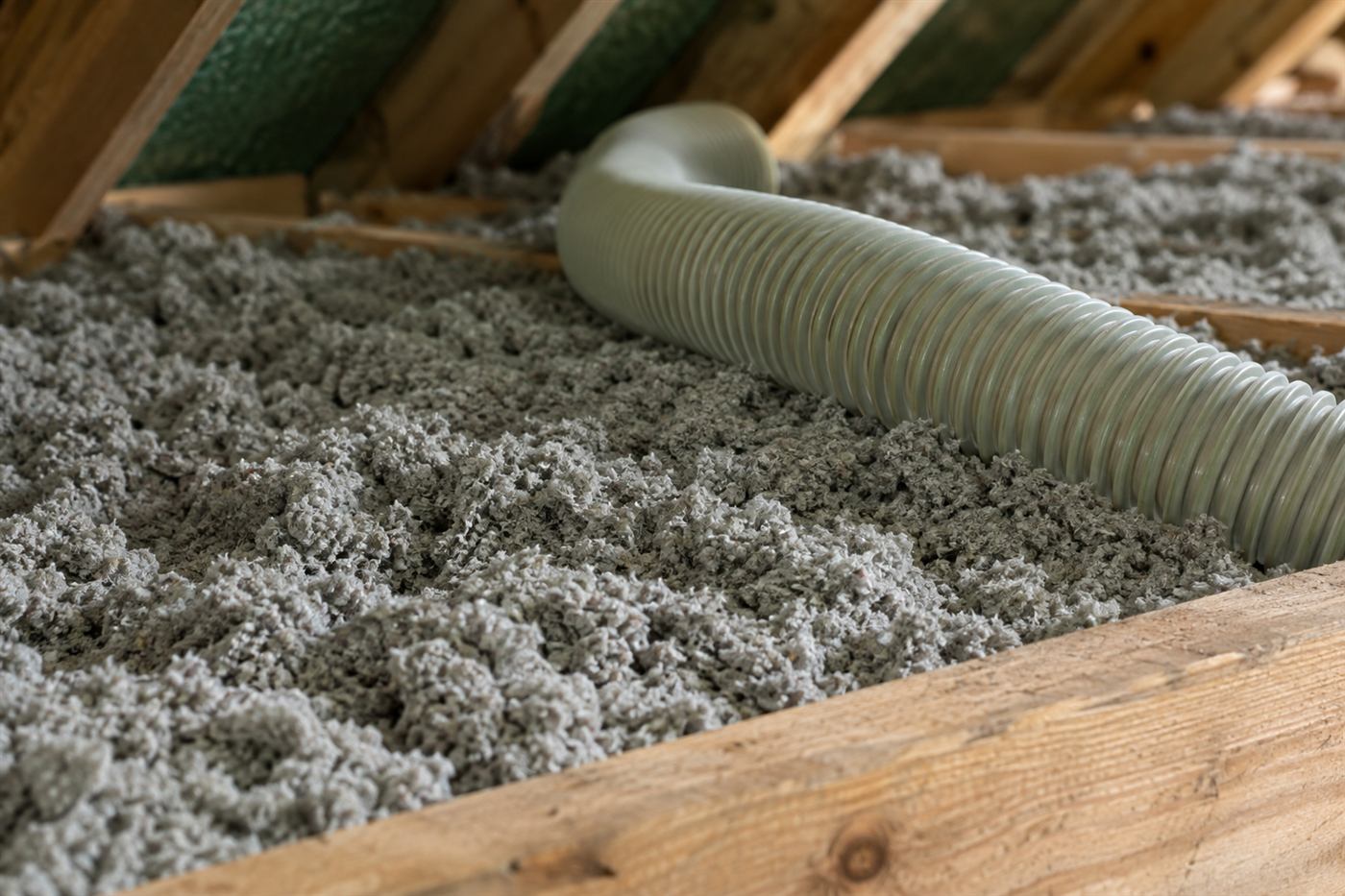
For these homes, loose-fill is often a sensible choice for the main attic floor, because it flows around the irregular framing. Where an addition or an odd roof section makes loose-fill impractical, another material may fit better. Our page on insulation for concrete block homes explains how block walls fit into the picture, and why the attic is usually the first place to work.
Beachside condos: what is yours and what is not
Beachside condominium buildings present a different set of questions. Owners rarely have an attic of their own. The top-floor units sit beneath a roof that belongs to the association, and the space above their ceilings is common property. Lower units are surrounded by neighbors, with shared floors, ceilings and walls.
For an owner, this means that the options inside the unit are limited. Within your own walls and ceilings, some improvements may be possible, particularly in a top-floor unit where the association allows access. But roof-level work is usually an association matter, and decisions about it are made collectively.
If you own a condo, our page on insulation for condos explains how to approach the question. Start with your documents and your management office. Ask what is allowed and who authorizes entry. Then call us with what you have learned, and we can say whether there is something useful to do within those limits.
- Read your condo documents for sections on ceilings, roofs and common elements
- Ask the manager who controls access to the space above your unit
- Find out whether contractors must be registered or insured with the building
- Ask about elevator, parking and working-hour restrictions
- Call us with the details before scheduling any visit
Getting coverage right near the edges
In any attic, the edges are where coverage most often fails. The low, tight space where the roof meets the exterior walls is hard to reach, and installers sometimes leave it thin. But the edges are where wind-driven air and heat meet the ceiling, so getting them right matters.
Baffles are the tool for this. A baffle is a rigid or semi-rigid channel placed at the eaves that holds insulation back from the vent openings while keeping a path for air. With baffles in place, loose-fill can run right up to the edge without blocking ventilation. Without them, material may block the vents or, if the installer is cautious, leave too much bare.
A technician should show you how edges are handled. Ask for photos of the eave areas before and after, and for readings from depth markers near the edges. Coverage that is thick in the center and thin at the perimeter is a sign of a rushed job. If you see it, ask for it to be corrected.
Air sealing and humidity control
In a humid coastal climate, air sealing is as important as insulation. When conditioned air leaks upward into the attic, it cools the attic and wastes energy. When humid attic air leaks downward into the house, it adds moisture to rooms and makes the system work harder. Sealing the ceiling plane limits both.
Typical leak points include gaps around wiring and plumbing, the tops of interior walls, openings around recessed lights, bath fan housings, and the attic hatch. Sealing these takes time and the right materials, but the effect is quiet and lasting. Our page on air sealing covers the details.
A well-sealed, well-insulated attic helps the air conditioner by reducing the load, and it helps the building by reducing moisture movement. In Deerfield Beach, where humidity and salt are constants, that combination is worth planning for from the start.
Bath fans, kitchen vents and other moisture sources
In a humid coastal city, some of the biggest sources of attic moisture are inside the house. A bathroom fan that discharges into the attic instead of outdoors dumps a shower's worth of steam into the space every time it runs. A kitchen hood or dryer vent that ends in the attic does the same. Over months, that moisture soaks insulation and wood.
Technicians look for these during a visit. A flexible duct that stops short of the roof, a fan housing with no connected duct, or a vent that terminates just above the insulation are all common findings. The fix is usually simple: connect the duct and run it to a proper outdoor termination. That job may belong to a roofer, a handyman or an electrician, depending on the fan.
Mention to the technician if you have noticed condensation on bathroom ceilings, mirrors that stay fogged long after a shower, or a musty smell in a bathroom. Those can point to a fan that is not doing its job. Fixing the source before insulating keeps the new material dry and effective, and it protects the ceiling below.
Protecting what you already have
Some Deerfield Beach homes already have decent insulation that has been disturbed over the years. Air conditioning technicians, electricians, satellite installers and roofers all walk through attics, and few of them restore what they move. Footprints, trenches and bare spots are common findings. A modest repair, bringing the layer back to even depth, may be all that is needed.
Make a habit of mentioning the insulation to anyone who enters the attic. A simple request to avoid stepping off the walkway and to smooth the material back in place helps. If you have a regular service provider, ask them to note any damage they see.
When you are ready to improve coverage, a technician can show you where the layer is strong and where it is thin. In many cases, a targeted top-up in the weak areas is a sensible step. Our page on how long insulation lasts explains how age, moisture and disturbance affect performance over time.
Questions for your visit
A good visit answers questions you did not know you had. Still, a few worth asking: What did you find in my attic, and what evidence supports it? Is there any moisture or pest issue to handle first? What material do you propose and why? How will edges, fixtures and the hatch be treated? How will you show me the finished depth? What would you leave alone?
Our guide on questions to ask an insulation contractor expands this list. You do not need to be an expert. A clear, patient explanation is part of the job, and a professional who welcomes questions is one worth listening to.
Verify credentials, keep records of what is installed, and ask for photos. These simple habits protect you and add value to the home if you sell it.
Ready to talk
Before you call, gather what you know: the type of building, the approximate age, which rooms or areas are uncomfortable, and any signs of moisture or pests. If you live in a condo, bring what you learned about access and rules. Photos from the hatch, taken safely, are a bonus.
Quotes are given by phone only. For complicated attics or coastal condition concerns, an on-site visit comes first, and a service call charge applies, explained on the phone before anyone is dispatched. This lets you decide with the facts in front of you.
When you are ready, call and tell us about your Deerfield Beach property. We will talk through what is likely involved and how to proceed without rushing you.
Questions people ask
Does coastal air affect attic insulation?
Indirectly. The material is not usually the issue, but salt-laden humid air corrodes metal and adds moisture to poorly ventilated attics. Checking for rust, stains and dampness before adding insulation is a sensible precaution near the ocean.
What if my attic got wet during a storm?
Do not go into it yourself, since wet ceilings can be heavy and weak. Keep people away from below, look for stains, and arrange an assessment. Wet insulation is usually removed or dried, and the entry point repaired before new material goes in.
Can I add insulation to a beachside condo?
That depends on what you own and what your documents allow. Many condo owners have no attic of their own, and roof-level work belongs to the association. Check your documents and management office, then call us with the details.
Why do the edges of the attic matter so much?
The edge near the eaves is where the roof meets the wall and where wind-driven air and heat reach the ceiling. It is hard to reach, so it is often left thin. Baffles and careful blowing keep coverage continuous without blocking ventilation.
Do you do roof repairs?
No. If we find evidence of roof leaks or vent problems, we will say so and recommend that you have a roofer address it before insulation is installed. Insulation is not a substitute for a sound roof.
How are quotes handled?
Quotes are given by phone only. For complicated jobs, an on-site visit comes first, and a service call charge applies, explained on the phone before anyone is dispatched. We do not publish prices because the scope depends on your building.
Describe the situation by phone and we will tell you what the job involves. Quotes are given by phone. Jobs that cannot be quoted without seeing them need a technician on site, and the service call charge is explained on the phone before anyone is dispatched.
(561) 854-1888Related pages
Keeping Moisture Out of Loose-Fill Near the Coast
Loose-fill insulation takes on moisture if the attic is damp or if a roof leak drips onto it. Near the coast, the crew checks the underside of the roof deck for staining, looks at the condition of existing material, and notes any musty smell. Wet insulation loses its usefulness and can feed mold, so it should be removed and replaced once the source of moisture is fixed. Covering damp material with fresh loose-fill hides the problem for a while but does not solve it, and the crew will not recommend that shortcut.
Ventilation also matters. Soffit and ridge vents that are blocked by insulation trap humid air. The crew installs baffles at the eaves so air can still enter, and they keep material away from vent openings. Bath fans and kitchen hoods should vent outdoors and not into the attic, and the technician looks for this common problem. A fan that dumps warm moist air into the attic can soak the material above it over a few seasons, so a short duct run to the outside is often the first thing worth checking.
Tell us about any past leaks, and mention whether the roof was recently replaced. Photos from the hatch help the technician prepare, and so does any report from a roofer or inspector. If you have noticed a musty smell in a closet or on the upper floor, say so. We explain the scope and any quote before work begins, and if the technician finds a moisture source, you hear about it before any new material is blown in over the top of it. Ask the technician to walk you through the finished area and point out anything you would like explained.
Edges, Eaves and the Places a Hose Cannot Reach
The hardest places to cover are the low edges where the roof meets the wall. In a Deerfield Beach attic, those spots may be only a few inches high. The crew uses a tool to push material into the eaves, and in some cases places it by hand. Skipping these edges leaves a ring of thin coverage around the perimeter of the ceiling, and heat enters there first. Because the area is hard to see from the hatch, you will not notice a poor job until the house is already finished and cooled.
Baffles keep the material from blocking the soffit vents. They are fitted before the loose-fill goes in, and the crew checks that each vent is clear. Around the attic hatch, a barrier is built so material does not spill down the opening, and the hatch lid is insulated separately. Pull-down stairs get a cover or a built box so the stairway does not leak air into the attic. These small pieces are often what makes the difference between a finished edge and a messy one that sheds material over time.
Before the visit, tell us if you know of any narrow areas, low spots, or sections where the roof comes down close to the ceiling. Mention if there are storage platforms we should avoid. If you have a pull-down stair, clear the space below it so the cover can be fitted. We explain the plan and any quote before work begins, and the technician describes how the eaves, baffles, and hatch will be handled so you can ask about any part that concerns you. Ask the technician to walk you through the finished area and point out anything you would like explained.