Mature neighborhoods and what they carry
Plantation is one of the older suburban cities in western Broward, and many of its streets are lined with large trees that have grown for half a century. Homes from the 1960s and 70s tend to be single-story ranch styles on generous lots, built of concrete block with stucco, with gable or hip roofs. Many have been renovated more than once, with additions, replaced windows, new kitchens and updated air conditioning.
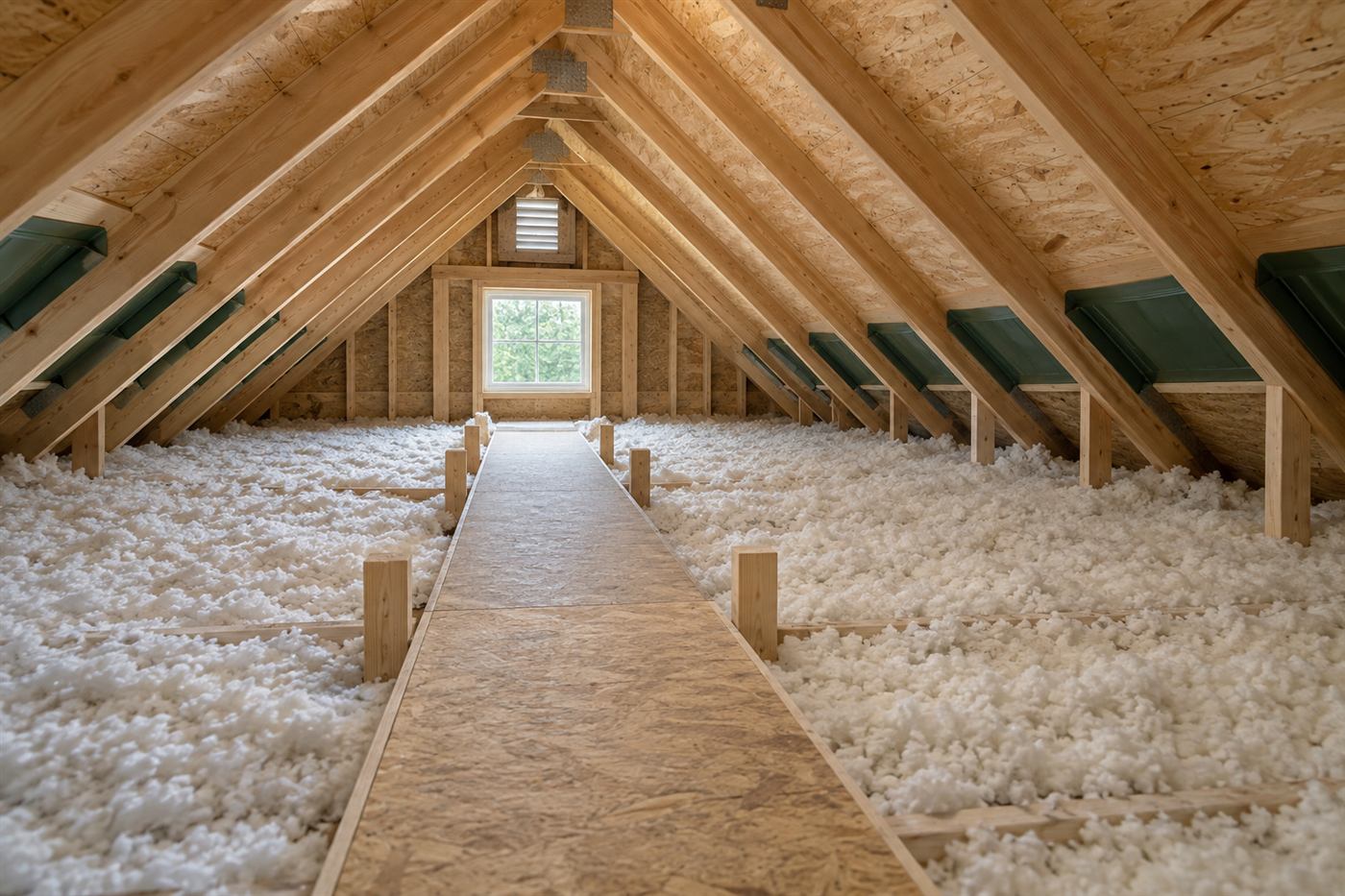
What has not usually changed is what is above the ceiling. Insulation from the original build, if there was any, is often thin and old. Fiberglass loses some of its fluffiness with age, dust fills its voids, and roof leaks over the years leave stained patches. Rodents and squirrels, drawn by trees, find ways in and leave nests and droppings.
That makes the first step in a Plantation attic an honest inventory. What is there, how deep is it, what shape is it in, and is anything under it damp or damaged? Only then can you decide whether to add to it, replace parts, or remove it and start over. Our overview of batt insulation explains the product; this page focuses on its place in older homes.
Old attic insulation: reading what you find
Older insulation tells a story. Yellow or pink fiberglass batts that are flat, grey with dust and broken at the edges have lost much of their value. Loose fill that has compacted to an inch or two has lost loft. Paper-faced batts with the paper torn or loose show past moisture or rodent activity. Dark stains on batts indicate a roof leak or condensation, sometimes years ago.
Some older homes in the region may contain materials that deserve care. Certain older products, particularly vermiculite-type loose fill, can contain asbestos, and old duct wrapping or other materials may also be a concern. If you find loose grey-brown pebbly fill that looks like small accordion-like flakes, do not disturb it. Have it identified by an appropriate testing professional before any work. A technician who sees such material should stop and tell you.
If the old insulation is dry, intact and simply thin, adding new material on top is often reasonable. If it is wet, contaminated by animals, or full of mildew, removal is usually better. Our page on insulation removal and replacement explains the process and why it is sometimes the right first step.
Tall trees, roofs and the leaks they leave behind
Mature trees give welcome shade but they also drop leaves, branches and fruit on roofs, hold moisture against shingles, and in a storm can damage the roof outright. Debris that holds water in valleys or at the edge of a roof can speed up shingle wear and let leaks start.
In Plantation attics, technicians commonly find old water stains on decking near valleys, chimneys and plumbing vents, and sometimes patches of matted or darkened insulation beneath. Many of these leaks were fixed long ago but left visible marks. Others are still active during heavy rain.
A sensible approach is to trace stains to their source before covering anything. A dry stain on old decking is a past event; a damp stain is current. If the roof is near the end of its service life, think about replacing it before putting a new layer of insulation on, because roofers working above can disturb the material and a new roof is the best time to check ventilation. Our guide on insulation after a roof replacement covers the sequence in detail.
Squirrels, rats and what they do to insulation
Tree-lined neighborhoods bring rodents and sometimes squirrels into attics. They tunnel through insulation, build nests, urinate and leave droppings, and chew wiring. Batts are particularly attractive for nesting because the soft fibers are easy to shred.
Contaminated insulation is a health and odor concern. Do not handle it casually, and do not try to vacuum it with a household machine. Technicians use protective equipment and purpose-built vacuums or bagging methods. Before new insulation goes in, the entry points should be found and closed, because new material over an active nest only invites damage.
Wires chewed by rodents are a fire hazard, and an electrician should assess any damage before the attic is covered. Our page on rodent damage in insulation explains the signs and the order of steps. Insulation work should follow pest exclusion, not precede it.
Where batts make sense in a ranch home
A single-story ranch with an open attic floor generally suits blown-in better than batts for the flat expanse. Where batts earn their place is on the vertical and the awkward: the edges near the eaves where a blown layer is thin, the small knee walls around an added room, the sides of the air handler platform, the area around the attic hatch and the surfaces of dormers or bump-outs.
Batts are also useful for interior work in an older home. During a kitchen, bath or addition project, new walls can be insulated with batts, and walls opened for plumbing or electrical repairs can be filled properly instead of being patched with scraps. If the room was converted from a garage, the walls and ceiling often need attention, since garages were built without insulation.
In a 1960s or 70s home, an attic that has been added to over the years may have a mix of ceiling heights and roof lines. Batts can follow the shapes where blown-in is hard to contain. The technician will walk through the attic and mark which areas suit which product.
- Edges and eaves where the blown layer is thin
- Knee walls and small walls around added rooms
- Sides of the air handler platform
- Garage conversions and room additions
- Single wall bays opened for repair work
Block walls with furring and plaster
Plantation ranch homes are generally concrete block, and interior walls may be plaster over block or drywall over furring. Neither provides a cavity for batts unless the interior is being opened. In practice, wall insulation in these homes is a renovation matter.
If you are redoing a room down to the block, consider furring out with strips, installing insulation in the new cavity, and adding drywall. The cavity is shallow, so the gain is modest, but the wall also gets a moisture and air barrier opportunity. Check the block for dampness first, because covering a wet wall encourages mold.
Block walls can absorb water through cracks and stucco defects, and tree roots or sprinklers close to the wall add to the load. If you see efflorescence, a white powder on the wall, or peeling paint, find out why before insulating. A technician with a moisture meter can help.
Ventilation and the older roofline
Older homes were built with different ventilation approaches. Some have gable vents, some have narrow soffit vents, and some have little more than a few louvers. After decades, vents may be painted shut, blocked by insulation or stuffed by nesting animals.
Adequate ventilation helps keep roof decking dry and lowers attic temperatures. Insulation added without regard to ventilation can make matters worse by blocking the airflow path. At each soffit, baffles hold insulation back so air can move.
If the home has no soffit vents, the technician may recommend adding some, or working with a roofer who can add ridge vents during re-roofing. Our guide on attic ventilation covers how the pieces fit.
Storm recovery in a tree-lined suburb
When a storm brings down a limb or tears shingles, rain can enter the attic quickly. Wet insulation becomes heavy, stays damp for a long time and can lead to mold. Do not walk on a wet attic floor. Look for ceiling stains and a musty smell in the days after a storm.
Document damage with photographs for your insurance carrier, make temporary protection of the roof as soon as it is safe, and ask a technician to assess the insulation. Insurance questions are handled by you and your carrier; a technician can describe what they find. Our page on insulation and insurance claims explains what homeowners typically document.
Before the season, a quick attic check for loose or missing insulation, gaps and stains can identify weak spots. Trimming trees away from the roof is another step that reduces risk, though that is work for a tree service.
Garage conversions and additions common in older ranch homes
Over fifty years, many Plantation ranch homes have gained a converted garage, an enclosed porch or a room addition. These conversions are some of the most under-insulated spaces in the house. A garage was never meant to be a bedroom, so its walls may have bare block or a single layer of drywall, and its ceiling may have almost nothing above it.
A converted garage often has a flat or low-slope ceiling, a slab floor and an old overhead door opening that was framed in. Batts can go in the framed-in opening wall and in any new framed walls. The ceiling can take batts or blown-in material from the attic side, depending on access. The slab is a separate matter; moisture rising through it can make flooring damp, and no insulation above the slab fixes that.
Additions deserve a look at the joint with the original house. The seam where old and new roofs meet is a common place for leaks and gaps in insulation. A technician will check the transition and make sure both sides are covered without a break. If the addition was built without permits, mention it, since that can affect what is allowed and how work is documented.
Comparing the choices for an older home before you decide
When you get a recommendation, ask four plain questions. What is the material, and why this one for this space? How deep or thick will it be when finished? How will it be kept away from vents, lights and flues? And what will be done about any moisture or pest findings first? A technician who can answer all four is thinking about your house rather than reciting a standard job.
It also helps to ask what is not being recommended and why. If blown-in is proposed for the open attic and batts for the edges, ask what each would do if swapped. The reasoning should make sense. Our guide on questions to ask an insulation contractor lists more points to raise.
Remember that insulation is one piece of a comfort picture. Old air conditioners, leaky ducts, single-pane windows and sun-facing walls all play a part. A good visit says what insulation can and cannot do for your home, and what else is worth looking at. Our page on the order of energy-saving upgrades helps you think about sequence.
Windows, doors and the other half of the comfort picture
Plantation homes from the 1960s and 70s often still have some original openings: older doors, jalousie or aluminum-frame windows, and gaps around frames that have never been resealed. Insulation in the attic reduces heat from above, but sunlight through glass and air leaking around frames can offset a good deal of the gain.
A walk around the house with a technician can show where sun hits hardest, where weatherstripping has failed and where caulk has cracked. These are small repairs that often cost less than people expect and help the insulation do its job. They are also not something a batt installer necessarily performs, so treat them as a to-do list you can hand to another trade.
Shade helps too. Mature trees that shade the west side reduce heat gain, and an owner who is thinking about trimming them should weigh that against roof safety and debris. The aim is a balanced picture: a roof clear of hazards, an attic that is dry, ventilated and evenly insulated, and a shell that does not leak around its edges.
Preparing for a visit and calling
Before the technician arrives, make sure the attic hatch is accessible and the path is clear. Note the age of the roof and any history of leaks or animals. Mention past renovations, particularly any garage conversion or addition, and any older materials you are unsure of.
Quotes are given only by phone, and complicated jobs need an on-site visit. There is a service call charge for the visit, which is explained on the phone before anyone is dispatched. If pests, moisture or old materials are involved, expect the visit to include a careful inspection before any scope is proposed.
When you are ready, call and describe the house, what you have seen in the attic and what prompted the call. Call whenever you want to talk through the options.
Questions people ask
Should I add new insulation over old attic insulation?
If the old material is dry, intact and simply thin, adding on top is often reasonable. If it is wet, contaminated by animals or full of mildew, removal is usually better. A technician can assess condition and depth and recommend one or the other.
What if I find grey-brown pebbly fill in my attic?
Do not disturb it. Some older loose fill materials can contain asbestos. Have it identified by an appropriate testing professional before any work is done. A technician who sees material like this should stop and tell you.
Do squirrels and rats ruin insulation?
They tunnel through it, nest in it and soil it, and they chew wiring. Contaminated insulation is a health concern and usually needs removal. Entry points should be closed before new material goes in, and an electrician should check any chewed wires.
Can I add insulation before replacing my roof?
It is usually better to coordinate. Roofers working above can disturb new material, and a re-roof is the right time to check ventilation. If the roof is near the end of its life, consider the roof first. A technician can discuss the sequence.
Are batts or blown-in better for a Plantation ranch attic?
Blown-in usually suits the open floor, while batts suit edges, knee walls, platform sides and small walls. Many jobs use both. The technician will mark which areas suit which product after walking the attic.
How do I get a quote?
Quotes are given by phone, and complicated jobs need an on-site visit. There is a service call charge, explained on the phone before dispatch. Call, describe the house and what you have noticed, and the next step will be explained plainly.
Describe the situation by phone and we will tell you what the job involves. Quotes are given by phone. Jobs that cannot be quoted without seeing them need a technician on site, and the service call charge is explained on the phone before anyone is dispatched.
(561) 854-1888Related pages
Dealing With Past Pest Damage Before New Batts Go In
In mature neighborhoods, attics sometimes show signs of earlier visitors, including droppings, chewed wiring, and flattened or tunneled insulation. Before new batts go in, the technician looks at the extent of any damage and whether the animals are still present. Installing fresh material over an active problem is wasteful, because it will be damaged again. The honest first step may be to have the pests dealt with and the entry points closed, and the crew will say so even when it delays the insulation work.
If old insulation is contaminated, removing it is better than covering it. Removal involves protective gear, careful bagging, and cleaning of the area. It is a larger job than adding new material, and the technician explains why it may be needed. Chewed wiring is a safety matter and should be checked by an electrician before anything is covered. The crew will not place batts over damaged cables, because hidden damage is far harder to find once the attic floor has been covered with new material.
Owners can help by describing any noises, smells, or sightings, and by noting where wires or ducts look chewed. Take photographs from the hatch if you can do so safely, and do not enter the attic yourself if you suspect nesting animals. Tell us whether any pest company has already been out. We explain the scope, the order of work, and any quote before work begins, so you know whether cleaning, removal, or simple fitting of new batts is the plan before anyone starts. Ask the technician to walk you through the finished area and point out anything you would like explained.