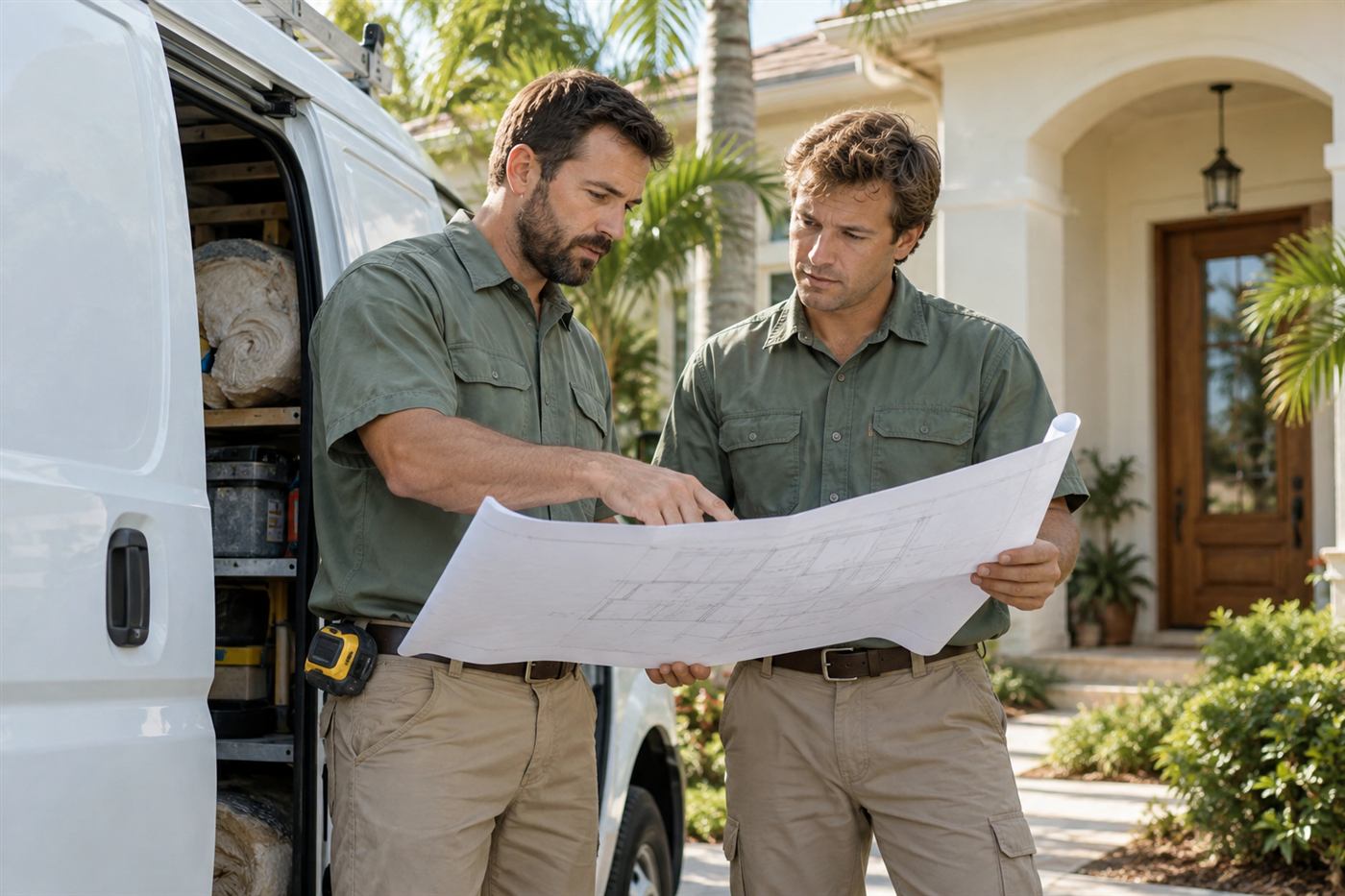
Where crawl spaces appear in Boca Raton
The standard Boca Raton home is built on a concrete slab, which is why many owners have never looked beneath their floors. That is true of the stucco villas inside gated golf communities, of the large estate homes on canal lots, and of most of the mid-century ranch houses that were built when the city first grew. Where crawl spaces do turn up, they are usually in a specific kind of building: a house with a raised wood floor over a shallow void, a home with an elevated section added to meet flood-zone requirements, a structure on piers, a guest house or a detached studio, or an older building on a slightly different foundation than its neighbors.
So the first honest question on a call is: what kind of space is it? A technician will often start by asking how the floor feels, whether there is an access panel, whether the area has vents, and whether anyone has been in there recently. Some owners discover that what they call a crawl space is a utility chase, a plumbing access void or a part of the garage. Each of these has different needs, and each deserves a straight answer about whether encapsulation is the right response.
- Raised wood floors over shallow voids.
- Elevated sections built to meet flood-zone requirements.
- Pier-supported guest houses, studios and additions.
- Utility chases and plumbing access voids that people call crawl spaces.
What encapsulation involves
Encapsulation means turning a vented, damp-prone below-floor space into a controlled one. The main components are a vapor barrier over the ground, sealing at seams, walls and piers, closing or controlling vents that let humid air in, managing any water that collects, and in some cases adding a dehumidifier or supply of conditioned air. It is a system rather than a single product.
A heavy barrier is the visible part, but it is the least of it. The decisions that matter are where the water comes from, where it goes, and how the space will stay dry afterward. A barrier laid over a leaking pipe, a wet corner or a drainage problem is a cover, not a fix. A good technician therefore asks about plumbing, roof runoff, grading and the history of flooding before talking about material.
Vapor barriers: what to look for
A vapor barrier is a durable sheet laid across the ground and run up the walls and piers, with overlapping seams sealed so moisture rising from the soil cannot enter the space. Thickness, puncture resistance and seam quality matter. A thin sheet that is torn within a year, or one with open seams, does not do the job.
In Boca Raton, where the water table is high and rain can be intense, ground moisture is a constant factor. The barrier also needs to be installed so that it does not trap water on top of it. Where water can collect, a drain path or a sump arrangement may be needed, and the technician should say where the water will go. Ask how the barrier is attached at the walls, how it handles piers and pipes, and how it will be protected from foot traffic during future service visits.
Photos before and after are the best record. The ground condition before the work, the seams, the wall termination and the finished surface should all be visible, so that anyone later can see what was done.
- Clear debris and sharp objects from the ground surface.
- Correct drainage or leaks that are adding water.
- Lay the barrier with overlapping, sealed seams.
- Run it up walls and piers and seal at the top.
- Photograph the finished surface and note access paths.
Drainage, grading and the high water table
Boca Raton is low and flat, and much of it was developed with canals, lakes and engineered drainage in mind. Ground water can sit close to the surface in the wet season, and heavy storms can push water against foundations. A below-floor space in this setting can take on water even if the house has never had a plumbing leak.
That is why drainage is part of the plan. Walk the property after a rain, if you can, and notice where water pools, where downspouts discharge and whether the grade slopes toward the house. Gutters that overflow, splash blocks that were removed or landscaping that has raised the soil level can all send water to the wrong place. Fixing those is often the simplest step and should come first.
If water collects below the floor, a pump or drain may be needed. That equipment requires power and attention, and it is worth asking how it will be maintained and what happens during a power outage. Storm season makes that last question a real one.
- Check downspouts, gutters and grading around the house.
- Ask what happens to the drainage system when power is out.
- Note any standing water you see after a heavy rain.
- Mention previous floods or flood claims when you call.
Golf communities, gated rules and permit review
Many Boca Raton homes sit inside gated communities with architectural and vendor rules. Work vehicles may need to be registered at the gate, there may be limits on work hours, and any visible exterior change could need approval. For below-floor work, the exterior impact is small, but the access rules still apply. Telling the office the community name when you call helps the scheduling conversation.
The city also reviews construction work, and some below-floor work, especially anything that affects structure, flood-zone elevation or drainage, may require a permit. Which work does and which does not is a question for the local building department, and a technician can tell you in general terms what usually applies. If the home is in a flood zone, extra rules may apply to enclosed spaces below the base elevation. Do not assume that a permit is unnecessary because the work is out of sight.
Keep paperwork together. If you later sell, a buyer's inspector may ask what was done below the floor, and a tidy file with photos and permit records answers the question in a minute.
Tile roofs, big cooling loads and the link to the floor
Boca Raton houses often have tile roofs, large rooms and heavy air conditioning use. A big cooling system produces a lot of condensate, and a cold air handler located in a space near a raised floor can sweat. Duct leaks in an enclosed lower space can pull in humid air and then cool it against metal, creating drips that the owner never sees.
That is one reason a below-floor check should include any ductwork or air handlers in or near the space. If supply ducts run through the area, their wrap and connections matter. A torn wrap on a cold duct in a humid void is a moisture machine. If this describes your home, mention it, and be ready for the technician to suggest an air-conditioning contractor for any duct repairs that fall outside insulation work.
Insulation in an enclosed below-floor space is a different subject from attic insulation, and the right material is one that tolerates moisture. Your attic, in contrast, is covered by the methods on the Boca Raton attic insulation page.
Mid-century ranch homes and large attics
The older ranch homes in Boca Raton were built with generous attic spaces and modest ceilings, and many have had additions over the decades. An addition may sit on a different foundation from the original house, so a slab house can have a raised section tacked on, with a small void beneath it. Those are the places where moisture issues often show up: a floor that feels cold or soft, a smell near an added bathroom or a bedroom that has persistent mildew on the wall base.
If you own such a house, think about the layout. Where does the floor level change? Is there a step between rooms? Was any section built later than the rest? Those questions help narrow down where a below-floor space might exist. A technician may also ask about previous repairs, since patched plumbing and old termite treatments can leave marks that tell a story.
A calm, evidence-based approach is best. Observe, measure and decide, rather than assume a large project is needed.
What to expect on the day of the visit
The technician will want to see the access point, so clear the area around it. Furniture, rugs or stored items covering a floor hatch should be moved beforehand. Tell the office if there are pets, if the space has had pest activity, or if you know of any areas where the floor feels soft. The inspection may involve crawling or entering a narrow space, and the technician is responsible for judging whether it is safe to do so. If the space is unsafe, because of standing water near electrical equipment or structural concerns, they should stop and say why.
You will receive a plain explanation of what was seen. If the space is dry and sound, you will hear that, and there will be no need for a project. If moisture is present, you will hear where it appears to be coming from and which steps come first. Quotes are given by phone, and anything complicated may require a separate on-site visit. A service call charge applies to visits and is explained on the phone before dispatch.
For a wider view of what a visit involves, see preparing for an insulation visit.
Questions worth asking any contractor
Whoever you consider, ask these directly. What is the source of the moisture, in their view? What will be done about it before a barrier goes in? What materials will be used and how are seams and walls treated? Is a dehumidifier proposed, and who maintains it? What permits apply? What records will you receive?
The questions to ask an insulation contractor guide offers a longer list. Answers that are specific and calm are a good sign. Answers that are vague or that rush you to a decision are not. When you are ready to talk it through, call, describe the house and what you have noticed, and the office will tell you what to gather and what comes next.
Flood zones, elevation and enclosed space
Parts of Boca Raton lie in mapped flood zones, particularly near the Intracoastal Waterway, the canals and low-lying neighborhoods. Homes built or substantially improved in those zones follow elevation and enclosure rules, and some raised structures exist precisely because of them. Enclosed areas below the required elevation are often limited to parking, storage and access, and they may be required to have openings that let floodwater pass through.
That creates a tension with encapsulation. The goal of encapsulation is to close a space to outside air and water, while flood rules may require that a space be able to flood and drain. Before sealing vents or adding barriers in a low enclosed area, confirm with the building department and your flood-zone documentation what is allowed. A technician cannot decide this for you, and a contractor who ignores the question is taking a risk on your behalf.
If your home has an elevation certificate, keep it handy and mention the flood zone when you call. It helps the office understand what kind of space you have and what constraints may apply. It also matters for insurance, since changes to an enclosed area can affect how it is classified.
- Find out whether your property is in a mapped flood zone.
- Locate any elevation certificate or flood-zone paperwork.
- Ask the building department before sealing flood openings.
- Tell your insurer about significant changes to enclosed areas.
Guest houses, studios and detached buildings
Large Boca Raton lots often hold more than one building: a guest house, a pool cabana, a studio, a detached office or a garage apartment. Some of these sit on slabs, and others, especially older or custom ones, rest on piers or raised floors. They tend to be used less than the main house, which means humidity builds quietly and nobody notices a smell or a soft floor for a long time.
Treat each building separately. A guest house that is rarely cooled can hold damp air all summer. A cabana near the pool takes on splash and humidity. A studio over a garage can have heat from the garage slab and moisture from below. Each calls for its own look, and the answer for one may not apply to another.
If a detached building has a below-floor space, the process is the same as for the main house: find the water source, address drainage, install the barrier and control the air. If it is also a candidate for ceiling insulation, the visit can cover both. The pool house and detached office guide covers that side in detail.
Questions people ask
Do most Boca Raton homes have a crawl space?
No. Most are built on concrete slabs. Crawl spaces appear in raised wood-floor houses, pier-built additions or guest houses, and elevated sections. Some owners find their so-called crawl space is really a utility chase or access void. A visit can confirm what you have and whether encapsulation applies.
Is a vapor barrier enough to keep a crawl space dry?
Not by itself. It blocks moisture rising from the ground, but leaks, poor grading, drainage problems and humid air entering through vents can still bring water in. A sound plan finds the sources first, handles drainage, and then installs the barrier with sealed seams and wall terminations.
Will I need a permit for below-floor work in Boca Raton?
It depends on the work. Anything affecting structure, drainage or flood-zone elevation may require review by the building department. A technician can explain in general terms what usually applies, but the permit office makes the final call, so confirm with it before assuming either way.
What if my gated community has vendor rules?
Many do, including gate registration, work-hour limits and approval for exterior changes. Give the office the community name when you call so scheduling can account for them, and check your association's rules about vendor access and insurance paperwork before the technician arrives.
Can sweating ducts cause moisture below a raised floor?
Yes. A cold duct with torn wrap in a humid space can drip condensation onto surfaces below. The technician should check ducts and air handlers in or near the space. Duct repair belongs to an air-conditioning contractor, but flagging the problem early prevents repeated moisture damage.
How do quotes and visit charges work?
Quotes are given by phone after you describe the home and what you have noticed. Complicated work needs an on-site visit first. A service call charge applies to visits and is explained on the phone before anyone is dispatched, so you know the terms in advance.
Describe the situation by phone and we will tell you what the job involves. Quotes are given by phone. Jobs that cannot be quoted without seeing them need a technician on site, and the service call charge is explained on the phone before anyone is dispatched.
(561) 854-1888