Start at the door: the biggest opening in the garage
When people think about garage insulation they usually picture the ceiling or the walls. In many Boynton Beach homes, the door is where the problem begins. A standard garage door is a large panel that faces the afternoon sun, and most older ones are a single layer of thin metal or a plain wood panel. In summer that surface gets hot enough to warm the entire garage, and the heat does not stay there.
The edges matter as much as the panel. Over the years, the rubber seal along the bottom flattens, the vinyl stops along the sides crack, and the top seal pulls away from the header. Each gap lets in humid air, dust, insects and sometimes rain driven by wind. On a hot day, the garage floor may feel damp near the door, and after a storm you may find water along the bottom edge.
The practical order is simple. First, look at the seals: do you see light around the door when it is closed, or does the bottom seal look flattened or torn? Second, look at the header and side stops for gaps or loose trim. Third, think about the panel. Sealing the edges is often the lowest-effort improvement and should come before any thought about adding material to the door. A technician can show you exactly where air is getting by, and may recommend a door professional if the door itself is the issue.
Why you should not add weight to the door casually
Insulation kits for garage doors exist, and some owners ask about them. The concern is not the material, it is the balance. A garage door is counterbalanced by springs that are matched to its weight. Adding panels or foam boards changes the weight, and a door that is too heavy for its springs strains the opener, wears the cables and can become unsafe.
Garage door springs carry a great deal of stored energy. Adjusting, replacing or rebalancing them is a task for a qualified garage door technician with the right tools. We do not give steps for it, and we advise owners not to try it. If your door has started to feel heavy, drift down when lifted halfway or make new noises, stop using the opener and have it checked.
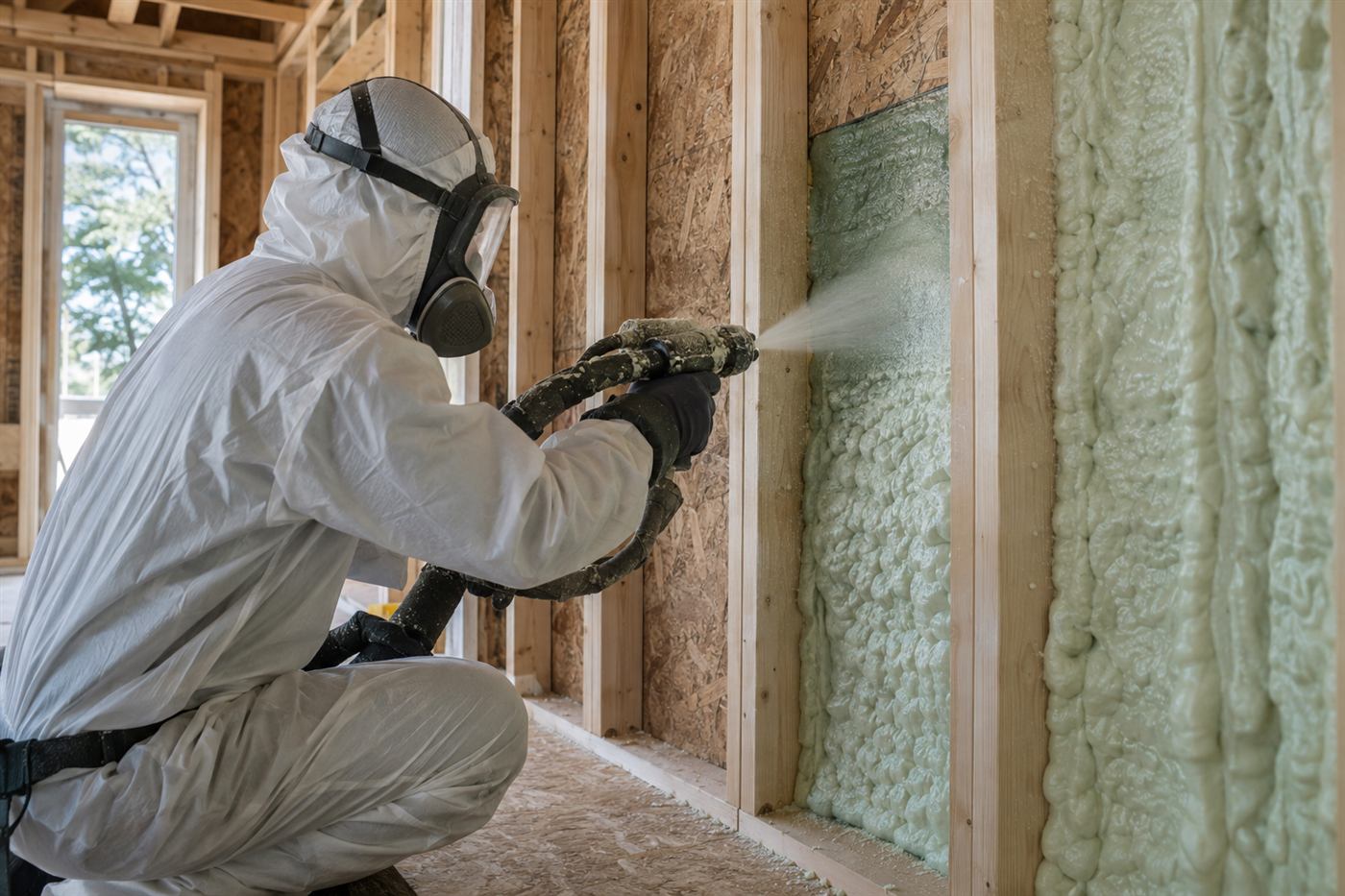
What an insulation contractor handles safely is the frame around the door: sealing gaps between the door jamb and the wall, adding or replacing weatherstripping, and insulating the wall and header surfaces next to the opening. If a new insulated door is the right answer, that is a purchase to plan with a door professional. We can tell you what the surrounding wall and ceiling need so everything works together.
Age-restricted villages and the buildings inside them
Boynton Beach has a number of age-restricted communities, with villas and single-story homes arranged around shared amenities. Many have attached garages that open directly into the kitchen, a laundry room or a hallway. Because owners in these communities are often on fixed incomes and spend more time at home, comfort and cooling bills matter, and so does the safety of the garage-to-house door and the air that crosses it.
In these villages, the association usually sets rules on exterior appearance. The garage door color, style and trim are commonly regulated, and a replacement door or a visible exterior alteration needs written approval. Interior work is less restricted, but notice or a contractor registration may still be required. Check with the management office before scheduling, and keep their answer in writing.
Many villa garages share a wall with the neighboring unit or sit beneath a common roof. That means you may not own the structure above the garage, and what happens in the attic is governed by association rules. A technician can often work from the garage side, treating the wall, the door frame and the accessible part of the ceiling, while leaving shared structure alone. Our page on insulation for condos and shared buildings goes through the questions to ask.
1980s block homes and what they were built with
A large share of Boynton Beach single-family homes were built in the 1980s with concrete block walls and a stucco finish. They are sturdy, but block is a poor insulator on its own, and the garage walls in these homes were often left as bare block or with a thin foam layer. In summer, the sun heats the exterior, the block stores that heat and releases it slowly into the garage and the rooms behind the shared wall.
Adding insulation to a block garage wall is not as simple as filling a cavity, because there usually is none. Typical approaches include furring out the wall inside the garage and adding a rigid or sprayed layer, or treating the shared surface with a product suited to masonry. Each approach changes the room slightly, so you should consider what is stored along the wall and how much space you can spare.
Block also holds moisture. Where a wall sweats or shows staining, the cause may be water getting in from outside, a leak in the roof edge or high humidity in the garage. Applying insulation over a damp wall traps the moisture and can create a mold problem behind the finish. A technician checks the surface and, if necessary, recommends repairs before anything is added. Our guide on insulation for concrete block homes explains the thinking.
Older blown-in material that has settled
Many of the attics above Boynton Beach garages were insulated with blown-in material when the homes were built or refreshed once or twice since. That kind of insulation settles over time, and it can also be moved by pests, disturbed by contractors working in the attic and compressed by stored items. A layer that once covered the joists may now sit well below them, with bare spots near the garage wall where it was always hard to reach.
Settled material means less resistance to heat, and the garage ceiling or the shared wall may be where it shows first. If the attic above the garage is thin, the garage becomes hotter and passes more heat to the house. A technician looks at the depth, the coverage and the condition. If the material is dry and clean, adding more on top is often sensible. If it is damp, stained, contaminated by rodents or compacted into a mat, it may need removal first.
You can read more about how that works on our page on attic insulation in Boynton Beach and on our overview of insulation removal and replacement. The key point is that the garage and the attic above it are one system. Fixing one without checking the other can leave a weak link.
Signs that your garage boundary is leaking
You can notice a lot without leaving the house. The following signs often point to trouble at the garage boundary.
- A floor or wall in an adjoining room that feels warm by late afternoon.
- A smell of exhaust, paint or stored chemicals inside the house, especially near the garage door.
- Light visible around the edges of the closed garage door, or a bottom seal that is flat or torn.
- Insects or small lizards that appear in the kitchen or laundry near the garage entry.
- A room next to the garage that is slow to cool and always seems humid.
- Stains or damp spots at the top of the garage wall, which can mean roof edge moisture.
- A visibly thin or uneven layer of attic insulation above the garage when seen through the access.
Safety points around fumes, panels and equipment
Garages hold things that can hurt people if air moves the wrong way. Car exhaust contains carbon monoxide, and stored fuel, paint and cleaners release vapors. Sealing the wall and door between the garage and the house is a safety measure as well as a comfort one, and it should never be skipped. If you ever smell exhaust inside the home or feel unwell near the garage, ventilate, get everyone outside and call 911 if symptoms are serious.
A garage often contains the electrical panel, a water heater and sometimes an air handler or a furnace. Insulation must respect the clearance rules around those items and must never cover a flue or block a vent. Spray products and loose-fill must be kept away from heat-producing equipment as the manufacturer and the building rules require. A technician checks these details and explains them.
Owners should not try to move or modify gas or electrical equipment to make room for insulation. If something is in the way, we flag it and recommend the right trade. For the same reason, we advise against working in a hot attic without proper equipment. Summer attic temperatures are dangerous, and our seasonal page on summer heat and attic temperatures explains why.
Permits and what a contractor should tell you
Most insulation and sealing work does not need a large permit, but some projects do, particularly where fire-rated surfaces, electrical or structural elements are touched. The local permit office decides what applies, and your association may add its own requirements. A reputable contractor tells you in plain terms what is needed and who is applying for it.
Our guide on permits for insulation work gives an overview, and our list of questions to ask an insulation contractor helps you compare proposals. If a contractor avoids questions about permits, materials or what is behind a wall, that is worth noting before you commit.
What happens on the call and at the visit
You start with a phone call. We ask about the type of home, the age of the garage, what you notice around the door, which rooms are affected and whether the community is involved. Quotes are given only by phone. If the situation is simple, such as a seal or a small gap, we may quote after a few questions. For complicated jobs, an on-site visit is needed, and there is a service call charge explained on the phone before anyone is dispatched.
At the visit, the technician examines the door seals, the walls, the ceiling and the attic above, checks for moisture and notes what is in the cavities. They explain what they found and what the options are, and the quote is confirmed by phone. We do not promise arrival windows, and we will tell you what we can about scheduling when you call.
To prepare, clear a path along the walls, have the management contact ready if you live in a community, and note when the garage feels hottest. If you have photos of gaps around the door, share them.
Call when you are ready to look at your garage boundary
If your garage door lets in more than it should, or the rooms beside the garage never quite cool, a careful look around the door, the wall and the attic above will show where the problem is. Gather a few photos, write down what you notice and check your community rules. Then call. We will talk through what you describe, tell you what is likely to help and explain the service call charge before anyone is dispatched. Call us when you are ready.
Questions people ask
Where should I start with a hot garage in Boynton Beach?
Start with the door seals and the gaps around the frame, because they are the easiest leaks to find and fix. Then look at the wall shared with the house and the attic above. Many garages gain most of their heat through a worn seal, a thin ceiling or settled attic material, and a technician can show which applies.
Can I add insulation panels to my garage door myself?
We advise against it. Added panels change the door weight, and the springs and opener are set for the original weight. Garage door springs hold stored energy and should only be worked on by a qualified door technician. Sealing the frame and weatherstripping is a safer first step, and a door professional can advise on replacement.
My 1980s block garage wall feels hot. What can be done?
Block walls usually have no cavity, so options include a furred-out layer with rigid or sprayed insulation on the garage side. Before adding anything, a technician checks for moisture or leaks, because insulating a damp wall can trap water. The choice also depends on how much floor space you can give up along the wall.
Does my age-restricted community need to approve garage work?
Often only for exterior changes such as doors, vents or trim, but rules vary and some require notice or contractor registration for any work. Ask the management office for the rules in writing before scheduling. Your contractor should also tell you if any part of the job needs a municipal permit.
Is old blown-in attic insulation a problem for my garage?
It can be. Blown-in material settles, thins and gets disturbed over the years, and the area above the garage is often the thinnest. A technician checks depth, condition and coverage. If it is dry and clean, adding more may help. If it is damp, soiled or matted, removal may come first.
How do quotes and the service call charge work?
Quotes are given only by phone. Simple jobs may be quoted after a few questions. Complicated jobs need an on-site visit, and there is a service call charge that is explained on the phone before anyone is dispatched. We do not promise arrival windows, but we will explain scheduling when you call.
Describe the situation by phone and we will tell you what the job involves. Quotes are given by phone. Jobs that cannot be quoted without seeing them need a technician on site, and the service call charge is explained on the phone before anyone is dispatched.
(561) 854-1888Related pages
Weatherstripping and seals around the door opening
The edges of a garage door are often where the most obvious gaps appear. Old bottom seals harden and crack, side stops pull away from the jambs, and the top seal may be missing entirely. A technician examines each edge with the door closed, looking for daylight, feeling for air movement on a windy day and checking where the door meets a rough concrete floor. Small repairs at these edges can reduce drafts, dust and pests, and they take the crew little time compared with larger wall or ceiling work.
Replacing seals is a straightforward process when done carefully. The old seal is removed, the track area is cleaned, and the new seal is fitted to match the door profile, since different doors use different channels. The floor may need leveling or a threshold addition if the slab is uneven. The crew checks that the door still opens and closes freely and that sensors and springs are not disturbed. Anything involving torsion springs or cables is dangerous and should be handled only by trained garage door technicians, not by owners or general helpers.
Owners can prepare by observing the door during different conditions: on a rainy day, in heavy wind and at night with a flashlight. Report any places where light shows or water enters. Remove items from near the door so the crew can work along the entire edge. If the door is old or damaged, a repair or replacement by a door specialist may be a better first step than adding seals. The scope and any quote are explained before work begins, and the crew will tell you plainly where insulation work ends and door work begins.
Handling a garage that doubles as a laundry room or workshop
Many Boynton Beach garages carry a second job. A washer and dryer, a workbench, a freezer or a hobby area changes the plan, because heat, moisture and dust come from the room's own use. A dryer vent pushes warm humid air into the space if it is poorly routed, and a freezer adds steady heat. The technician asks how the garage is used and how often, then checks vents, outlets and ducts. If a dryer vent ends inside the garage or in the ceiling cavity, that should be corrected before anything is covered.
Work around equipment requires planning. Appliances and benches may need to be moved away from walls, or protected with covers while the crew works. Panels, water heaters and gas appliances need clear working space, and materials should be kept away from flues and hot surfaces. Dust from a workshop can settle on new surfaces, so the crew may suggest sealing or finishing that is easy to clean. Cabinets fixed to walls are typically worked around, not removed, unless the owner prefers otherwise and it is done carefully.
Before the visit, list what is in the garage and what has to stay powered. Freezers can usually stay in place if the crew is told in advance. Keep chemicals, paint and fuel containers sealed and stored away from the work. Tell the crew about any leaks, drains or standing water near the laundry connections. In a humid city like Boynton Beach, moisture sources matter as much as heat. The scope and any quote are explained before work begins, and the crew will not cover anything that needs a repair first.