Reading an older garage
A garage in a Plantation ranch home built in the 1960s or 1970s has seen a lot. It has lived through decades of summers, several hurricane seasons and probably at least one roof repair. Its walls and ceiling carry a record of that history, and a careful look often explains why the house behind it is not as comfortable as it could be.
Start with the ceiling. Look for stains, which suggest past leaks, for sagging, which suggests wet or heavy insulation above, and for patches or different paint, which suggest repairs. Look at the walls for cracks, damp spots and signs of earlier work on pipes or wiring. Look at the door and its seals for wear.
None of these signs is a reason to panic. They are information. A technician will use them to decide where to look more closely, what to repair before insulating and what can be left alone. This page explains what the common findings mean and how they affect the plan.
What Plantation's mature neighborhoods look like
Plantation includes many established neighborhoods of single-story ranch homes on generous lots, with big shade trees, canals in places and a layout built around the car. Most of these houses have attached garages, often two-car, set into the front of the house or at the side, with the attic running above both house and garage.
The homes are mostly concrete block, with roofs that have been replaced at least once. Many started with minimal insulation by today's standards, and some had material added over the decades by different owners using whatever was common at the time. The result is often a patchwork: thick in one area, thin in another and missing in places where work was done.
That patchwork is why a visit pays off. Rather than assuming a standard layer across the attic and garage ceiling, a technician measures what is there in several places and notes where it is thin, compressed or absent. The garage ceiling, which often connects directly to the main attic, is part of that survey.
Old attic insulation above the garage
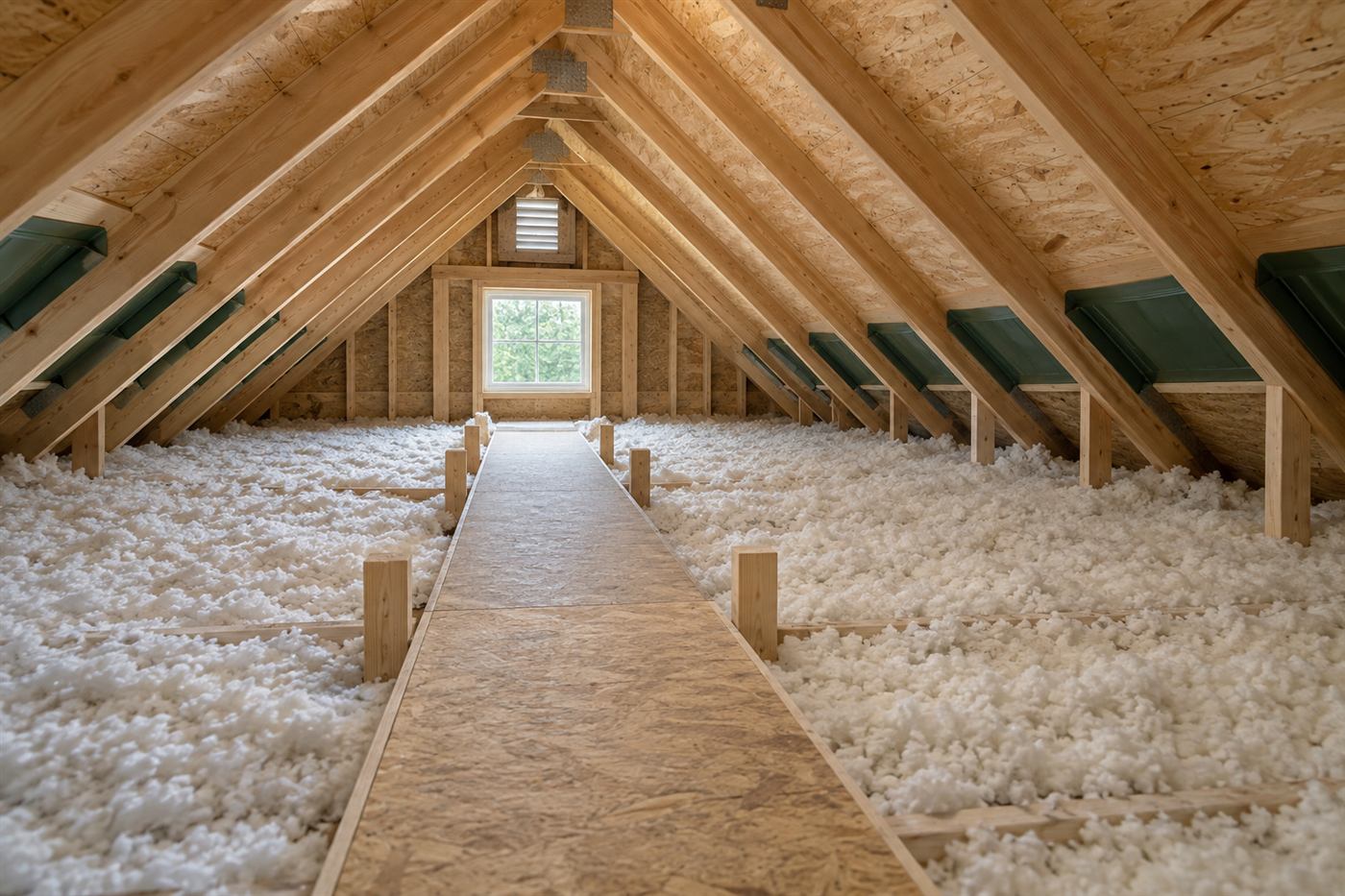
The ceiling of a ranch garage usually has the attic directly above it, so the insulation on top of that ceiling is the main barrier between the hot attic and the garage below. In an older house, that insulation may be thin, settled, uneven or contaminated by past leaks and pests.
Old material can lose much of its effectiveness. Loose-fill insulation compresses over time, leaving a thinner layer than was installed. Batts can slip, tear or get pushed aside by other trades. Animals such as rodents can tunnel through insulation, leaving gaps and droppings. Moisture from old roof leaks can leave material matted and discolored.
A technician will check depth, coverage and condition. If the material is sound and merely thin, adding more on top is often the right fix. If it is wet, contaminated or heavily disturbed, removal and replacement may be a better path. Our page on insulation removal and replacement explains when that applies.
- Look for stains or sagging on the garage ceiling
- Note any past roof repairs or leaks you know about
- Mention rodent activity or droppings in the attic or garage
- Take photos of any attic opening above or near the garage
Roof leaks after storms
Plantation sits in the middle of South Florida's hurricane zone, and older roofs have taken plenty of wind and rain. A leak that started during a storm may have been patched, but the insulation under it often tells the rest of the story. Wet insulation loses its insulating ability, grows heavy, sags and can hold water against drywall and framing.
If your garage ceiling shows a stain, a bulge or a patch, do not assume the problem is over. Ask whether the roof was repaired and whether the insulation above the stain was ever checked. Water can travel along framing before it shows up on a ceiling, and the stain may be some distance from the leak.
Insulation should never go over a wet or leaking area. The roof must be repaired first, the area dried and the damaged material removed. Only then should new insulation be added. Our page on wet insulation after a hurricane explains how to handle that situation.
Tall trees: shade, debris and moisture
Plantation's mature trees are an asset. They shade roofs and walls, which reduces the heat load on the building. They also shed leaves and branches onto roofs, clog gutters and keep surfaces damp longer after rain. A roof under heavy tree cover can stay wet and grow algae or moss, and that moisture can eventually find its way into the building.
Tree roots and branches can also affect the structure itself. Branches rubbing on a roof wear through the covering. Roots disturb slabs and walls. If a garage has been through tree trouble, check for gaps in the roof, cracks in walls and stains on ceilings.
Trees also bring pests. Rodents and squirrels use branches to reach roofs and attics, and insulation near the garage can become a nest. If you see signs of animals, such as droppings, chewed wiring or tunnels in the material, mention it. Our page on rodent damage to insulation describes what a technician looks for.
The shared wall and the door to the house
In a 1960s or 1970s ranch, the wall between the garage and the house is typically concrete block or framed wall, finished on the house side with drywall or plaster. The garage side may be bare block, painted block or drywall. Heat from the garage crosses this wall and enters the rooms behind it.
Where the wall is framed, insulation can go in the cavities, with the fire-rated drywall kept intact. Where it is block, options include furring with insulation, rigid foam with a protected finish and sealing. Which one fits depends on the wall, the use of the space and what rules apply.
The door from the garage to the house deserves attention. Older doors can be hollow, warped or loose, with wide gaps at the bottom. A tight, solid door with weatherstripping and a threshold keeps heat, dust and exhaust out of the house. It is a small improvement that makes a visible difference.
- Find out whether the shared wall is block or framed.
- Check the entry door for gaps at the bottom and sides.
- Look for gaps around pipes, wires and ducts that cross the wall.
- Describe the findings on the call and let a technician decide what to open.
The door and its condition
Older garage doors are often showing their age. Panels may be dented, paint peeling, rollers worn and seals hard or missing. A tired door lets in hot, humid air and insects, and an old door may not meet current wind requirements for the opening.
If the door is sound, an insulation kit and new seals can be worthwhile. If it is damaged or hard to operate, replacement is usually more sensible. A replacement must meet wind requirements, and the city permit office can tell you what applies. Insulating a failing door only dresses up the problem.
Do not adjust springs, cables or tracks yourself. These parts store a large amount of energy and cause serious injuries. If the door has become heavy, noisy or crooked, stop using it and call a trained garage door technician.
Wiring, ducts and what is hiding in the ceiling
Over the decades, ceilings accumulate wiring, ducts and pipes added by different people at different times. A garage ceiling in an older ranch may carry old wiring, newer air conditioning ducts, a vent for a bathroom fan and sometimes an exhaust duct for a dryer. Insulation has to be installed around these without covering anything that must stay clear.
Older wiring in particular needs care. Some insulation should not be packed tightly over certain types of old wiring, and recessed light fixtures need clearances. A technician will identify these before work begins, and may recommend an electrician look at anything questionable.
Ducts in an older garage ceiling are often uninsulated or poorly sealed. Wrapping and sealing them reduces heat gain and improves how well the air conditioning reaches the rooms. If you have a room at the end of a long duct that never cools, mention it. Our page on uneven room temperatures explains why.
Bath fans and dryer vents deserve a note. A bathroom fan that ends in the attic or the garage ceiling instead of outside dumps warm, wet air where it can condense. A dryer vent that is crushed, disconnected or buried in insulation is a safety hazard as well as a moisture source. Both should vent outdoors through a clear, sealed duct, and a technician will point out anything that looks wrong so that it can be corrected before insulation goes in.
Comfort, safety and the entry door
Beyond temperature, a leaky garage affects air quality in the house. Exhaust from a car that has just been started, fumes from paint and fuel cans and dust from stored boxes can all drift through gaps into the rooms beside the garage. In a house with a bedroom or a family room against the garage wall, that can be noticeable.
Safety comes first. Vehicle exhaust contains carbon monoxide, which is dangerous in enclosed spaces. Never run an engine in a closed garage, and keep working carbon monoxide alarms in the house. Sealing the shared wall and the entry door reduces the chance of fumes reaching living space, but it never replaces alarms or sensible habits.
The entry door itself should close fully on its own, seal around the edges and sit on a proper threshold. Many older ranch homes have a door that has swollen, warped or lost its seal. Replacing it, or adding weatherstripping, is a modest change that improves comfort and keeps garage air out of the house.
Planning the work in the right order
With an older garage, order matters even more than usual. First, fix roof leaks and any damage. Second, handle pests and remove contaminated or wet material. Third, seal air leaks. Fourth, add or replace insulation where it is thin or missing. Fifth, address ducts and the door.
Skipping the early steps leads to disappointing results. Insulation over a leak gets wet again. Insulation over a rodent nest is soon displaced. Insulation without air sealing underperforms. An honest technician will tell you what has to be done first, even when it is not part of insulation work.
Your garage may need only some of these steps. Many Plantation garages need little more than extra material in the ceiling and a better door seal. Others need a bigger plan. A visit sorts out which one you have.
What to prepare before you call
Before calling, note which rooms share a wall or ceiling with the garage, what the walls are made of, any stains or sagging on the ceiling and what you know about the roof's history. Photograph the ceiling, walls, door and any visible attic opening. Mention any signs of animals or moisture.
Quotes are given by phone. Simple jobs can often be discussed from a description and photos. Complicated ones, such as those involving old wet insulation, pests or wiring questions, need an on-site visit first. There is a service call charge for a visit, and it is explained on the phone before anyone is dispatched.
At the visit, a technician will look at the ceiling, the attic above, the walls, the door and any ducts, and will explain what they find. For more background, see our garage insulation overview, our page on attic insulation and the page for Plantation. When you are ready, call and tell us what your garage looks like.
Questions people ask
Is my old attic insulation above the garage still working?
Maybe, but older material often settles, tears or gets disturbed, and may be wet or contaminated from past leaks and pests. A technician measures depth and coverage in several places and checks condition. If it is sound but thin, adding more may be enough. If it is damaged, removal and replacement may be better.
Can I insulate over a ceiling stain from an old leak?
Not until the roof has been repaired and the area checked. Insulation over wet or damaged material loses effectiveness and can hold moisture against framing and drywall. Have the leak found, the area dried and any damaged material removed first. A technician can tell you whether the stain is old or still active.
Do shade trees change my insulation needs?
Shade reduces the heat load on a roof, which helps, but trees also drop debris, keep surfaces damp and bring pests. Look for roof wear, stains and animal activity. The insulation plan should account for any damage or contamination found. Mention tree trouble and signs of animals when you call.
Should I replace my old garage door or insulate it?
If the door is sound and moves smoothly, new seals and an insulation kit may be enough. If it is dented, rusted, warped or hard to operate, replacement usually makes more sense, and it must meet current wind requirements. Do not adjust springs or cables yourself. A trained door technician should handle any balance issues.
What if there is old wiring in the garage ceiling?
Tell the technician before work starts. Some old wiring and recessed fixtures need clearances or should not be buried in insulation. A technician will identify what is there and may recommend an electrician look at anything questionable. Do not touch or move wiring yourself.
How do I get a quote in Plantation?
Quotes are given by phone. Simple jobs can often be discussed from a description and photos, and complicated ones get an on-site visit first. There is a service call charge for a visit, and it is explained on the phone before anyone is dispatched. Have your roof history, ceiling condition and any moisture or pest signs ready.
Describe the situation by phone and we will tell you what the job involves. Quotes are given by phone. Jobs that cannot be quoted without seeing them need a technician on site, and the service call charge is explained on the phone before anyone is dispatched.
(561) 854-1888Related pages
Matching the fix to the garage you actually have
Older Plantation garages vary more than people expect. Some were built as open carports and enclosed later, some have a flat ceiling with joists exposed above, and some have a finished drywall ceiling that has been patched several times. A technician treats each differently. An enclosed carport may have thin or missing sheathing and gaps where the old roofline meets new walls. A finished ceiling usually calls for a method that does not tear out more drywall than necessary. Describing which type you have on the phone helps narrow the plan before anyone arrives.
The crew also checks how the garage was changed over the decades. Added outlets, a ceiling fan, a window air unit, or a water heater closet can each interrupt a wall cavity or a ceiling run. Wiring that was added by a previous owner is sometimes surface mounted or stapled in odd places, and the technician notes it so that nothing is covered in a way that makes it hard to reach later. Anything that looks unsafe is pointed out so you can have an electrician look before insulation work goes forward.
Tradeoffs are part of the conversation. A full tear-out gives the cleanest result but costs more disruption, while working from above or through small openings leaves more of the existing finish in place. Neither is automatically better, and the right choice depends on the condition of the ceiling and what is above it. Your questions are welcome at every step, and the scope is explained in plain language before any work starts, including what will be patched and what will be left for you or another trade.