How planned-community construction shapes the problem
Coconut Creek grew through planned neighborhoods, with consistent architecture, shared amenities and a lot of attached or closely spaced homes. Houses from the 1990s are common: two-story stucco construction, trussed roofs and attic spaces that often run long and continuous. Because builders used similar plans across a whole community, a problem found in one house often turns out to be a pattern in many.
Typical issues in this housing stock include roof leaks at flashing and penetrations as the roofs approach the end of their service life, condensation on attic ductwork, and pest entry at soffits and gable vents. Each of those can damage insulation. Wet material loses effectiveness, pest-fouled material stinks and compacts, and over time, insulation around problem spots becomes thin or missing altogether.
Two-story homes add a wrinkle. The upstairs ceiling sits directly below the roof attic, and the downstairs ceiling sits below the upstairs floor. Different spaces may need different treatment, and owners sometimes confuse an attic problem with a floor cavity problem. A technician has to determine which cavity is involved before suggesting removal.
Finally, the planned-community setting means the roof, exterior walls and sometimes even the attic partitions interact with neighbors' homes. Understanding where your property ends and the next begins is a key first step in any removal plan.
Shared roof lines and attic partitions
In townhome and attached villa layouts, one continuous roof may cover several units. Beneath it, the attic is divided by partitions, often fire-rated walls or draft stops, meant to slow the spread of fire and smoke from unit to unit. Those partitions are part of the building's safety design. They should not be breached, and insulation work should respect them.
A roof leak above one unit can travel along the underside of the roof and affect the unit next door. If the water source is a shared roof element, the association usually handles the repair, and each owner is responsible for the interior consequences within their unit, depending on the governing documents. It is important to clarify who is responsible for what before work begins.
When removal is planned, a technician must confirm the boundaries of your attic space and see whether partitions are intact. If a partition has a gap, such as a wiring hole or a missing section, it should be reported to the association rather than quietly sealed by an insulation crew without authorization.
Noise and dust also travel. Neighbors may hear the work, and fine dust that escapes containment can drift. A courteous heads-up to adjacent units and, where required, to the association, helps keep the project smooth. Careful containment and HEPA filtration reduce what escapes.
- Know where your attic space begins and ends.
- Do not breach fire-rated partitions.
- Report gaps in shared partitions to the association.
- Tell adjacent units when noisy work is planned.
HOA exterior rules and what they do and do not cover
Homeowners associations in Coconut Creek often have detailed rules about exterior appearance: paint colors, roof materials, equipment placement, even vehicle and dumpster rules. Interior attic work typically does not change the exterior, so it often does not require architectural approval. But it may trigger other rules.
Examples include limits on contractor working hours, requirements for contractor insurance, restrictions on large trucks or dumpsters in driveways and streets, and rules about where debris can be staged. A truck-mounted vacuum used for clearing blown-in material is large, and it may need an approved parking spot.
If the project involves any exterior element, such as adding or changing a roof vent, installing a gable vent or modifying a soffit, then architectural review is more likely. Ask the management office ahead of time. A short written request describing what will be done, where, and with what materials usually speeds things up.
Our guide to permits for insulation work explains how municipal review and association approval differ, since owners often assume one covers the other. It does not. A city permit does not substitute for community approval, and an association approval does not replace any required municipal permit.
What the technician checks in a two-story stucco home
Two-story homes require a slightly broader look than single-story ones. The technician will want to understand both the attic above and, where relevant, the cavities between floors. The visit typically includes the following steps.
- Identify which cavity is affected: roof attic, floor cavity or wall.
- Find the source of moisture or pest entry, including roof penetrations, flashing, soffits, gable vents and plumbing.
- Inspect the existing insulation for dampness, staining, compaction and contamination.
- Check ceiling drywall below for stains, sagging or mold-like growth.
- Look at ductwork and the air handler for condensation or damage.
- Review wiring and fixtures for clearance and condition.
- Confirm partition boundaries in attached layouts.
- Plan access, protection of finished spaces and debris handling.
Ductwork condensation and its effect on insulation
In humid South Florida attics, cold ducts attract condensation. When duct wrap is torn, loose or old, moisture forms on the metal or on the flexible duct skin and drips onto insulation below. Over time that creates wet spots, stains on the ceiling and a musty smell. Many Coconut Creek homes with attic air handlers have experienced this at some point.
If the real cause of damaged insulation is a sweating duct, removing the wet material will not solve the problem on its own. The duct needs to be inspected, and the wrap or connections repaired or replaced. Ask the technician to look at the ducts and discuss what they find. Our page on sweating ductwork in the attic explains the signs and typical fixes.
A clogged condensate drain line can also cause water to overflow into the attic. A technician may notice staining near the air handler and a pan that has been wet. This is a job for an air conditioning contractor, and insulation work should follow after the leak source is addressed.
Insulation near ducts should not be piled so that it hides leaks. Leaving the area visible for periodic checks is a good habit, and a technician can show you where to look from the attic hatch without needing to go inside.
Safe removal, containment and disposal
Removal in a finished two-story home takes planning. The attic hatch is often in a hallway or a closet, and the path from the front door to the hatch crosses living space. Crews protect the route with floor covering and corner guards and move material out in sealed bags or through a vacuum hose, so little dust enters the home.
Protective equipment is standard: respirators, eye protection, gloves and coveralls. Homeowners should stay out of the work area. If anyone in the home has asthma, allergies or another breathing condition, plan to be elsewhere during the work. See our guide to insulation safety and dust for more.
Disposal is part of the job. Material should leave the property in closed containers or bags, not be placed in a community dumpster without permission. Some associations restrict dumpster use by residents and contractors, so confirm the plan in advance.
If during removal the crew finds something unexpected, such as damaged wiring, a roof leak that is still active, a nest of animals or material that looks unusual, they should stop, show you what they found and discuss next steps. Good communication matters more than finishing quickly.
Replacing material and restoring performance
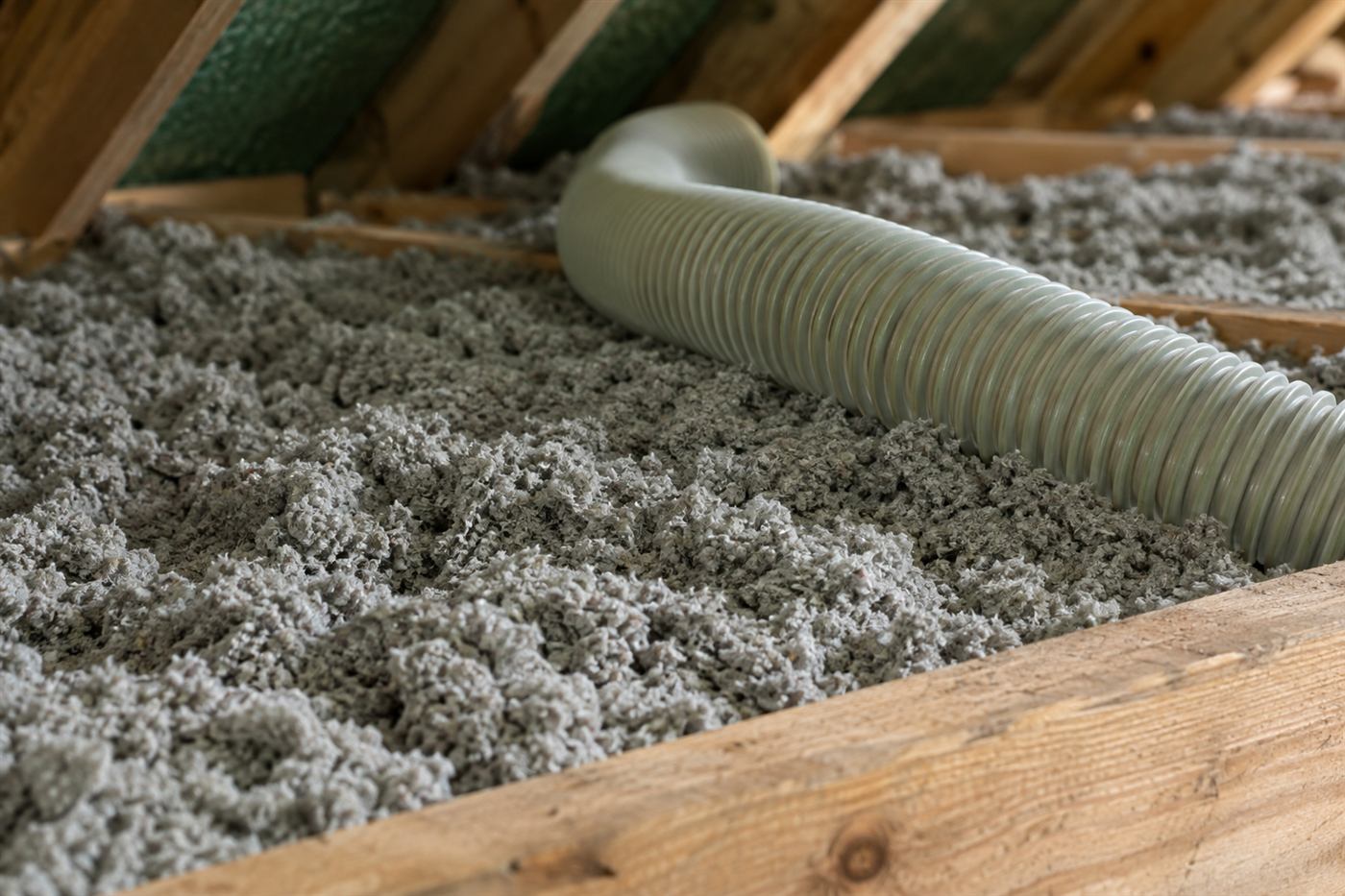
After removal and repair, a fresh layer of insulation brings the attic back to work. In a 1990s home with an open trussed attic, blown-in material is a common and sensible choice. It can be applied evenly across the floor and around bracing, and it can be installed to a consistent depth. Batts can be used in some cavities, and spray foam is another option in certain designs.
Keep ventilation in mind. Baffles at the eaves preserve the airflow from soffit vents, and clearances around recessed lights and flues should be respected. The attic hatch should be sealed and insulated, since an untreated hatch can undo part of the benefit.
It is also a moment to think about the rest of the house. If removal showed that sealing is needed at the ceiling plane, do it now. If ducts need repair, schedule it. If the roof is nearing the end of its life, consider timing the work so it does not have to be redone. Our guide on insulation after a roof replacement explains why sequencing helps.
When the work is done, ask for photographs of the finished attic and of any problems discovered. Keep them with your home records. They are useful for future work, for an insurance claim if one is ever needed, and for a buyer who asks about the attic someday.
Scenarios from Coconut Creek neighborhoods
A two-story home has a brown ring on an upstairs bedroom ceiling. The technician finds damp insulation under a roof vent where flashing has failed. The association is informed, since the roof is its responsibility in that community, and the roof is repaired. After drying, the affected insulation is removed and replaced.
A townhome owner hears scratching in the attic at night. Inspection shows droppings and nesting near one end where the soffit is damaged. A pest specialist handles the animals, the soffit is repaired, and the contaminated insulation is removed and replaced. The neighboring unit is told about the finding in case the same entry exists next door.
A homeowner whose air handler is in the attic sees stains on the hallway ceiling below. The cause is a clogged drain line overflowing the pan. An air conditioning contractor clears the line. The crew then removes the soaked insulation and repairs the area. They also advise adding a float switch to protect against a repeat.
A buyer purchasing a home asks for a second look at the attic. The visit finds some thin areas and one stained patch from an old repair. The plan is to replace the stained section and top up the rest.
Planning around family life and the calendar
Removal and replacement is easier on a household when it is scheduled with some thought. In a two-story home, the attic hatch is often upstairs, which means crews pass through bedrooms or hallways. Think about which rooms must be cleared, whether children need to be away during the work, and whether anyone works from home and needs quiet.
Hurricane season matters in this part of Florida. A clean-out that leaves the attic open for a long time right before a storm is a poor plan, so ask how long the attic will be without insulation and whether the work can be finished in a single visit. Conversely, after a storm, many households want repairs at once, and schedules fill up. Calling early in an event, with clear photographs, helps everyone sort priorities.
If your community has restrictions on working hours, share them when you call so the schedule fits. Weekdays are usually easier for associations, and weekend work may be limited or prohibited altogether. Ask the crew how they handle noise and when they expect to start and finish each day, and do not assume that a promised window is guaranteed, since attic conditions can change the plan.
Finally, think about what you want to know afterward. Ask for photographs of the cleared attic, of any problems found and of the finished installation. Keep them with your records alongside any association approvals. In a community of similar homes, those notes can also help neighbors facing the same problem.
Getting started with a phone call
Call and describe what you have seen: stains, smells, noises or recent storm or plumbing events. Mention whether your home is part of an association, whether the roof is shared, and whether you have had repairs. Photographs help.
Quotes are given only by phone. Simple situations may be quoted from your description. Anything involving hidden damage, partitions or unknown conditions needs an on-site visit, and there is a service call charge that is explained on the phone before anyone is dispatched. You can also read about the general process on our removal and replacement page.
If water is actively entering, take safe steps to limit it, and if there is any electrical risk, shut off power to that circuit at the panel and stay clear. Call 911 for immediate danger. When you are ready to talk through your Coconut Creek home, call and the team will help you decide what comes out, what stays and in what order.
Questions people ask
Does my HOA need to approve interior attic work?
Often not for appearance, since interior work does not change the exterior. But associations commonly have rules on contractor insurance, working hours, truck parking and debris. Contact the management office early, and if any exterior vent or soffit work is involved, ask about architectural review.
What if the roof leak is the association's responsibility?
The association typically handles the roof repair, while you handle the interior consequences within your unit, depending on your governing documents. Document the damage with photographs, notify the association in writing and wait for the source to be fixed before replacing insulation.
Can sweating ducts really ruin insulation?
Yes. Condensation on cold ducts drips onto insulation and framing, creating damp areas and stains. If that is the cause, the duct wrap or connections need attention along with any insulation replacement, or the problem will return.
Is it okay to clear old insulation myself?
It is not recommended. Attics are hot and hazardous, material can irritate lungs and skin, and wiring and framing create fall and shock risks. Trained crews use protective gear and containment, and they know how to dispose of material properly.
What if I share an attic with a neighbor?
Work should stay within your own unit's space, and fire-rated partitions must not be breached. If the technician sees gaps in a partition, they should report them so the association can address them. Tell neighbors when noisy work is planned.
How do I get a quote?
Quotes are given only by phone. Simple jobs may be quoted from your description, and complicated work needs an on-site visit with a service call charge explained before dispatch. Call and describe what you are seeing.
Describe the situation by phone and we will tell you what the job involves. Quotes are given by phone. Jobs that cannot be quoted without seeing them need a technician on site, and the service call charge is explained on the phone before anyone is dispatched.
(561) 854-1888Related pages
Handling a job in a community with tight shared spaces
Many Coconut Creek neighborhoods have homes close together, narrow driveways and shared parking. A removal job needs a truck and hose near the house, and a technician looks at where that can go without blocking neighbors. Calling ahead to the community office, or asking if a guest space can be used, avoids last-minute problems. Plans for debris bags and rolling containers are made so that nothing blocks sidewalks. A quick note to the community office, with the day and the vehicle description, usually settles any parking question before it becomes one.
Inside the home, shared walls and attic partitions can make removal more delicate. The crew may need to work up to a dividing wall without disturbing the other unit, and they use hand tools in places where a vacuum nozzle might pull material from the neighbor's side. If the partition is damaged, they report it and may suggest informing the association or the neighbor, since the repair responsibility may not be yours alone. The crew photographs the partition before and after, so a record exists of its condition if a question ever comes up between neighbors.
Courtesy matters. Let nearby residents know when the work will happen, keep gates closed, and make sure pets are not wandering into the work area. The crew keeps the work area tidy and sweeps the driveway when they finish. If a neighbor has a concern, calling us gives the crew a chance to address it. The scope and any quote are explained before work begins, and you can ask about how the community's rules will be handled. Courtesy of this kind costs very little and tends to be remembered when the next resident in your community plans work of their own.