How coastal moisture reaches insulation
Insulation is rarely damaged by one dramatic event. More often it is a slow accumulation. In a coastal city like Deerfield Beach, warm, salty, humid air is constantly pressing on the building envelope. Each small gap around a window, vent, pipe or roof penetration lets some of that air in. Over years, it adds up.
Wind-driven rain is the second path. During summer storms and tropical systems, rain does not simply fall, it blows sideways and upward, finding flashing laps, soffit vents and the edges of roof tile that a gentle rain would never reach. Water that gets in this way can soak insulation in a limited area and leave staining that appears long after the storm.
Condensation is the third path. In an air-conditioned building, interior surfaces are cooler than the outside air. Where humid air meets a cold surface inside a wall or ceiling cavity, moisture condenses. That moisture is absorbed by insulation, and fibrous materials in particular can stay damp for a long time because the cavity does not dry quickly.
Salt adds corrosion to the mix. It speeds rust on nails, brackets, duct hardware and air handler cabinets, and it can compromise electrical connections. Rust stains on drywall, discolored fasteners and white crusty deposits are all clues that moisture has been present and active for some time. A technician looks for those signs to judge how long a problem has been going on.
Beachside condos: stacked units, shared walls and rules
Beachside condominiums are a major part of the Deerfield Beach landscape. Many are mid-rise or high-rise buildings with concrete structure, shared walls and floors, and building-wide systems. Insulation in these units is usually found in dropped ceilings, exterior wall furring, soffits over balconies and around plumbing and mechanical chases, rather than in a traditional attic.
That changes both the problem and the process. A damp ceiling in a unit may be caused by a leak from the unit above, a failed balcony waterproofing system, an air conditioning condensate line or a window seal. Identifying the source is a building-level question, and the association may need to be involved before any repair can begin.
Association rules in beachside buildings are typically strict. Contractors may need to register, show insurance, use designated elevators and loading areas, and work only during limited hours. Floor protection and debris removal procedures may be specified. In many buildings, any work that opens a wall or ceiling must be approved ahead of time.
Our guide to insulation for condos explains the structure of these buildings and why accessible cavities are limited. In many cases, removal is confined to small areas and is done carefully to avoid disturbing neighbors.
- Find the source of moisture before removing anything.
- Notify the association and ask about approvals, insurance and working hours.
- Expect cavities to be small and access limited.
- Photograph conditions before work begins.
Older block homes near the Hillsboro corridor
Away from the beach buildings, many Deerfield Beach neighborhoods have older concrete block homes. These houses are sturdy, but they were built in an era with different assumptions about insulation, ventilation and air conditioning. Attics may have thin original material, often fiberglass batts or early loose-fill, and ductwork that has been repaired or replaced piecemeal.
In these homes, coastal conditions show up in the attic. Soffit vents may be corroded or blocked by paint. Metal fasteners are rusted. The underside of the roof deck may show water staining at nail points, a sign of repeated condensation. Insulation near the eaves often looks darker and more compressed than in the middle of the attic, since that is where moisture enters.
Older homes also tend to have had multiple owners and multiple contractors. Wiring may have been added in stages, ducts rerouted and fixtures changed. When removal opens up the attic floor, surprises come with it, and a good crew will document what they find and tell you about it before covering anything back up.
If you live in an older block home and have never seen your attic, a visit may reveal that a gentle top-up is enough, or that parts need removal. A technician will explain which and why. Our page on insulation for concrete block homes explains how these houses differ from wood-frame construction.
What the technician checks before recommending removal
A responsible visit begins with finding the cause. In coastal buildings, the checklist is longer than in drier climates because moisture may have several entry points.
- Identify visible stains and compare them with the cavity above or behind them.
- Trace possible sources: roof, flashing, windows, balcony slabs, plumbing, condensate lines and wall penetrations.
- Examine insulation for dampness, discoloration, compaction, mold-like growth and odor.
- Look for corrosion on fasteners, ductwork hardware and equipment.
- Check ventilation paths at soffits, ridge and gable vents.
- Inspect wiring and electrical boxes for water damage or corrosion.
- Assess the condition of drywall and framing for rot or softening.
- Plan containment, building access and disposal for the specific property.
Wet insulation, mold concerns and what is reasonable to do
Wet insulation that stays wet can support mold growth, and a musty smell is a common sign. That does not mean every damp patch is an emergency, but it does mean the cause should be found and the material dried or removed promptly. Our page on mold smell in the attic explains how to think about it.
It is not the role of an insulation crew to diagnose health effects, and they should not promise that removal will resolve any health complaint. They can identify visible signs of moisture and growth, remove damaged material, and recommend further testing by a qualified specialist if the situation warrants it. If anyone in your household is having breathing problems, talk to a doctor.
Small areas of surface growth on framing may be cleaned, while extensive growth or structural damage is a larger project that may need a specialist. A technician will tell you which they think applies. Do not disturb suspicious material yourself, since doing so can spread spores and dust through the home.
After removal, drying is essential. Fans, dehumidifiers and time may be needed, and moisture readings can show when the area is ready. Reinstalling insulation over damp framing is a common error that leads to repeat problems. A patient approach pays off, even when it feels slower.
Choosing replacement material for a coastal building
Replacement should reflect the moisture conditions. In a coastal environment, material that tolerates humidity and does not hold water is usually preferred, and the assembly should allow cavities to dry rather than trap moisture.
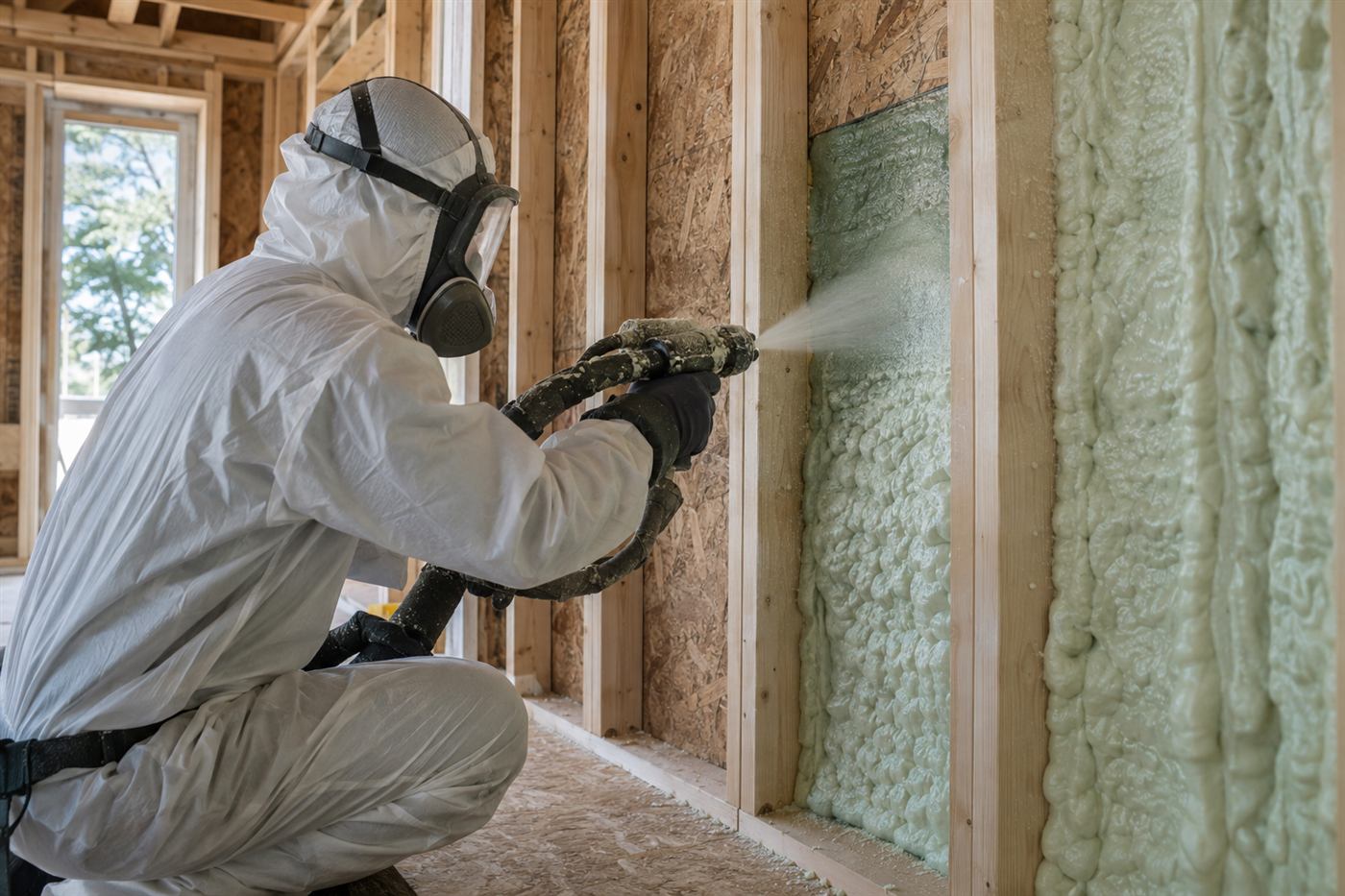
In a block home attic, blown-in fiberglass or cellulose are common options, each with trade-offs described in our guide on fiberglass, cellulose and foam. Closed-cell spray foam can resist moisture and seal air leaks, and it is sometimes used in coastal buildings, though it needs proper installation and is not suitable everywhere. In condo wall cavities, rigid board or sprayed products may be used depending on access and building rules.
Air sealing is as important as insulation here, since keeping humid air out of cavities is half the battle. Gaps around penetrations, top plates and recessed fixtures should be sealed. Our page on air sealing explains typical work.
Ventilation should be preserved. Baffles at the eaves, clear soffit vents and a working ridge or gable vent let a vented attic breathe. If the design is a sealed or conditioned attic, the plan changes, and the installer should explain how.
| Location | Typical concern | Common direction |
|---|---|---|
| Block home attic | Thin or damp material near the eaves | Remove damaged zones, seal, add even depth |
| Condo dropped ceiling | Leak from above or condensation | Find the source with the association, then repair |
| Exterior wall furring | Moisture from window or wall leaks | Repair the envelope first, then replace material |
| Soffit or balcony ceiling | Wind-driven rain | Fix flashing and drainage, then reinsulate |
Protecting a coastal home or unit during the work
Protection is part of the plan. Crews lay floor covering along the route, use plastic containment around the work zone, and keep the work area under negative pressure or filtered when possible. In a condo, they also protect hallways, elevators and common areas according to building rules.
Salt air and humidity mean that open cavities should not be left exposed for long. Good crews plan the work to close up the same day, or to protect the opening overnight with sealed covers. If bad weather is forecast, the schedule may need to shift.
Homeowners can help by moving furniture away from work zones, covering what cannot be moved, and keeping pets and children away. If anyone in the household is sensitive to dust, plan to be elsewhere. Our guide on preparing for an insulation visit has a longer checklist.
After work, ask for a walk-through. Check that the area is clean, that no fixtures were disturbed and that the air conditioner is running normally. If something is off, raise it the same day while the crew's memory is fresh and details are easy to trace.
Typical Deerfield Beach scenarios
A beachside condo owner sees a brown stain on the ceiling near a balcony door. The association investigates and finds failed waterproofing on the balcony above. After the repair, the owner arranges for the damp material in the dropped ceiling to be removed and replaced, with the association's approval.
An older block home near Hillsboro has darkened insulation along the eaves and rust on the roof nails. The technician finds that soffit vents were painted shut. The vents are cleared, damp material is removed, baffles are installed and new insulation is added to even depth.
A homeowner sees staining on a wall near a window after a tropical storm. The cause is wind-driven rain behind the trim. After the window is resealed, the wall cavity is opened, wet insulation is removed, the area dries and the wall is closed with new material.
A couple buying a condo asks about an old musty smell in a closet. The technician finds condensation on an uninsulated chilled-water line and damp material around it. The line is wrapped properly, the damp material replaced and the closet aired out.
Starting the conversation
Call and describe what you have noticed: where the stain or smell is, how long it has been there, any recent storms and whether you live in a condo or a house. Mention whether the association has been told. Photographs help.
Quotes are given only by phone. Simple situations may be quoted from your description. Anything involving hidden cavities, building rules or unknown conditions needs an on-site visit, and there is a service call charge that is explained on the phone before anyone is dispatched. For background on the process, read our removal and replacement overview.
If you see active water, take safe steps to limit it. If there is electrical danger, shut off the circuit if it is safe and stay clear, and call 911 for immediate hazards. When you are ready, call and talk through your Deerfield Beach property, and the team will help you decide what comes out and what to do first.
Questions worth asking any installer
Whoever you call, a few questions separate careful work from rushed work. Ask how the installer will identify the source of the moisture, and what happens if it is not found. Ask how long the cavity will stay open. Ask how debris leaves the building and whether the association has requirements. Ask what material will go back in and why it suits the moisture conditions. Ask whether permit review applies to the scope, since rules differ by municipality and job.
Also ask what they will not do. A reliable installer will say plainly when something falls outside insulation work, such as a roof repair, a plumbing fix or an electrical correction, and will recommend the right trade. They will not promise to cure a health complaint or guarantee that a leak will never return. Our guide to questions to ask an insulation contractor offers a fuller list.
Finally, ask how you will know the job is done well. Photographs of the cleared cavity, the repair and the finished installation are a good standard. Keep them with your records, especially if an insurance claim or a resale is in your future.
Questions people ask
Why does coastal air damage insulation?
Warm, humid and salty air enters through small gaps, condenses on cool surfaces and soaks fibrous material. Wind-driven rain adds more water. Salt also corrodes fasteners and hardware, which are clues that moisture has been active for a while.
Who is responsible when a leak comes from the unit above?
It depends on the governing documents and the source of the leak. Notify the association in writing, document the damage with photographs and ask what process applies. Do not remove material before the cause is identified and the association has been informed.
Is mold a reason to panic?
Not necessarily, but it is a reason to act. Find the moisture source, remove damaged material and dry the area. For extensive growth or health concerns, a qualified specialist and your doctor are the right people to consult, not an insulation crew.
Can I just add new insulation over damp material?
No. Covering damp material traps moisture and invites repeat problems. The source should be fixed, damaged material removed and the area dried before anything new goes in.
Do I need a permit for insulation removal and replacement?
It depends on the municipality and the scope. Some work within existing cavities may not require review, while bigger projects could. Ask your installer how they handle it and check with the building department if unsure.
How do I get a quote?
Quotes are given only by phone. Simple jobs may be quoted from your description, and complicated work needs an on-site visit with a service call charge explained before dispatch. Call and describe what you are seeing.
Describe the situation by phone and we will tell you what the job involves. Quotes are given by phone. Jobs that cannot be quoted without seeing them need a technician on site, and the service call charge is explained on the phone before anyone is dispatched.
(561) 854-1888Related pages
Drying out, deodorizing and knowing when to stop
After insulation has been wet, a technician in a Deerfield Beach home looks beyond the material itself. The wood below, the ceiling drywall and any nearby framing need to be checked for dampness, since wet insulation can leave moisture behind even after it is removed. A meter helps, but so does touch and smell. If readings stay high, work is paused until the area dries or the moisture source is dealt with. Running a fan or opening the attic hatch for a while after removal can help the space dry, if the weather and the plan allow.
Odors are a common complaint. Old, damp insulation can smell musty, and that odor can linger on wood and in ductwork. The crew vacuums surfaces and may recommend letting the attic ventilate for a time before new material is placed. They do not make health claims about mold or air quality. If you are concerned about mold, a separate qualified specialist can test or remediate, and the crew will say when something looks beyond the scope of insulation work. Ducts that sweat in humid weather are a frequent cause of lingering smells, and the technician checks insulation wraps and joints for dampness.
Knowing when to stop is part of the job. If the crew finds widespread rot, active leaks or structural concerns, replacing insulation immediately would be premature. They show you what they found, suggest who should look at it, and offer to return once the repairs are done. That may be inconvenient, but it avoids covering problems. Scope and any quote are explained before work begins, and you decide whether to continue, wait or ask for another opinion. Taking notes and photographs at each stage makes it easier to share the findings with a roofer, plumber or other specialist.