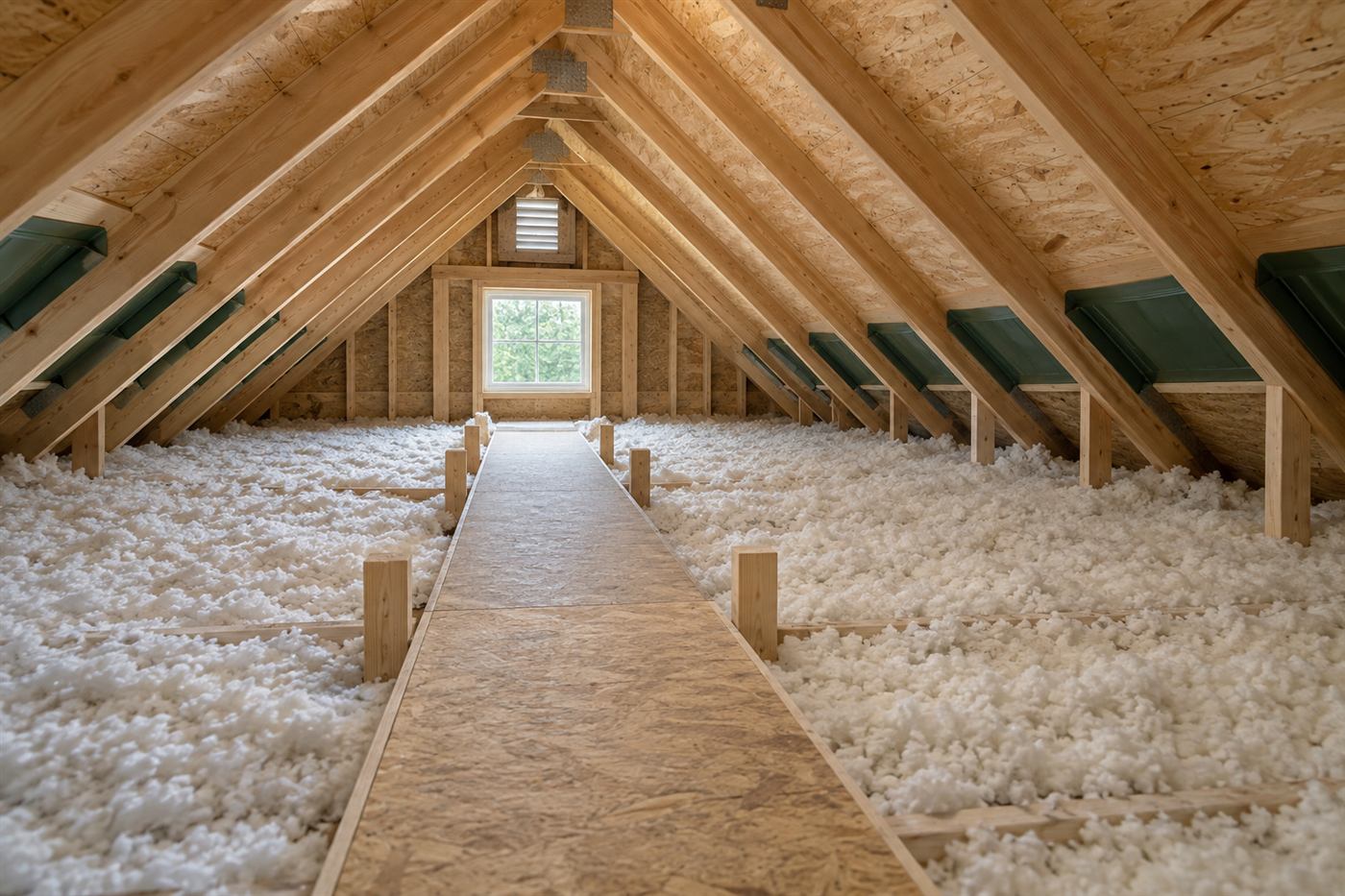
What makes Pembroke Pines attics a pattern
Much of Pembroke Pines grew through planned communities developed in stages, with similar floor plans repeated across entire neighborhoods. Single-story and two-story homes share certain features: stucco exteriors, concrete tile roofs, attached garages and air handlers in the attic. Because the homes were built to similar plans in similar years, their insulation tends to age in similar ways.
That consistency helps. When a neighbor discovers wet insulation under a tile roof valley, or finds that the builder-installed layer has thinned out near the eaves, there is a good chance the same thing is happening in other homes on the street. It does not mean every attic has a problem, but it does mean certain places are worth checking first.
The typical insulation in these homes was installed to what was acceptable at the time of construction, and has been compressed by decades of heat, service visits and foot traffic. Some attics still have decent coverage. Others have bare patches near access points, around ducts and along the edges where the material was never pushed fully into place.
Tile roofs and how water reaches the insulation
Concrete and clay tile roofs are heavy, durable and very good at shedding the bulk of the rain. But the tiles are not what keeps the house dry. The waterproofing layer, called underlayment, sits beneath them and does that job. Over time, underlayment can age, crack or tear, particularly around penetrations, valleys and flashing. Water then gets into the attic quietly, with no visible damage on the roof surface.
Tile roofs also hide problems. A cracked tile, a slipped tile or a degraded sealant joint around a vent may not show from the ground. Inspections require someone to walk the roof, which should only be done by a qualified roofer because tile is fragile and slippery.
From inside, the clues are ceiling stains, a musty smell, damp spots near corners and wet insulation that darkens or flattens. If you notice any of these, have the roof checked and the attic inspected. Once the source is fixed, a technician can decide whether the insulation can dry or whether it should be removed. See our page on insulation after roof replacement for what to look for after roof work.
Long-run duct systems and their effect on insulation
Many Pembroke Pines homes have duct systems with long runs from the air handler to the farthest rooms, snaking across attics and sometimes through multiple roof sections. Long runs mean more surface area for heat gain and more joints where leaks can develop. In a hot attic, even well-sealed ducts lose cooling capacity, and leaky ones lose much more.
Cold ducts in humid air sweat. Condensation forms on the outer jacket and, if the insulation wrap is damaged, on the metal or liner beneath. That water drips onto the attic insulation below, leaving dark, matted lines that follow the duct paths. Over months and years, those lines grow into wide stained strips.
A technician looking at your attic should trace the ducts and see whether the damage lines up with them. If it does, replacing the insulation without fixing the ducts is a short-term repair. A qualified HVAC contractor can handle duct sealing and replacement, and a good insulation crew will coordinate. Our page on sweating ductwork in the attic explains the problem more fully.
Signs a clean out is the better choice
Not every attic needs removal. A technician looks for specific signs that point to replacement rather than a top-up. If several appear together, replacement is usually the better path.
- Dark, matted strips of insulation running along ducts
- Stains or discoloration under roof valleys, vents or flashing
- A persistent musty or sour smell in the attic or upstairs rooms
- Evidence of rodents, such as droppings, tunnels or nesting debris
- Large areas where the material has slumped, compressed or gone missing
- Dusty, powdery material sifting through ceiling gaps or fixtures
- Past leaks that were repaired but never inspected for insulation damage
Single-story and two-story differences
Single-story homes have attics that cover the full footprint of the house, so heat gain through the roof affects every room. Insulation matters enormously in these homes, and a damaged layer can be felt everywhere. Access is usually through a hatch in a hallway or garage, and the attic often has plenty of space to work in.
Two-story homes have a smaller attic over the upper floor, often with tighter clearance, and walls between the upper and lower levels that need attention too. The upstairs rooms are the ones that feel the heat, and owners often complain about a hot upper floor even when the downstairs is comfortable. Sometimes the cause is insulation, sometimes ducts, sometimes both.
In either case, a technician should check access paths, ceiling construction and any complications such as knee walls, bonus rooms over garages and vaulted areas. Each of these has its own insulation challenges. Tell us about them when you call so the visit can be planned accordingly.
Air handlers, platforms and the traffic in your attic
In most Pembroke Pines homes, the air handler lives in the attic, and every filter change, coil cleaning or repair visit puts someone up there. Technicians walk the same path each time, step on insulation, drag tools across it and sometimes set equipment down in the wrong place. Over many visits, those paths turn into trenches of compressed material that no longer insulate.
The area around the air handler is also where condensation problems show up. A clogged drain line can overflow, a failing pan can leak and a poorly sealed cabinet can sweat. Water that reaches the insulation under the unit often goes unnoticed for months, because it sits out of view and the staining only shows on the ceiling once it spreads.
During removal, the technician should look closely at that area, note any rust, water marks or damaged platforms and tell you what they see. A solid walkway with a firm platform to the air handler helps protect the new layer. It is a simple addition that makes future service easier and keeps the insulation intact.
If your air conditioner has had a drain problem, a float switch failure or repeated shutdowns, mention it. That history helps the technician judge how far the moisture may have spread.
Selling, buying and documenting the work
Insulation shows up in home inspections more often than most owners expect. An inspector who finds stained, matted or sparse material, or evidence of past leaks, will note it, and a buyer may ask for it to be addressed. If you are preparing to sell, replacing damaged insulation before listing can remove a common negotiating point and show that the home has been looked after.
If you are buying, ask the inspector to look at the attic, and be cautious about attics that were recently disturbed or covered over with fresh material. Fresh insulation laid on top of damaged material can hide problems. A conversation with a contractor about what lies beneath is worth having before closing.
Whatever your situation, keep records. Photos taken before and after, notes from the technician, the type and depth of the new insulation, and any related roof or duct repairs form a useful file. It helps with insurance claims, future maintenance and resale. Our guide on how long insulation lasts explains what to expect over time and when to look again.
How the clean out is done
Removal uses a vacuum system with a hose run from outside the house to the attic, so the debris does not pass through your living space. The crew protects the area around the access point, wears respirators and eye protection and bags the removed material. In large attics, the hose may be moved to several positions to reach the far ends.
After removal, the space is cleaned and checked. The technician looks at the roof underside, wiring, ducts and any exposed framing, and records what is found. Air sealing happens next, followed by baffles at the eaves and the new insulation. A final walk-through shows what was done.
- Inspect the attic, roof underside, ducts and wiring.
- Correct leaks, pest entry points and duct problems first.
- Protect the interior and set up the vacuum hose.
- Remove the damaged insulation and bag it.
- Seal gaps at fixtures, penetrations and top plates.
- Install baffles and new insulation, then review the work.
Choosing new insulation for a tile-roof home
For open attics, blown-in fiberglass or cellulose is usually the practical choice, since it covers irregular spaces and flows around framing. Radiant barrier can be considered where roof heat is a major issue. Spray foam on the roof deck is an option in some homes, but tile roofs have specific considerations, and it needs careful planning. Our pages on blown-in insulation in Pembroke Pines and radiant barrier in Pembroke Pines explain these choices.
Whatever material goes in, ventilation must stay open. Soffit vents should not be blocked, and baffles should keep a clear path for air at the eaves. A hot attic with poor airflow can undo much of the benefit of new insulation.
Permit requirements depend on the scope and the local office. Ask the contractor how they are handled for your address, and check with the city if you have questions.
Homeowners associations and planned communities
Most communities in Pembroke Pines have homeowners associations. Attic work is not usually regulated, but rules about contractor vehicles, dumpsters, work hours and visible equipment may apply. If your community has rules, check them before scheduling and let the contractor know.
If the work relates to a roof problem, your association may have a roof approval process or approved vendors. Roof repairs and insulation work are separate matters, but the sequence is important. The roof must be fixed first, and the insulation work follows once the area is dry.
Keep records of what is found, what is done and what was installed. Photos, written notes and receipts are useful for future maintenance, home sales and insurance conversations.
Quotes and getting started
Quotes are given by phone only. Simple jobs can often be discussed from a description. Complicated work needs an on-site visit first, with a service call charge that is explained on the phone before anyone is dispatched. Be careful with anyone who quotes without asking about your attic.
When you call, tell us about the house: single or two-story, roof type, number of air handlers, what you have seen or smelled, and whether there has been a leak, storm or pest problem. Photos from the hatch opening, taken without entering the attic, are helpful.
When you are ready, call Boca Raton Insulation and describe what is going on at your Pembroke Pines home. We will talk through the options and set up the next step.
Questions people ask
Can tile roofs leak even if the tiles look fine?
Yes. The underlayment beneath the tiles provides the waterproofing, and it can age or tear without any visible change on the surface. Leaks often show up first as ceiling stains or damp insulation. A qualified roofer should inspect the roof, and a technician can then assess the attic.
Why are my upstairs rooms hotter than downstairs?
Heat rises, and the upper floor sits right under the roof. The cause can be thin or damaged insulation, leaky or sweating ducts, air leaks or air handler capacity. A technician should look at the whole picture so the fix addresses the real cause and not just one piece.
How long does it take to remove and replace attic insulation?
It depends on the size of the attic, the condition of the material and access. Many jobs fit within a day, while larger or more complicated attics can take longer. We do not promise specific times by phone, but the technician will give you a realistic plan after seeing the space.
Is it safe to be home during the work?
Usually yes, since the material is vacuumed through a hose from outside. People with breathing problems, small children and pets should stay in a part of the house away from the access point. Tell us about any health concerns when you call so the plan can account for them.
Will my HOA care about this kind of work?
Attic work is rarely regulated, but some communities have rules about contractor vehicles, dumpsters and work hours. Check your community documents and let the contractor know about any restrictions before scheduling. If a roof repair is involved, your association may have a separate process.
How do I get a price for removal and replacement?
Quotes are given by phone only. Simple jobs can often be discussed from a description, and complicated jobs need an on-site visit first. A service call charge applies for the visit and is explained on the phone before dispatch. Call with details about your home and what you are seeing.
Describe the situation by phone and we will tell you what the job involves. Quotes are given by phone. Jobs that cannot be quoted without seeing them need a technician on site, and the service call charge is explained on the phone before anyone is dispatched.
(561) 854-1888Related pages
Protecting the house while the attic is emptied
The cleanest clean-out is the one you barely notice in the living areas. In a Pembroke Pines house, the crew starts by covering the floor from the front door to the attic hatch, taping down runners, and sealing off return grilles so dust is not pulled into the duct system. Hallway ceilings with pull-down stairs get extra care, since the opening is the main leak point for fine particles. A vacuum hose is routed outside where possible, so most debris never travels through the house in an open bag.
While the work is underway, the crew keeps the air handler in mind. Running the system during removal can move dust through the ducts, so the technician usually asks you to switch it off or set it as directed for the duration. Once removal is finished, the surfaces are vacuumed, the return openings are uncovered, and the crew checks that the attic hatch seals properly when closed. Small details like a missing weatherstrip at the hatch are noted and can be fixed on the spot. Photographs taken along the way give you something concrete to look at, which is far more useful than a verbal summary after the crew has left.
You can help by moving fragile items away from hallways, clearing the garage floor, and telling the crew about any allergy sensitivities in the household so they can plan the sequence and the room closures sensibly. Without making health claims, they simply work to limit dust spread and leave the home tidy. The scope and any quote are explained before work begins, and you are shown photos of the bare attic before the new layer goes in. If any part of the plan does not match what you expected, say so right away and the crew will adjust or explain the reasoning behind it.
Fixing what the bare framing reveals before reinsulating
With the old layer gone, the framing can finally be read. Rust on nail points under a tile roof often means moisture is reaching the underlayment, while light-colored staining around vents hints at air leakage. The crew checks the top plates of interior walls, the openings around recessed lights, and the areas around plumbing stacks, since each is a common path for conditioned air to escape upward. These gaps are sealed with appropriate materials before any new insulation goes down, because sealing is far easier on bare wood.
Duct work gets a close look too. Long runs across a wide attic mean many joints, and any that have pulled apart, sagged or lost their wrap are noted. The insulation crew does not necessarily repair ducts themselves, but they flag what they see so you can call the right professional before the new layer covers the problem. Likewise, any roof leak evidence is documented with photographs, so you have something concrete to show a roofer when you ask for an inspection. South Florida humidity and the long storm season make careful, well-documented work worth the extra attention at every stage.
Only after this preparation do they install the replacement. The new material is placed evenly, kept clear of recessed fixtures where required, and held back from the eaves so soffit airflow continues. Depth markers are set and the finished work is photographed. You receive a plain explanation of what was done and in what order. That sequence, inspect, seal, then insulate, is what separates a lasting clean-out from a cosmetic refresh. Small details like these are easy to skip and are exactly what separates a tidy, lasting job from one that needs a return visit.