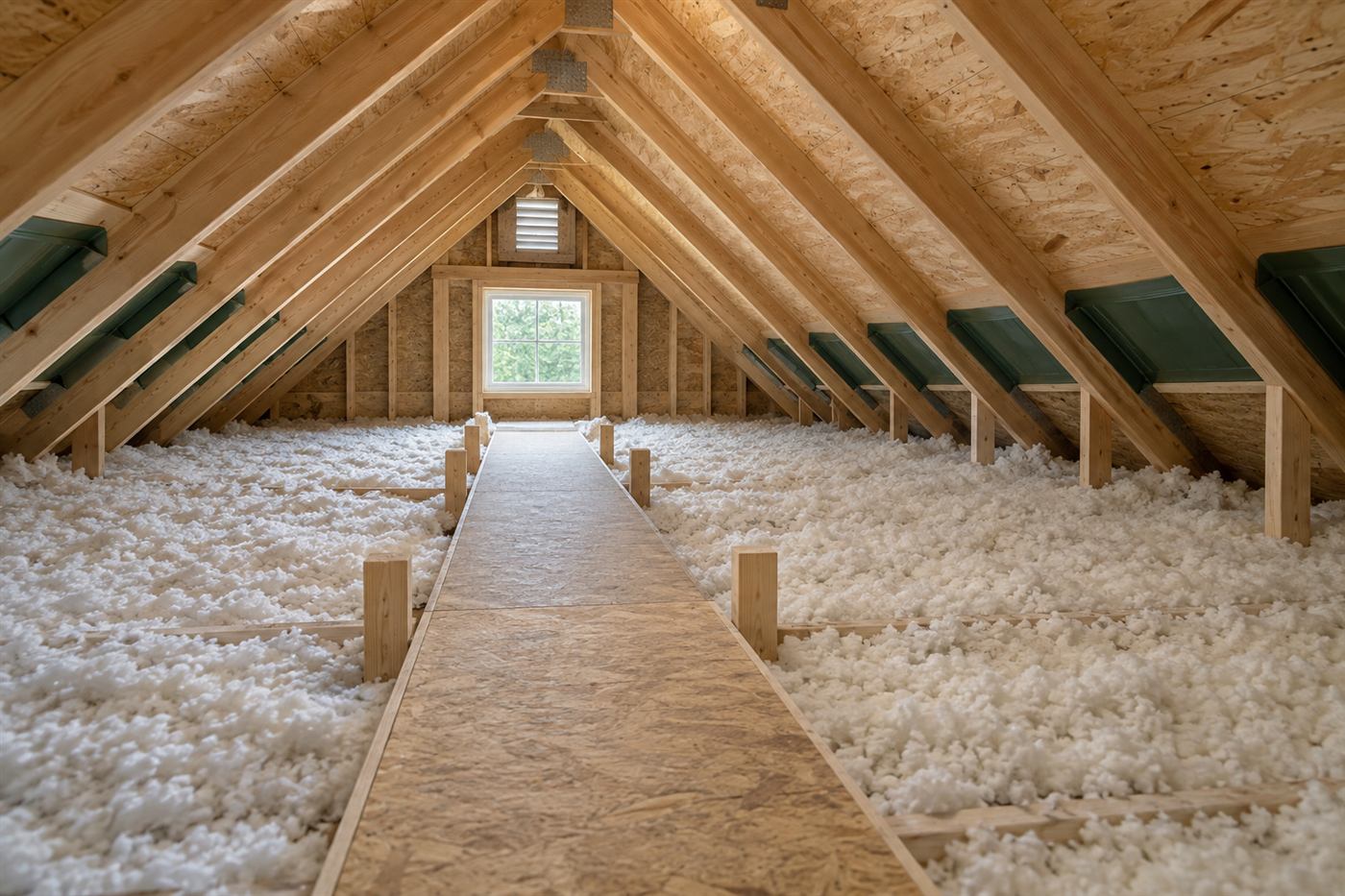
Sunrise housing and why its insulation is aging
Much of Sunrise took shape in the 1970s and 1980s as master-planned communities, golf courses and gated developments spread across western Broward. Villas, townhomes, garden apartments and single-family homes sit side by side, and many are managed by associations. The buildings are now four decades old or more, and so is much of what is above their ceilings.
Original insulation in homes of this era was typically thin batts or blown fill installed to the standards of the day. Time has not been kind. Humidity, heat and settling flatten it. Air handler service visits crush it. Small leaks over the years leave stains. Pests find gaps in aging vents. The material still looks like insulation, but its performance has often declined well below what it once offered.
Because the buildings share walls and often share attics, a problem in one place can spread. A leak at one end of a townhome row can wet insulation along the whole run, and an animal that enters one unit can travel the length of the attic. Understanding the shared layout is part of any good plan.
Shared walls, shared attics and who owns what
In a townhome or villa community, the line between what you own and what the association controls is not always obvious. Roofs are typically common elements, and the attic space above several units may be one continuous cavity. Party walls between units are shared structure. Your ceiling and the insulation directly over it may be your responsibility, or may fall under association maintenance, depending on the documents.
Before scheduling anything, find out who controls the area. Check your governing documents and ask management. If the damage is in a common attic, the association usually arranges and pays for the work, and your role is reporting the problem clearly. If it is inside your unit, you handle it, but you may still need approval for access, contractor hours and parking.
Keep communication in writing. Photograph stains, note when they appeared and whether they change after rain, and send them to management. A clear record gets action faster than a phone call. A contractor can also document conditions in a way that helps your association understand the scope.
Original insulation: what to look for
Original insulation in 1970s and 1980s buildings falls into a few common types. Fiberglass batts laid between joists are the most frequent. Loose-fill fiberglass or rock wool blown into the attic is also common. Some buildings have paper-faced batts in knee walls and soffit areas. A few may have older products that need extra care.
A technician looks at what is present, how deep it is, what shape it is in and whether it has been disturbed. They check for wet patches, stains, pest signs and compaction. If something looks unusual, they will stop and advise before it is disturbed. Testing may be recommended for very old loose-fill products of uncertain type.
- Flattened batts that no longer touch the ceiling surface
- Gaps between batts, especially near the eaves and around fixtures
- Stains along the lines of ducts, plumbing or the roof underside
- Sparse coverage over hallways, closets and garage walls
- Dusty or powdery material that sifts through ceiling gaps
- Droppings, nests or tunnels in the material
Leaks and roof problems in older communities
Roofs in these communities are often on their second or third cycle. Replacement is typically done by the association across an entire building or phase, and quality varies from one project to the next. Transitions between sections, flashing at walls and penetrations for vents and plumbing are the usual weak points.
A leak that starts in one spot can run along the underside of the roof deck and drip somewhere else entirely. Insulation soaks it up and holds it, so the damage is wider than the stain suggests. Over time, the wet material can damage ceiling drywall, corrode fasteners and feed mold growth.
Report any stain promptly. If you see dripping near light fixtures or outlets, stay clear and tell management and, if needed, an electrician. After the roof is repaired, a technician can assess the insulation. Wet material that stays damp or has been wet more than once is usually removed. Our page on insulation after water damage explains how that call is made.
Golf-adjacent and landscaped communities
Communities built around golf courses and lakes have mature landscaping, wide green spaces and plenty of wildlife. Birds, squirrels, rats and larger animals move along trees and fences and find their way into roofs. Lakes and irrigation also push humidity up, and shaded roofs stay damp longer.
Pest evidence in these communities often appears in groups, since one entry point can serve several units. Damaged vent screens, loose soffit panels and gaps at roof lines are the usual culprits. Insulation fouled by animals needs to be removed, and the entry points must be sealed to keep the new layer clean.
If you suspect animals, do not go into the attic. Report what you hear or smell to management and call for an inspection. Because shared attics may be involved, a coordinated plan is often more effective than separate efforts by each owner. Our page on rodent damage to insulation explains what to expect.
Working around neighbors
Insulation work in attached homes needs consideration for neighbors. Vacuum equipment, hose handling and foot traffic can be heard through shared walls and ceilings, and some communities limit contractor hours. Parking and access for vehicles and equipment can also be tight.
Tell neighbors in advance, especially those directly next to or below the work area. Ask the contractor how they will limit noise and keep the work area clean. Short, well-sequenced visits are easier on a community than a drawn-out job.
Also consider fire separation. Many shared attics have walls or barriers between units that must stay intact. A technician should note them and work around them. If something was damaged or cut in the past, report it to the association so the right trade can repair it.
Ducts, air handlers and what they do to the material below
In most villas and townhomes, the air handler sits in the attic or in a closet that opens to it, and the ducts run overhead to each room. After forty years, duct wrap tears, joints loosen and drain lines clog. Cold supply ducts sweat in humid attic air, and that water drips onto the insulation, leaving dark strips that follow the duct paths.
If your attic shows stained or flattened insulation along those lines, the duct problem and the insulation problem are linked. A qualified HVAC contractor should repair or replace the ducts, and the insulation can be replaced along those strips once the cause is fixed. If the stripes are the only damage, a partial removal may be enough.
Also look at the area around the air handler. A drain pan overflow, a cracked platform or a rusty cabinet suggests water has been reaching the material beneath. Mention any past air conditioner leaks or shutdowns when you call. The more history we have, the better we can judge how far the damage may have spread. Our page on sweating ductwork in the attic explains the problem in more depth.
Safety, dust and preparing your home
Old insulation is not harmless dust. After decades, it holds fine particles, animal waste, mold spores and fibers that irritate skin, eyes and lungs. Stirring it up without proper equipment is a bad idea. People with asthma, allergies or other breathing concerns should stay well away from the attic and from rooms near the access point on the day of work.
Professional crews use respirators, eye protection and gloves. The vacuum system captures most of the material at the source, and debris is bagged for disposal. Floors and walls near the access point are protected. Even so, plan to move delicate items out of nearby rooms and cover furniture that cannot be moved.
If your unit has an attic hatch in a closet or hallway, clear the area so the crew can set up. Let neighbors know when the work will happen. Our guide to insulation safety and dust explains what to expect, and our visit preparation checklist walks through the steps for a smooth day.
Selling, renting and documenting the work
Insulation condition appears in home inspections, and stained or sparse material in an attic photo can slow a sale. If you plan to sell, replacing damaged insulation before listing removes a common point of negotiation and shows the home has been looked after. If you rent a unit, tenants notice comfort and smells, and a well-insulated, dry attic cuts complaints.
Keep records. Photos before and after, notes from the technician, the type and depth of the new material and any related roof or duct repairs make a useful file. Share a copy with your association if the work touched shared elements. These records help with insurance, with future maintenance and with any buyer's questions. Our guide on how long insulation lasts explains when to look again.
How the clean out and replacement are done
A technician inspects the attic or ceiling space, looks at the roof underside, ducts, wiring and ventilation, and documents what is found. The crew protects the interior, runs a vacuum hose from outside to the attic and removes the affected material, bagging it for disposal.
After removal, the space is cleaned, air leaks are sealed and baffles are added where needed. New insulation goes in at a suitable depth, and the technician reviews the finished work with you.
- Confirm who controls the space and what approval is needed.
- Have a technician inspect and document the existing condition.
- Repair the roof, plumbing or duct source of damage.
- Remove wet, fouled or collapsed material using a contained method.
- Seal leaks, install baffles and confirm ventilation.
- Install new insulation and keep records of the work.
Choosing new insulation for a villa or townhome
Blown-in fiberglass or cellulose is a common choice for open attic spaces, since it covers uneven areas and flows around framing. Where air movement or tight assemblies are the issue, other methods may be discussed. Our pages on blown-in insulation in Sunrise and attic insulation in Sunrise describe the usual options.
Air sealing before new insulation is especially useful in attached buildings, where gaps around fixtures, wall tops and shared chases let air and noise move between units. It will not turn a townhome into a soundproof room, but it helps.
Permit requirements depend on the scope and the city. Ask the contractor how they are handled for your address, and confirm with your association whether additional steps are required.
Quotes and getting started
Quotes are given by phone only. Simple jobs can often be discussed from a description. Complicated work, including most shared-attic jobs, needs an on-site visit first, with a service call charge explained on the phone before dispatch.
When you call, tell us whether you live in a villa, townhome or house, whether you share an attic with neighbors, what you have seen, smelled or heard and whether you have spoken with management. Photos from an access point, taken without entering the attic, help. When you are ready, call Boca Raton Insulation and describe what is going on at your Sunrise property. We will go over the next step plainly.
Questions people ask
Who is responsible for insulation in a shared townhome attic?
That depends on your association's governing documents. Roofs and shared attic spaces are often common elements handled by the association, while insulation directly over your ceiling may fall to you. Report problems in writing, include photos and ask management. A contractor can document the condition to make the report clear.
My villa is from the 1980s. Is the original insulation still good?
It might be partly useful, but after decades it is often thin, compressed or stained. Clean, dry material can usually stay with new insulation added over it. Wet, fouled or collapsed material should come out. A technician can tell which situation applies after seeing the attic.
Will neighbors hear the work?
They may, since sound travels through shared walls and ceilings. Follow your community's contractor hours, tell neighbors in advance and ask the contractor how they limit noise. Short, well-planned visits are easier on a community than long ones.
Can animals travel between attics in attached buildings?
Yes. If the attic is continuous across several units, one entry point can serve all of them. That is why pest problems in townhomes often need a coordinated response with management. Insulation fouled by animals is removed, and entry points sealed before new material is installed.
Do I need a permit?
It depends on the scope and the city. Simple insulation work is treated differently from work that opens structure or accompanies a re-roof. Ask the contractor how permits are handled for your address, and check with your association for any additional steps.
How do I get a quote?
Quotes are given by phone only. Simple jobs can often be discussed from a description, while complicated work needs an on-site visit first. A service call charge applies for that visit and is explained on the phone before dispatch. Call with details about your home and what you are seeing.
Describe the situation by phone and we will tell you what the job involves. Quotes are given by phone. Jobs that cannot be quoted without seeing them need a technician on site, and the service call charge is explained on the phone before anyone is dispatched.
(561) 854-1888Related pages
Coordinating a clean out in an attached building
In Sunrise, many homes share walls or attic space with a neighbor, which changes how a clean out is planned. The crew first confirms where your unit ends and the next begins, because removing material across a boundary is not the owner's decision to make. They look for fire separations or dividers in the attic and leave them intact, working only in the space that belongs to your home. If anything is unclear, they ask you to check with your association or management before touching it. Keep your questions and notes together in one place, since they make any later conversation with a neighbor, inspector or buyer much simpler.
Noise and dust also reach beyond your walls in attached housing. The crew shares the schedule with neighbors where possible, keeps the hose and bags out of common walkways, and closes off openings that connect to shared spaces. Vehicles are parked where they will not block access for others. A short note to adjacent owners, or a call from the property manager, can prevent misunderstandings and make the day easier for everyone involved. None of this needs to be rushed, and a patient approach tends to catch the problems that a quick glance would miss.
Inside your unit, you can prepare by clearing the area under the hatch, moving fragile items from the adjoining rooms, and letting the crew know about any HVAC equipment or storage in the attic. The scope and any quote are explained before work begins, including the exact limits of the space being cleared. After the work, you are shown photographs of the bare attic and any dividers so you have a record of what was left in place. Ask as many questions as you like during the walk-through, because a clear picture of the plan makes the whole visit calmer for everyone in the household.
Finishing details that suit a villa or townhome
Villas and townhomes tend to have compact attics with a lot of obstacles: party walls, duct runs, platforms for equipment and tight corners near the eaves. The replacement stage focuses on those details. The crew checks that the material is placed evenly right up to the edges without blocking the soffits, and that it stays clear of recessed lights and exhaust vents. Around the air handler platform and the access path, they leave a clean, walkable area so future service visits do not disturb the new layer. Photographs taken along the way give you something concrete to look at, which is far more useful than a verbal summary after the crew has left.
Sealing is especially important where wiring and plumbing pass through the top plates of the shared and exterior walls. These small openings let air move between the living space and the attic, and they are easiest to close while the framing is bare. The crew uses suitable sealing materials and respects any fire-rated assemblies, never filling a gap that is meant to remain open or a part of a rated wall without confirming what it is. If in doubt, they stop and ask. If any part of the plan does not match what you expected, say so right away and the crew will adjust or explain the reasoning behind it.
When the job is done, the crew cleans up and walks you through the results. You get a clear summary of what was removed, what was sealed, and what was installed. Keep it with your records, since many associations and future buyers like to see documentation. If you notice anything odd later, such as a draft near a ceiling fixture, call us and we will look at it with you instead of leaving you to guess. South Florida humidity and the long storm season make careful, well-documented work worth the extra attention at every stage.