When insulation needs to come out instead of being added to
Most insulation conversations are about adding more. Removal is a different decision, and it should be made carefully, because pulling out material that is still serving its purpose is wasteful and sometimes creates a mess for nothing. The cases where removal makes sense are fairly specific.
Insulation that has been soaked by a roof leak, a plumbing failure or a storm usually needs to go. Wet fibrous material loses much of its resistance to heat flow, can hold moisture against framing and drywall, and may support mold growth if it stays damp. Material contaminated by rodents, birds or insects is another clear case: droppings and urine stain and foul it, and nesting material compacts it.
Insulation that has been disturbed by past work, compressed under stored boxes, or pulled apart by wiring or HVAC changes may leave bare patches that no amount of top-up will fix cleanly. And very old or deteriorated material that has broken down into dust, or has an unknown composition, is sometimes best removed before a new system goes in.
In an Aventura condo or townhome, there is an additional layer: the building itself. Interior wall cavities, ceiling spaces above units and shared mechanical chases are not always yours to open. Before any removal plan, you need to know what part of the building is your responsibility and what part belongs to the association.
How salt air and humidity age insulation near the Intracoastal
Aventura sits beside the Intracoastal Waterway and is close to the ocean. Salt in the air is a quiet factor. It accelerates corrosion on metal fasteners, air handler cabinets, electrical connections and duct hardware. It does not usually damage insulation directly, but it contributes to the failure of the things that insulation protects and works beside.
Humidity is the louder issue. Warm, moist air moves through gaps into wall and ceiling cavities. When it meets a surface cooler than its dew point, it condenses, and insulation that repeatedly takes on moisture can clump, sag and lose effectiveness. Some materials are more tolerant of moisture than others, and a technician will consider that when recommending a replacement.
Older buildings, particularly townhomes and low-rise condominiums from the 1960s through the 1980s, often have materials and construction methods that were reasonable at the time but behave differently from today's. Paper-faced batts that have absorbed moisture over many seasons, blown-in material that has settled, and original insulation in a cavity that has never been opened are all common situations.
If you suspect your insulation has aged badly, signs include a persistent musty smell near a closet or hallway ceiling, stains on drywall that return after painting, rooms that never seem to hold their temperature, and visible clumping or discoloration if you can see the material at all. Seeing is best left to a technician with appropriate protection.
Condominium associations and what they require
In a condominium, almost anything that touches the building envelope, shared structure or common systems may need association approval. That includes opening ceilings, working in a shared attic, or entering a common wall cavity. Even work inside a single unit can be restricted by rules about hours, noise, elevator use, insurance and contractor registration.
Start by reading your governing documents and contacting the management office. Ask what approval process applies to interior alterations, whether contractors must supply proof of insurance, whether there are limits on work hours, and how debris must be moved out of the building. High-rise buildings often require elevator reservations and floor protection, and some require advance notice to neighbors.
Be prepared to explain the scope in writing. A short description of what will be removed, where it is located, how it will be contained, how it will be disposed of and how long the work is expected to take will help the board or manager. If the issue relates to a leak from above, a neighboring unit or a common element, document that and bring it to the association, since responsibility for the source and for the repair may differ.
Insurance can be part of the picture. If the damage came from a covered event, there may be a claim process with specific documentation requirements. Our guide on insulation and insurance claims explains how to keep records, and why it helps to photograph conditions before anything is removed.
- Confirm which areas are your responsibility and which are common elements.
- Ask about contractor insurance, registration, work hours and elevator use.
- Document conditions with photographs before work begins.
- Describe the scope in writing for the board or manager.
What a technician checks before taking anything out
Removal starts with diagnosis. A technician will want to understand why the insulation is in the condition it is in, because replacing material without fixing the cause just repeats the problem. The visit typically involves the following steps.
- Locate and identify the source of any moisture: roof, plumbing, windows, condensation or air leaks.
- Identify the type of insulation and its condition: batt, blown-in, spray foam or board, and whether it is wet, stained, compacted or intact.
- Check for pests: droppings, nesting, chewed material and entry points.
- Look at framing, drywall and wiring for damage that needs repair before reinsulating.
- Assess whether any material of unknown or older composition needs testing by a qualified specialist before disturbance.
- Plan containment, protection of finished surfaces, and disposal.
- Decide what replacement system suits the cavity and the moisture conditions.
Containment, dust and protecting a lived-in space
Removal is a dusty job when it is done carelessly. In an Aventura condo, where an interior ceiling cavity may sit directly above a finished living room, containment is not optional. Good crews use plastic sheeting and tape to isolate the work area, cover furniture and floors, and use HEPA-filtered vacuums or similar equipment to capture particles. The aim is to remove material without spreading it into the rest of the home.
Homeowners can help by clearing the area, moving valuables and covering anything that cannot be moved. If anyone in the household has respiratory sensitivities, mention it when you call, and consider staying elsewhere during the work. Pets should be kept away from the work area.
Our page on insulation safety and dust explains what protective gear installers use and why homeowners should not be in the space during removal.
Debris must also leave the building properly. In high-rises, that often means bagging material at the source, moving it by service elevator, and removing it from the property rather than leaving it in common-area trash. Ask your installer how they handle this and whether the association has particular requirements.
Replacement options after removal
Once the old material is out and any moisture or pest problem has been corrected, the next question is what goes back in. The best choice depends on the location, the cavity and the moisture exposure.
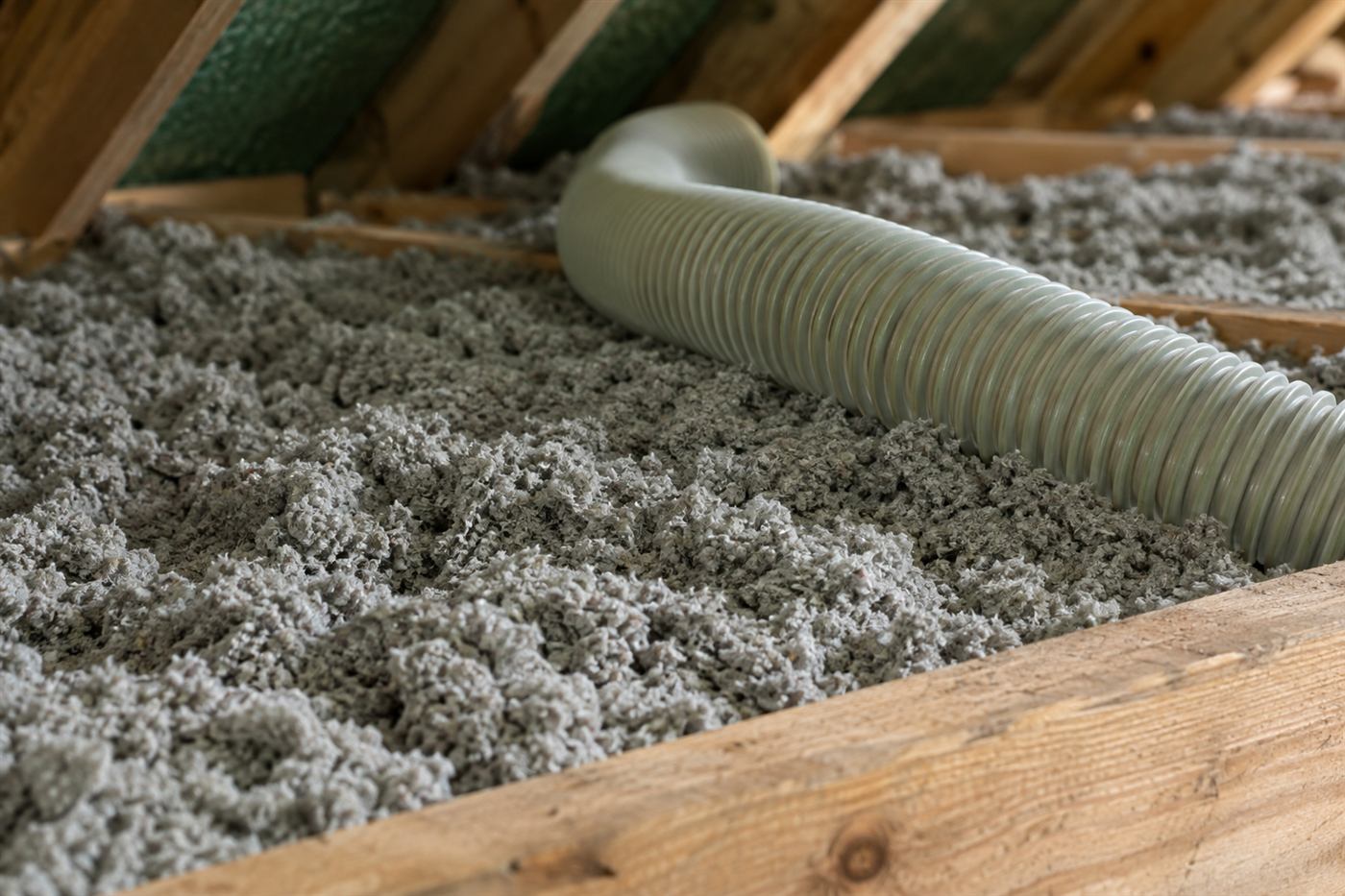
In an accessible attic or ceiling cavity, blown-in loose-fill can be a practical choice because it fills gaps and irregular spaces. Batts can work in regular framing cavities where they can be fit snugly without gaps. Spray foam is sometimes chosen for areas where air sealing and moisture resistance are priorities, though it has its own considerations and is not suitable everywhere. Our page comparing spray foam and blown-in lays out the trade-offs.
Material selection should also account for the building. A townhome with an attic has different options than a high-rise unit with a concrete slab ceiling, where there may be little or no cavity to fill. In that case, removal and replacement may relate more to wall cavities, soffits or dropped ceilings.
Whatever is chosen, the work should leave air paths open where ventilation is required, avoid covering recessed lights that are not rated for it, and leave clear access to electrical boxes and mechanical equipment. A good installer will explain what is going in and why, and will show you photographs of the finished work.
| Situation | Common approach | Note |
|---|---|---|
| Wet material after a leak | Remove, dry out, repair source, reinsulate | Moisture must be solved first |
| Pest-contaminated material | Remove, clean, seal entry points, reinsulate | Sealing entries prevents a repeat |
| Settled or thin material | Add to it or replace if damaged | Removal is not always needed |
| Unknown older material | Have it evaluated before disturbing | Testing is done by a qualified specialist |
Typical Aventura scenarios
A top-floor condo unit shows a brown stain on the bedroom ceiling after a heavy storm. The association identifies a roof leak and repairs it. The owner asks about the insulation above the stain. In many buildings there is little accessible space above, so the work depends on what the building's construction allows and what the association permits. The technician's role is to explain the options, not to open anything without approval.
A townhome near the Intracoastal has an attic where a rodent got in years ago. The owner notices a smell in the upstairs hall on warm days. An inspection finds droppings, compacted insulation and a gap at the soffit. The plan is to remove contaminated material, clean up, seal the entry, and reinsulate evenly. Sealing is as important as the insulation.
A ground-floor unit has a wall that feels damp near an exterior window. The cause turns out to be a failed seal and wind-driven rain. The wall cavity insulation has absorbed moisture. After the leak is repaired, the wet material is removed and replaced, and the wall is closed up.
An owner buying a unit wants to know if the old insulation should be replaced before moving in. The technician looks at what can be seen, explains what cannot be known without opening a wall, and advises replacing only what shows a real problem.
Wiring, plumbing and other things found behind old insulation
Removing insulation often reveals what has been hidden for years. Behind old batts or loose-fill you may find wiring that was added later without much care, plumbing lines that sweat or drip, abandoned cable, old air conditioning drain lines, and gaps where pipes pass through top plates. None of these are insulation problems, but a removal job is the moment they become visible, and a good crew will tell you about them rather than cover them back up.
Electrical findings deserve respect. Cable that is brittle, spliced outside a junction box or showing scorched insulation is a job for a qualified electrical contractor. Installers should not attempt repairs outside their trade, and they should keep material away from live connections until the problem is dealt with. If anything suggests an active hazard, leave the area and call 911 if there is smoke or burning.
Plumbing findings are just as common in older Aventura buildings. A weeping joint above a ceiling may be the very reason the insulation went bad. If the source is a shared riser or a common line, the association or building engineer must be told. Photographs taken before and after removal help everyone agree on what was found and who is responsible for what.
Finally, removal is a good time to improve the cavity. Gaps around penetrations can be sealed, loose boxes can be secured by the right trade, and the space can be left ready for new material. That small amount of attention at this stage often does more for comfort and moisture control than the new insulation by itself.
How to start the conversation
Call and describe what you have noticed: where the stain or smell is, how long it has been there, whether there is any history of leaks, and whether you live in a condo or townhome. Mention if the association has been told. For simple situations, a quote may be possible over the phone. For anything involving opened walls, ceilings or unknown conditions, an on-site visit is needed, and there is a service call charge that is explained on the phone before anyone is dispatched.
Have the following ready if you can: photographs of any staining, the approximate age of the building, whether work has been done before, and the association's contact information. If anything in the space looks like it may be a safety hazard, such as sagging ceiling material, exposed wiring or active water, treat it as urgent. Call 911 for immediate danger and have an electrician or plumber address the cause before insulation work starts.
Our general page on insulation removal and replacement gives more background. When you are ready, call and talk through your Aventura property, and the team will help you work out what should come out, what can stay and what to do first.
Questions people ask
Does wet insulation always have to be removed?
Often, yes, especially if it stayed wet for long or was exposed to dirty water. Wet fibrous material loses performance and can hold moisture against framing. A technician checks how wet it is, how long it has been that way and what the source was before recommending removal.
Do I need association approval to replace insulation in my unit?
Frequently you do, especially if the work involves ceilings, shared walls or common areas. Read your governing documents and ask the management office about contractor insurance, working hours and debris handling. A written description of the scope usually helps.
Is it safe to remove old insulation myself?
It is not recommended. Dust, droppings and unknown materials can irritate lungs and skin, and attics and ceiling cavities contain wiring and fall hazards. Trained crews use protective gear and containment, and they know how to dispose of material properly.
What if the old material might contain something hazardous?
If you suspect older material of unknown composition, do not disturb it. Have it evaluated by a qualified specialist who can test and advise. A technician will tell you when they think that step is needed before any work begins.
Will replacement fix a musty smell?
It can, if the smell came from contaminated or damp insulation and the source of moisture or pests has been corrected. If the cause is still active, the smell may return. That is why the visit focuses on finding the source first.
How are quotes given?
Quotes are given only by phone. Simple situations may be quoted from your description, while more complicated work needs an on-site visit with a service call charge that is explained before dispatch. Call to describe what you are seeing.
Describe the situation by phone and we will tell you what the job involves. Quotes are given by phone. Jobs that cannot be quoted without seeing them need a technician on site, and the service call charge is explained on the phone before anyone is dispatched.
(561) 854-1888Related pages
Building rules, elevators and getting material out
Removing old insulation from an Aventura condo or apartment is as much a logistics job as a technical one. Bags of old material have to travel from the unit to a truck, usually through hallways, elevators and a loading area shared with other residents. A technician asks about building rules early: approved hours, whether protective covering is required in common areas, and who in the office has to be notified. Skipping that step can lead to a stopped job. A written confirmation from the office, even a short email, makes the day smoother if a guard or door attendant asks questions.
The crew plans containment and routes with the building in mind. Sealed bags are used so nothing spills in the elevator, and floor protection runs from the unit door to the service entry. Vacuum equipment with filtration keeps loose fibers and dust from spreading, and doors between the work area and common spaces are kept closed. These steps protect neighbors as well as your own home, and good manners in a high-rise are part of the job. Wet wipes on door handles and a damp mop at the end of the day are small steps that keep shared spaces presentable.
Residents can help by getting forms to the office, reserving the elevator if it can be reserved, and removing furniture and valuables from the area. Ask the management what documentation they need from a contractor and share it with our office so the paperwork is ready. Our team explains the scope and any quote before work begins, including what is removed, what is replaced, and who handles any repairs that the removal reveals. Because rules differ from one building to the next, the crew follows whatever your management requires and does not assume the last building's rules apply.