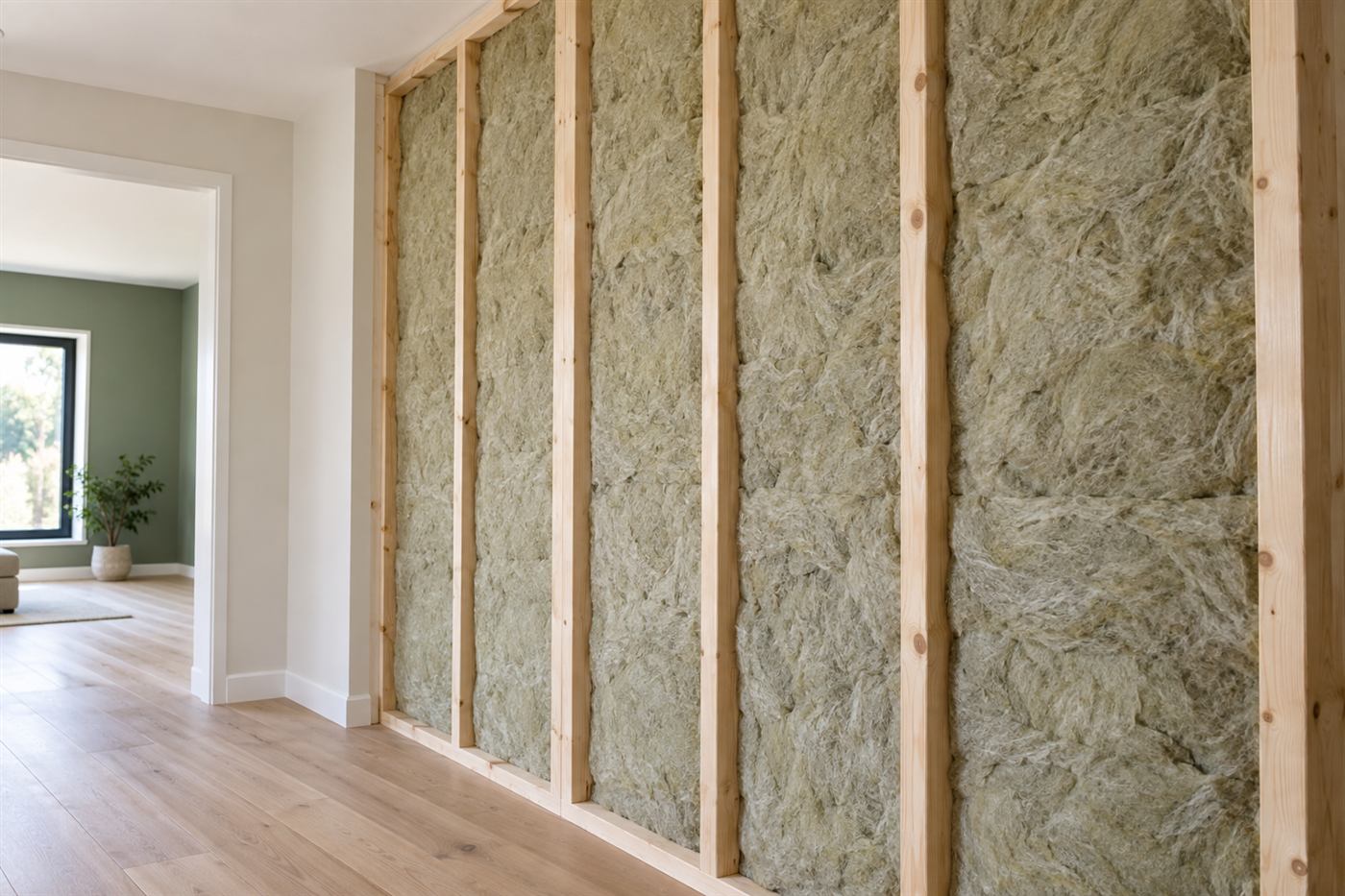
What settled blown-in insulation looks like after decades
Blown-in insulation is installed fluffy. Over the years, it compresses under its own weight, shifts when people walk or work in the attic, absorbs and releases moisture with the seasons, and breaks down at the fiber level. A layer that once stood deep and even may now sit thin and lumpy, with bare drywall showing in places and heavy drifts in others.
In Boynton Beach, many homes from the 1980s still have their original attic insulation, or a top-up from some later date. Concrete block construction with a flat or low-slope ceiling below a trussed roof is common, and the attic above is a simple open space that was easy to insulate and has rarely been looked at since. In age-restricted communities, many owners have lived in the same home for a long time and never had reason to climb up and see.
Several clues suggest the insulation has aged out. The home feels warmer on the upper side of rooms in the afternoon. The air conditioner runs longer than it used to. Ceiling drywall shows faint dark lines where framing meets the ceiling, a pattern sometimes called ghosting, caused by differences in temperature and dust deposits. The attic itself shows visible bare spots or compacted layers when a technician looks.
Settling alone does not always mean the material must be removed. Often the better and simpler answer is to add new material over the old, restoring depth. Removal is a stronger step, appropriate when the old material is contaminated, damp, mixed with debris, or when the project calls for starting with a clean attic floor. Part of a good visit is working out which situation you are in.
When topping up is enough and when a clean-out is better
Adding insulation over existing material is usually less disruptive and less costly than removal, so it is the first option a responsible technician will consider. It works well when the old layer is dry, clean and reasonably intact, and when the goal is simply to bring the total depth up to a better level.
A clean-out becomes the better choice when conditions make adding on a poor idea. Material that is damp or has been wet should not be buried. Material that is heavily soiled by pests should not stay. Material that is full of construction debris, dust or old paper is better replaced. And if the attic requires work that is hard to do with a thick layer in the way, such as sealing the ceiling plane, repairing wiring or replacing ductwork, it may be wise to clear the floor first.
There is also a hybrid. In some attics, the technician may recommend removing material from specific problem zones, such as around a leaking vent or a pest entry point, and topping up the rest. That is often the most practical path, and it avoids tearing out good material.
Another reason to clear an attic is to find out what is under it. Old blown-in material can hide cracked ductwork, uncapped junction boxes and gaps in the ceiling drywall. Sealing those before new insulation goes in makes the whole system perform better. Our page on air sealing explains why the order of work matters.
- Dry, clean, intact material is a candidate for topping up.
- Damp, soiled or debris-filled material is a candidate for removal.
- Targeted removal in problem zones can be the most practical middle path.
- Clearing the floor is wise when sealing or repairs are needed underneath.
How the clean-out is done
Clearing a blown-in attic is done with a large industrial vacuum, usually truck-mounted, with a long hose that runs from the truck to the attic. A crew member in the attic uses a nozzle to pull material from the floor and carries the hose from section to section. The material travels through the hose and into a collection container on the truck, so very little needs to be carried through the house.
Preparation matters. The crew protects the entry points, lays floor covering where needed, and checks that the attic hatch, pull-down stairs or scuttle is secure. Anything stored in the attic needs to come out ahead of time. Lights and fans are set up, and the crew checks for wiring that is loose or exposed before starting.
Safety gear is part of the process. Crews wear respirators, eye protection, gloves and protective clothing. Homeowners should stay out of the attic and out of the work path, and anyone with respiratory conditions should plan to be away or in a separate part of the house. Keep pets and children away from the hatch area.
As the floor is cleared, the crew looks at what is underneath: the ceiling drywall, the top plates of walls, the wiring, the ducts. If they find damage, they should photograph it and tell you before proceeding. That information becomes the basis for the next steps, whether that is sealing, repairs by another trade, or replacement with new material. Our page on insulation safety and dust describes why containment and protective gear are not optional.
Age-restricted villages and community rules
Many Boynton Beach residents live in age-restricted villages or planned communities with active associations. These communities often have specific rules about contractors: required registration or insurance documentation, permitted working hours, designated parking and limits on dumpsters or trucks on the street.
A truck-mounted vacuum is a large vehicle with a long hose, and it may be subject to rules about where it can park and how long it can stay. Ask the management office ahead of time. If trucks are not allowed in a particular area, the crew may need to use a different setup or a different schedule.
Neighbors share walls, rooflines and sometimes attic spaces in villa-style buildings. If you are in a duplex, triplex or row home, the attic may be continuous across several units, separated by fire-rated partitions. A technician needs to see whether those partitions are intact, because clearing material without understanding the layout could cause issues. Work should stay within your own unit's space unless the association has arranged otherwise.
A courteous note to nearby neighbors is a thoughtful touch, particularly if noise from the vacuum will carry. It is not usually a requirement, but it avoids confusion and complaints. For more about shared buildings, see our guide to insulation for condos, which also covers villa-style layouts.
What a technician evaluates before recommending removal
The first visit is for understanding, not for selling. Before any clean-out is recommended, the technician will usually look at the following.
- Depth, uniformity and type of the existing material across the whole attic.
- Any signs of moisture, such as staining, compressed damp areas or rust on fasteners.
- Evidence of pests: droppings, trails, nesting and chewed material.
- Condition of ceiling drywall, including water stains or sagging.
- Location and condition of ductwork and the air handler, if they are in the attic.
- Wiring, junction boxes and recessed fixtures that need clearance.
- Ventilation paths, including soffit vents that may be blocked.
- Access points and the practical route for the vacuum hose.
Repairs and sealing between clean-out and new insulation
A cleared attic is a rare chance to do the things that are hard to do under a layer of insulation. The most valuable is air sealing the ceiling plane. Gaps around recessed lights, plumbing stacks, wire penetrations, bath fan housings and the top plates of interior walls let conditioned air leak up and hot air leak down. Sealing them reduces that exchange and makes every inch of new insulation more effective.
Ducts deserve attention. Joints that have separated, wrap that has deteriorated and flex duct that has been crushed or kinked can all waste cooled air before it reaches a room. Repairing or sealing the connections is often more beneficial than adding another layer of insulation. Our page on sweating ductwork in the attic shows how duct condition and insulation interact.
Ventilation baffles at the eaves keep new insulation from blocking soffit vents. If soffit vents have been covered by old material or paint, they should be cleared. In a humid climate, a breathing attic is safer for the structure and for the insulation.
Wiring should be reviewed. Old cable that is brittle or poorly supported, or junction boxes that are open, should be corrected by a qualified electrical contractor before covering. Installers should not cover problems they have reason to believe are unsafe.
Replacement choices for a 1980s block home
For a typical open attic over a block house, blown-in material is the common replacement because it spreads evenly and handles the irregular spaces around trusses and bracing. Fiberglass and cellulose are both used, and they behave differently with moisture and settling. Our guide to fiberglass, cellulose and foam compares them.
Spray foam is another route, applied either to the underside of the roof deck or on the attic floor. It has benefits in sealing, and it also has important cautions: it changes how the attic behaves, it should be installed with care for ventilation and moisture, and it is not appropriate everywhere. A technician can explain whether it makes sense for your home.
Depth matters as much as material. A common mistake is to install material unevenly, leaving thin areas along the edges and near the access hatch. Depth markers placed in the attic show how much material is down, and a thorough installer photographs the finished work and lets you see it.
Do not forget the attic hatch itself. A bare, uninsulated hatch is a hole in the ceiling insulation. Weatherstripping and an insulated cover are simple additions that make a visible difference in a well-sealed attic. Ask about it when you call.
Typical Boynton Beach scenarios
An owner in an age-restricted village notices that the house feels warm in the evenings and the air conditioner seems to run endlessly. The technician finds a thin, uneven layer of old loose-fill with bare patches along the center of the attic. The material is dry and clean, so the recommended approach is to top it up after sealing some gaps. A full clean-out is not needed.
A 1980s block home with a past roof leak shows damp-looking material and stains on the ceiling drywall. The technician finds that the leak was repaired but the old insulation remains matted. The affected section is removed, the framing is dried and checked, and new material is installed over the area and blended with the rest.
A snowbird owner returns each season to a home that smells musty on arrival. The attic shows slightly dark material near a bath fan that vents into the attic rather than outdoors. The fan duct is redirected, the damaged section of insulation is cleaned out, and the area is reinsulated. Moisture control is the real fix.
A homeowner is planning to replace the air conditioner and wants the attic in better shape first. The technician recommends clearing the old material, sealing the ceiling plane, repairing duct connections and installing fresh insulation, so that the new equipment works in a better envelope.
How to prepare and when to call
To get the most from a phone conversation, gather a few details: the age of the home, the type of roof, whether you have had leaks or pests, whether anyone has added insulation before, and whether the air handler is in the attic. If you have been in the attic hatch area and seen the material, describe its color and depth. Do not climb into the attic to look around, since the heat, wiring and framing make it unsafe.
Quotes are given only by phone. A simple situation may be quoted from your description. A clean-out, hidden damage or a complicated layout needs an on-site visit, and there is a service call charge that is explained on the phone before anyone is dispatched.
On the day, clear the area under the hatch, move vehicles so the truck can park, secure pets and make sure the association knows the schedule. Ask the crew to show you the cleared attic and any problems they found before they begin installing new material.
If you suspect something dangerous, such as scorched wiring, a gas smell or smoke, leave and call 911 first. For everything else, when you are ready to talk about your Boynton Beach attic, call and describe what you have noticed. You can also read our overview of insulation removal and replacement for more background.
Questions people ask
Is old blown-in insulation always worth removing?
No. If it is dry, clean and intact, adding new material on top is often enough. Removal is best when the material is wet, soiled, full of debris or when repairs below require a clear floor. A technician can tell the difference by looking at the attic.
How is blown-in insulation removed?
A large vacuum, usually truck-mounted, pulls material through a long hose from the attic into a container outside. The crew works in protective gear and keeps the work area contained so dust does not spread into the house.
Do I need to clear the attic first?
Yes. Stored items should be removed or protected before the visit, and anything fragile should be moved out of the way. Clear the area below the hatch too, so the crew can set up without scraping floors or walls.
Will my community let a truck park outside?
It depends on the rules. Many communities limit vehicles, parking and working hours. Ask your management office ahead of time and share what you learn with the installer so the schedule and setup fit the rules.
What happens to the old material?
It is collected in the truck and taken away for disposal. Ask the installer how they handle it and whether your community has any rules about debris. Nothing should be left behind in common trash areas.
How do I get a quote?
Quotes are given only by phone. Simple jobs may be quoted from your description, and anything that needs a look at the attic requires an on-site visit with a service call charge explained before dispatch. Call and describe your home.
Describe the situation by phone and we will tell you what the job involves. Quotes are given by phone. Jobs that cannot be quoted without seeing them need a technician on site, and the service call charge is explained on the phone before anyone is dispatched.
(561) 854-1888Related pages
Keeping a lived-in home orderly during a clean-out
A clean-out is disruptive if it is not organized, so the crew treats the household like a work zone with rules. Before anything starts, they lay protection over floors and furniture along the path to the attic, close off vents that could draw dust through the house, and check where the vacuum hose and bags will run. In an older Boynton Beach home with narrow halls, that planning keeps the path tidy. Sliding glass doors and hallway runners are a favorite spot for protection, since they carry the most foot traffic between truck and attic.
During the work, a hose may run from a truck outside through a window or door to the attic, drawing out old material while a crew member inside moves it toward the hose. Some people find the sound loud, so arranging to be elsewhere for part of the day can help. Pets should be kept away. Medications and food are best kept in rooms far from the work. If anyone in the household has breathing sensitivities, mention it beforehand and ask how it can be handled.
When the removal is finished, the crew vacuums the accessible areas, checks that nothing is left in corners, and inspects the exposed attic floor. This is the moment to look for any needed repairs, such as gaps around pipes or open wall tops. You can see the real condition of the space before new material goes in, and any additional work is explained before work begins. Questions during this stage are welcome and answered plainly. Keeping a flashlight handy lets you take a look from the hatch as well, and the technician is glad to point out anything of interest.