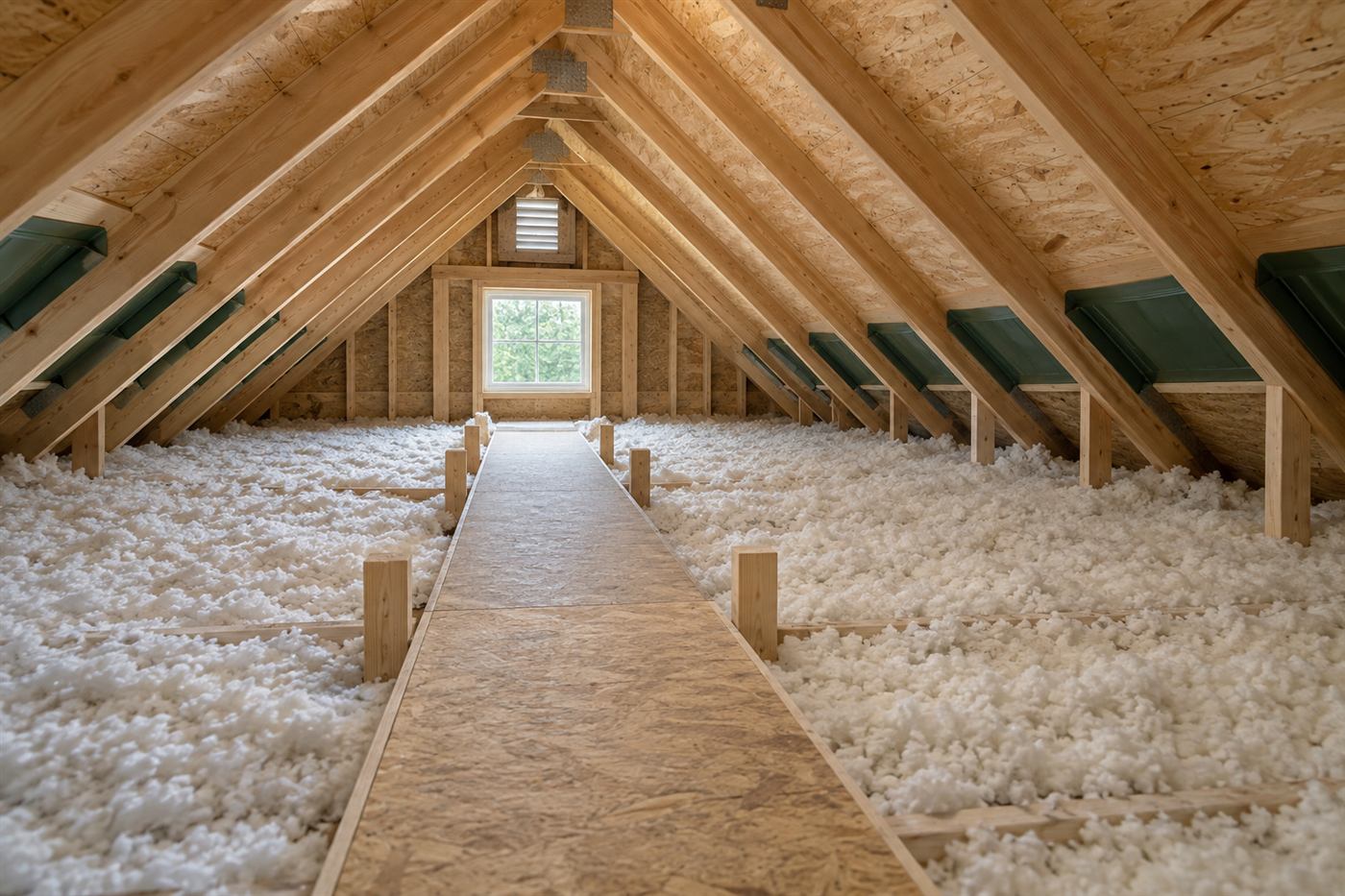
How Davie properties differ from typical suburban lots
Much of Davie is built on larger parcels, with ranch-style houses set back from the road, horse property, workshops, storage barns and sometimes guest cottages. A single address may include three or four separate buildings, each with its own roof, its own heat load and its own history of leaks, pests and weather exposure.
That variety changes how a removal and replacement conversation begins. Instead of one attic, there may be a main house attic, a garage or workshop ceiling, a barn loft and a detached office or pool house. Each space has a different purpose, a different structure and a different level of moisture risk. A technician needs to know which building you are asking about, and what you use it for.
Rural-feeling lots also come with more wildlife. Rodents, squirrels, opossums, raccoons and birds find outbuildings attractive, and a barn or workshop with open eaves is an easy home. When they move in, they nest in any insulation present, soil it and chew what they can reach. Wiring damage in detached buildings is a particular worry because it can go unnoticed for long periods.
The result is that insulation in Davie outbuildings often needs removal for reasons that have nothing to do with age. It is contaminated, wet, or damaged by activity. Planning the cleanout around the actual use of the building is the first step.
Metal roofs and what they do to insulation
Metal roofs are common on barns, workshops and many newer ranch-style additions. They last a long time and shed rain well, but they behave very differently from shingle or tile. Metal heats quickly in the sun, conducts that heat into the structure below and cools quickly at night, which makes it prone to condensation on the underside.
When warm, humid air inside a building meets a cold underside of metal at night, moisture condenses and drips. Insulation directly under the roof can absorb that moisture. Fiberglass batts pressed against the metal often end up soggy and stained. In a barn or workshop, that can create a cycle of dampness that never fully dries.
Noise is another factor. Rain on a metal roof can be loud, and some owners ask about insulation partly to deaden it. Different materials handle sound and moisture differently, so it helps to say which problem you want solved.
If a metal roof building has damp insulation, the first questions are where the moisture is coming from and how the roof is attached. Leaks at fasteners, laps and flashing are common. Condensation without a leak is also common. A technician can often tell by looking at the pattern of staining. Our page on commercial metal building insulation explains related issues for larger structures.
- Metal roofs condense moisture on their underside when conditions are right.
- Insulation touching metal can become soggy and stained.
- Leaks at fasteners and laps are separate from condensation.
- Say whether your goal is moisture control, heat reduction or noise reduction.
Detached buildings: workshops, barns and guest quarters
Detached buildings are used in many ways, and the right plan depends on how. A workshop where someone does fabrication or woodworking has dust, fumes and heat that affect what material is suitable. A barn housing animals or feed has dust, ammonia and moisture. A guest cottage or home office is a living space and needs the same care as a house. A storage building may need only basic moisture control.
Before removal, a technician will ask what the building is used for, who is in it and for how long, and what kind of heating or cooling is present, if any. They will also look at the structure: framing, roof type, ventilation and electrical service. Wiring in outbuildings is sometimes added over time by different people, and it may not be neat or protected.
If the electrical condition looks unsafe, the technician should say so plainly and recommend a qualified electrical contractor. Insulation should not be installed over wiring that is damaged or that has been poorly spliced. In a barn with animals, where dust and moisture are present, electrical safety is especially important.
For detached living spaces such as a guest cottage or pool house, our guide to pool house and detached office insulation goes into more detail about how those buildings differ from the main house.
What a technician checks before a clean-out
An evaluation in Davie often involves more than one structure, so it helps to list what the technician will look at and to prepare for each building.
- Identify each building to be assessed and its purpose.
- Look at roof type and condition, including fasteners, laps and signs of leaking.
- Inspect existing insulation for moisture, staining, compaction and pest contamination.
- Check for entry points: gaps at eaves, ridge vents, doors, utility penetrations and damaged screens.
- Examine wiring, panels and lighting for damage and for safe clearances.
- Evaluate ventilation and the potential for condensation.
- Consider how the building is used and what materials are suitable.
- Plan access, protection and debris disposal, including routes for equipment on larger lots.
Pests, wildlife and cleanup
Rural-style lots attract animals, and where animals have been, cleanup must be careful. Droppings and urine can carry pathogens, and disturbing them creates airborne dust. This is the reason crews wear respirators, gloves and protective suits, and why homeowners should stay clear.
A responsible sequence starts with removing the animals through a pest specialist, since removing insulation while animals are present is unsafe and futile. Then comes cleanup: bagging contaminated material, vacuuming surfaces and, where appropriate, applying a cleaner or disinfectant recommended by the specialist. Then comes sealing: closing the entry points with materials the animals cannot chew through easily, such as metal flashing or hardware cloth where suitable.
Only after sealing does new insulation go in. Skipping the sealing step means animals are likely to return and the new material to be ruined. Our page on rodent damage to insulation describes the full cycle.
In barns and workshops, think about how animals will be kept out in the future. Feed storage, open doors, gaps under doors and holes where cables pass through walls are common invitations. A technician may point out things that are easy to fix and make a real difference.
Re-insulating after removal: material and layout choices
In a main house with a conventional attic, blown-in loose-fill is a common choice and works well over flat ceilings. In a ranch home with a low-slope or vaulted roof section, batts, dense-pack or spray foam may be considered, depending on the cavity and the moisture picture.
In a metal-roofed workshop or barn, material choice matters more. Fiberglass batts held against metal can trap moisture and become a problem. Closed-cell spray foam applied directly to the underside of the metal can both insulate and control condensation, because it is attached to the surface and does not allow warm humid air to reach it. It is not suitable for every situation and needs careful handling, so ask the technician to explain the trade-offs. Our guide to spray foam versus blown-in covers the basics.
Rigid board, reflective facings and vented assemblies are other tools, and the right combination depends on the building. A good installer chooses a system that fits what the building does, not merely what is easiest to install.
Whatever is chosen, ventilation and moisture paths must be considered. Closing a building tightly without a plan for moisture can make things worse. A technician should explain how the finished assembly will manage humidity, particularly in a barn or workshop where moisture sources are active.
Safety around electricity, dust and tools
Outbuildings are often a patchwork of wiring added by different people over many years. Extension cords may be hardwired in place, junction boxes may be open and cable may be stapled across framing with little protection. Before any insulation work, a qualified electrical contractor should look at anything that seems unsafe.
Dust is a second concern. Barns and workshops can hold decades of fine dust, animal dander and organic material. Disturbing it releases particles that irritate lungs. Crews use respirators and containment, and homeowners should not be inside the building during the work.
Heavy equipment may be used on larger lots. Truck-mounted vacuums, blowing machines and long hoses create trip hazards and need clear paths. Keep children, pets and livestock away from the work area. If you keep animals in a barn that is being worked on, plan to move them elsewhere for the duration.
If during the visit a technician sees a hazard, such as sagging structure, active leaks over electrical panels or signs of fire damage, they should tell you and advise on next steps. In an emergency, call 911 first.
Typical Davie scenarios
A ranch house on a large lot has an old attic with matted insulation and a smell of rodents. A pest specialist clears the animals, the crew removes and cleans the contaminated material, soffit gaps are sealed and new loose-fill is installed evenly across the attic.
A metal-roofed workshop shows drips on cold mornings and stained batts under the roof. The technician finds that the batts are touching the metal and trapping condensation. The plan is to remove the batts and discuss an assembly that controls moisture, possibly with foam applied to the underside of the roof panels.
A barn used for equipment storage has an old, dusty insulation layer and signs of birds nesting under the eaves. The roof is sound. The technician advises cleaning out the nests, screening the openings and deciding whether insulation is needed at all, since the building does not require temperature control.
A guest cottage at the back of a property feels stuffy in summer. The attic has thin material and several ceiling gaps. The recommended approach is air sealing and topping up the insulation, with no removal needed, since the existing material is dry and clean.
Access, equipment and large-lot logistics
On a larger lot, getting equipment to the work is its own challenge. A truck-mounted vacuum needs a firm, level spot and a hose path that is not blocked by fences, gates, soft ground or low branches. After heavy rain, grass and sand shoulders can be soft, and heavy trucks can sink or rut a lawn. If the driveway is gravel or the gate is narrow, tell the person you speak with on the phone.
Long hose runs lose suction, so a building far from the road may need a different setup, such as bagging material by hand and carrying it out. That changes how long the work takes and how many people are needed, which is one reason an on-site visit is required for complicated properties. Do not expect one answer to cover every building before someone has seen the layout.
Gates, dogs and livestock deserve a plan. Make sure gates can be opened for the crew and closed behind them. Secure dogs, move horses or other animals away from work areas, and warn the crew about electric fences. Keep feed and tack out of buildings being worked on, or cover them thoroughly, since fine dust travels.
Water and power matter too. Some outbuildings have limited or no power, and a crew may need to bring lighting and generators. Heat inside a metal building in summer can be severe, so work is best planned for cooler parts of the day. Be flexible about timing, and trust the crew when they say conditions are unsafe. A rushed job in dangerous heat is bad for everyone.
Keeping records on a multi-building property
On a property with several buildings, keeping track of what was done where is surprisingly valuable. Make a simple list: building name, roof type, what was found, what was removed, what was installed and the date. Keep the photographs the crew provides in a folder with the same names.
These records help with later decisions. If a roof is replaced on the barn in a few years, the roofer can see what insulation sits underneath. If you sell the property, a buyer's inspector will want to know the condition of each structure. If an insurance claim is ever needed, dated photographs of the condition before and after a loss are very useful.
Records also help you notice patterns. If the same building keeps getting damp, or the same corner keeps attracting animals, the cause may be something that has not yet been fixed. A technician reading your notes can often spot it faster.
Ask the installer to label photographs with the building and location when they send them. A few extra seconds of labeling saves confusion later, especially when two buildings look alike from the inside.
Calling to schedule and what to have ready
When you call, list the buildings you are concerned about, describe their use, and say what you have noticed: stains, drips, smells, sounds or pests. Mention roof types and any known leaks. If you have photographs, have them ready. Describe how vehicles and equipment can reach each building.
Quotes are given only by phone. Simple situations may be quoted from your description. Multi-building properties, hidden damage and unusual structures need an on-site visit, and there is a service call charge that is explained on the phone before anyone is dispatched. For general background, see our removal and replacement page.
Before the visit, clear access to each building, secure animals and make sure someone can open each space. When you are ready, call and talk through your Davie property, and the team will help you plan what to clear, what to keep and what to do first.
Questions people ask
Why does insulation under a metal roof get wet without a leak?
Warm, humid air meeting the cold underside of the metal at night can condense and drip. Insulation touching the metal soaks up that moisture. A technician can tell condensation from a leak by the staining pattern and can suggest an assembly that controls it.
Should barns and workshops be insulated at all?
It depends on use. A building that needs temperature control, or has condensation problems, may benefit. A simple storage barn may not need insulation. A technician will ask how you use the building before recommending anything.
What if animals are living in the building?
They must be removed by a pest specialist before cleanup begins. After that, contaminated material is removed, surfaces are cleaned and entry points are sealed. Skipping the sealing step usually lets them return.
Can the work be done on several buildings in one visit?
An evaluation can cover several buildings, and the plan can be phased. Each building has different needs, so the technician will assess them separately and may recommend different approaches for each.
Is it safe to clean out a barn attic myself?
It is not recommended. Dust and droppings can carry hazards, wiring may be unsafe and framing may be weak. Trained crews use respirators and containment. Keep animals and children away from the work area.
How do I get a quote?
Quotes are given only by phone. Simple jobs may be quoted from your description, and larger or multi-building properties need an on-site visit with a service call charge explained before dispatch. Call and describe each building.
Describe the situation by phone and we will tell you what the job involves. Quotes are given by phone. Jobs that cannot be quoted without seeing them need a technician on site, and the service call charge is explained on the phone before anyone is dispatched.
(561) 854-1888