One city, many kinds of buildings
People who talk about insulation in Miami often picture a single kind of house. The reality is wider. The city includes early bungalows with wood framing, mid-century concrete block homes, small apartment courts, mixed-use buildings along commercial corridors, townhomes, newer infill houses and large industrial and storage buildings with metal or concrete roofs.
Each of these handles heat differently. A wood-framed bungalow with a vented attic behaves nothing like a flat-roofed block apartment building, and a metal warehouse behaves differently again. Foam at the roof deck can help in several of them, but the way it is applied, the type chosen and the problems to check first all change with the building.
This page walks through the main property types you see in Miami and explains where foam fits. It is not a catalog of products. It is a way to describe your building in the terms a technician will use, so the first phone call is quick and useful.
If your building is something else, a church hall, a small office, a duplex above a shop, describe it anyway. Most buildings fall into a few families, and the visit is where the specifics get sorted out.
Why summer heat is the central problem
Miami summers are long and hot, and the sun beats on the roof for much of the day. A dark roof surface can reach temperatures far above the air temperature. That heat moves down into the attic or the rooms below through conduction and radiation, and in a vented attic the air itself becomes very hot.
In a home with ductwork in the attic, the air conditioner has to push cooled air through a space that may be extremely hot. In a home with no attic, the ceiling below the roof becomes a radiating surface. In both cases, the occupants feel the effect in upstairs bedrooms, in top-floor apartments and in rooms at the far end of the duct run.
Insulation slows heat flow, and foam seals air leaks while it insulates. Applied at the roof deck, it reduces the temperature of the space beneath and moves the thermal boundary up to the roof. That can help the air conditioner and make rooms more comfortable.
Our notes on summer heat and attic temperatures explain what happens above your ceiling in July and August, and why simple measures sometimes make a bigger difference than owners expect.
Concrete block homes
A large share of Miami housing is concrete block with stucco. Block stores heat well, and walls that bake in the afternoon continue to release warmth into the evening. The roof, usually framed with trusses and covered with tile, shingle or flat membrane, is the larger source of heat gain, and most insulation conversations focus there.
Older block homes often have thin or settled insulation in the attic. Ductwork is typically in the attic, and joints may leak. Foam at the roof deck can address several problems in a single application, but a technician must check that the roof is sound and that the attic shows no signs of moisture.
Walls in block homes can be insulated during a renovation by adding furring strips and foam or rigid board on the interior, but this is a gut-level project, not a quick fix. For many owners, the practical improvement comes from the attic.
Our page on insulating concrete block homes explains the options and the trade-offs in detail, including why wall work is usually tied to a remodel.
Bungalows and older wood-framed houses
Older neighborhoods in Miami have wood-framed bungalows with small attics, shallow eaves and original wood roof decking. These homes often have little or no insulation, and their roofs may have been patched many times. They also often have old wiring, and some have older ductwork or none at all.
Foam on the underside of a wood deck can be effective, but the deck must be in good condition. Rotted decking, active leaks and old stains must be addressed first. A technician will check the wood, the nail heads and any signs of past water damage.
In these homes, attic space is often cramped. That affects not just the access but the method. Sometimes foam is easier to apply in tight spaces than blown-in material, because the installer does not need to spread a deep layer across a floor they cannot reach.
Old electrical wiring deserves its own mention. Some older wiring types are not suitable to be buried in insulation or foam, and any wiring concern should be checked by an electrician before the work proceeds. A good technician will flag what they see rather than cover it.
Apartment buildings and mixed-use properties
Small apartment buildings and mixed-use properties are common in Miami. Owners care about tenant comfort, utility costs for common areas and the condition of the roof. Top-floor tenants often complain first, and the pattern is consistent: warm ceilings, rooms that never cool and air conditioners that run constantly.
For a building with a pitched or framed roof, foam at the deck can be a practical solution. For a building with a flat roof and concrete slab, the better insulation location is typically above the slab, as part of roofing work. A technician should say which applies after seeing the roof.
Occupied buildings require planning. Foam installation requires the work area to be vacated during application and for a period afterward, following the manufacturer's published instructions. In an apartment building, that means notice to tenants, a schedule and a plan for ventilation and access. Shared air systems and corridors must be considered.
If you manage several units, ask for a written plan before work begins. Our notes on preparing for an insulation visit list what to organize in advance.
Warehouses, shops and metal buildings
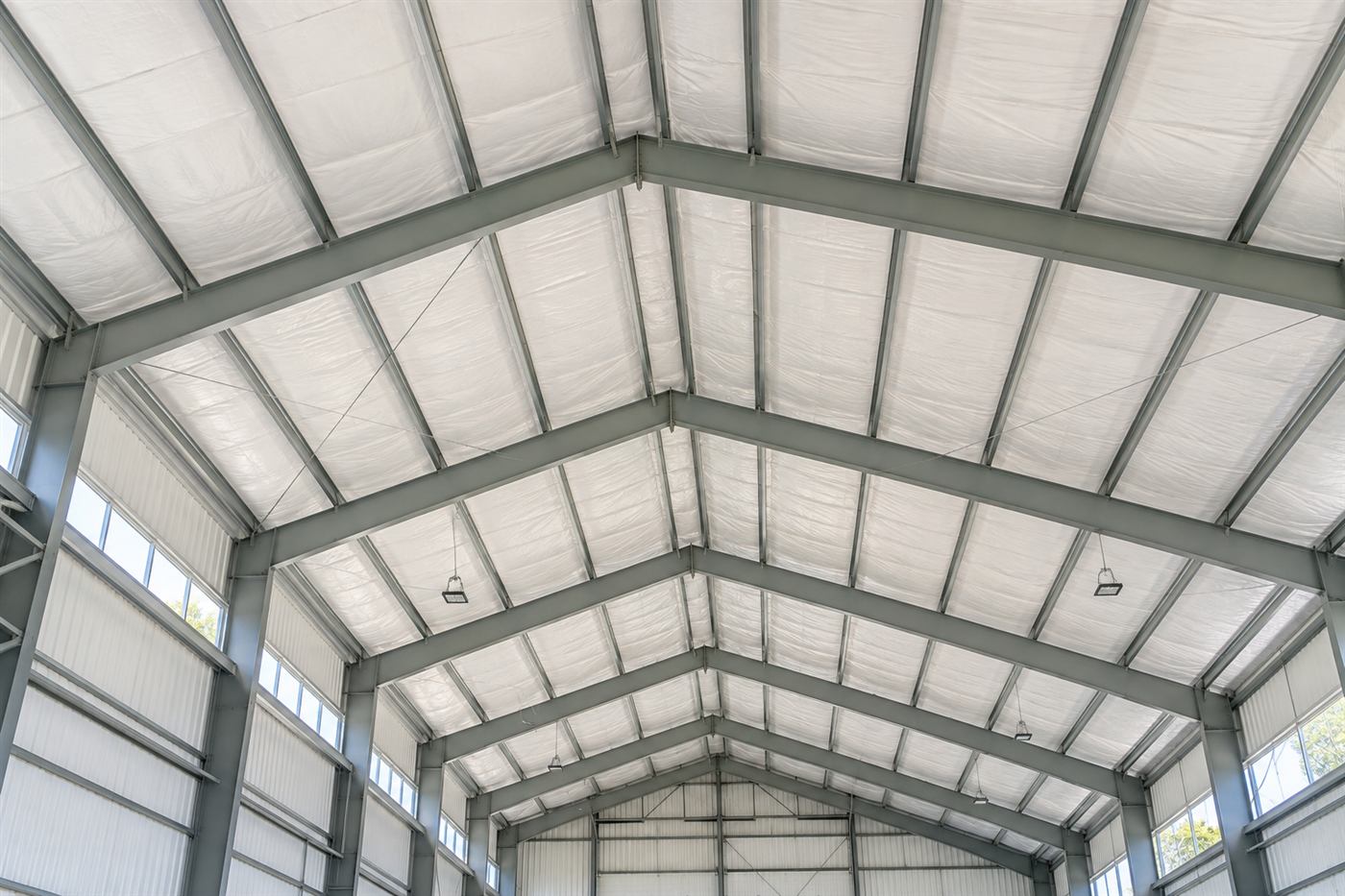
Miami has many warehouses, workshops and storefronts with metal or low-slope roofs. These buildings can be oven-like in summer. Workers feel it, stored goods suffer and cooling equipment, where it exists, struggles. Foam applied to the underside of a metal roof deck can reduce radiant heat and also reduce condensation, which appears when warm humid air meets a cool metal surface.
Commercial work has its own questions. The building may need approvals from the landlord, the fire marshal or the insurer. Foam in a commercial setting is often subject to fire-performance requirements and must be covered with an approved barrier where the rules require it. The roof structure, the fire protection systems and sprinklers may all be relevant.
Access matters too. Lifts, scaffolds and clearances may be needed, and operations may have to stop during application. Plan for how stored goods will be protected and where staff will work.
We cover the topic more fully on our page about commercial metal building insulation. If you have a shop or warehouse, start with a call describing the roof type, the height and what is stored inside.
What a technician checks before recommending foam
Foam is only as good as the surface it is applied to. Before any recommendation, a technician needs to look at the roof deck or ceiling from below, check for stains and damp spots, and ask about past leaks. They should check the condition of fasteners, framing and any metal. They should look at the air handler and ducts and note where they live.
They will also ask about the roof itself. How old is it? Has it been repaired? Is a replacement planned? The best order of work is usually roof first, foam second. Applying foam to a deck under a roof that is about to be replaced creates avoidable complications.
They will ask about the occupants as well. Who lives or works in the building? Are there health sensitivities? Where could people stay during the application period? These questions are not paperwork. They shape the schedule and the plan.
- Roof age, material and any history of leaks or repairs.
- Condition of decking, framing, fasteners and any metal.
- Location of air handlers, ducts, flues and bath fans.
- Presence of old insulation, pests or moisture stains.
- Access to the attic or roof space and clearance for equipment.
- Occupants, pets and any health sensitivities.
Open-cell, closed-cell and Miami conditions
In Miami's climate, the difference between open-cell and closed-cell foam is worth understanding. Open-cell is soft, light and vapor-permeable, expands widely and is often used on dry roof decks and in framing cavities. Closed-cell is dense and moisture-resistant and is more often discussed where humidity exposure, thin application or a harder surface is wanted.
On a roof deck that has been dry for years, either type may be considered. On a metal deck that can sweat, a moisture-resistant type is the more cautious choice. In a warehouse with a low-slope metal roof, closed-cell is frequently discussed. In a wood-framed bungalow with a sound deck, the choice may come down to the framing and the owner's priorities.
Neither type is a substitute for fixing leaks or for good ventilation of the living space. After a building is sealed, bath fans, kitchen hoods and the air conditioner become more important in managing humidity.
For the broader comparison with other products, read our page on spray foam versus blown-in insulation.
Permits, insurance and records
Whether foam needs a permit depends on what is being done and where. Insulation alone may not require one in many cases. Work that changes the roof deck, ventilation or rated assemblies may. In a commercial building the rules are more detailed. The City of Miami building office or the relevant authority for your property can answer for certain.
Insurance is worth a call. Some insurers ask about changes to the roof assembly, and a roof inspection that notes foam at the deck should be accurate. Keep the contractor's written scope, product data sheets and any inspection records together, and give a copy to your roofer for future work.
If your building is in a flood zone, ask how floodplain rules apply to materials in lower areas. If it is in an association or a historic district, ask what approvals are needed before roof or exterior work starts.
Our page on permits for insulation work lists the usual questions to bring to the local building department.
Storms, hurricane season and foam
Miami homeowners think about hurricanes every summer. Foam bonded to the underside of a roof deck becomes part of the roof assembly in a way that loose insulation never does. Some owners ask whether it improves wind resistance. That is a structural question, and the honest answer is that it depends on the roof system and should be evaluated by a roofer or engineer, not assumed.
What can be said is that after a storm, a roof deck covered in foam is harder to inspect from below, so roof inspections after heavy weather should include a close look at the outside. Leaks hidden under foam can cause damage before they are noticed.
If a storm does damage the roof or wet the insulation, call a roofer and an insurance adjuster first, then talk about repairs. Wet insulation generally needs to be removed and replaced. Our page on wet insulation after a hurricane explains what to look for.
Before the season starts, a quick check of the attic, the roof and the drainage is sensible. See our pre-season insulation check for a simple list.
Getting a straight answer by phone
The easiest way to start is a call. Describe the building type, the roof, the rooms or areas that suffer and whether you have noticed any leaks, stains or smells. If it is a commercial or multi-tenant property, say who owns the building and who must approve work.
Quotes are given only by phone. A simple question may be answered in one call, and complicated jobs need an on-site visit before pricing. A service call charge applies to the visit and is explained on the phone before anyone is dispatched. This website lists no prices because every building is different.
At the visit, the technician will look at the roof deck or ceiling, check for moisture, examine the equipment and explain what they see. You can decide at your own pace, and a sensible recommendation may be smaller than you expected.
If you own property in Miami and want to talk through foam at the roof deck, call and describe what you have. We will help you work out the right fit and the next step.
Questions people ask
Is foam better than blown-in insulation for a Miami house?
Neither is always better. Blown-in material suits a dry attic with thin cover and a sound roof. Foam suits cases where ducts sit in the attic, the space is awkward or air leaks are widespread. A technician should compare them for your house after looking at the roof and the attic.
Can foam be applied to a metal warehouse roof?
Often yes, and it can reduce radiant heat and condensation under the deck. Commercial buildings have extra considerations: fire-performance requirements, covering rules, landlord and insurer approvals, and operations during the work. Describe the roof, the height and the contents when you call so the visit can be planned.
Does a block house need foam in the walls?
Usually not as a first step. Most heat enters through the roof, so the attic is the better place to start. Wall insulation in block homes is typically done during a renovation, by adding furring and foam or rigid board on the interior. It is a larger project than attic work.
What if my roof is old?
Tell the technician. If the roof is near the end of its life, replacing it first is usually the better order, because foam on the underside makes future roof work and inspection more complicated. If the roof is sound and dry, foam can proceed after the technician checks the deck.
Do tenants need to leave during application?
Yes. Foam work requires the area to be vacated during application and for a period afterward, following the manufacturer's published instructions. In a multi-unit building, plan notice to tenants, ventilation and access to shared spaces. Ask for the instructions in writing before agreeing to a date.
How do I get a quote?
Quotes are given only by phone. A simple question may be handled in one call, and complicated work needs an on-site visit before pricing. A service call charge applies to the visit and is explained on the phone before dispatch. This site shows no prices because the right answer depends on your building.
Describe the situation by phone and we will tell you what the job involves. Quotes are given by phone. Jobs that cannot be quoted without seeing them need a technician on site, and the service call charge is explained on the phone before anyone is dispatched.
(561) 854-1888Related pages
How Spray Foam Is Applied in a Miami Property
Spray foam is applied by a trained crew using a rig that mixes two components at the nozzle, and the process looks different from batts or blown-in material. In a Miami property, the crew starts by deciding where foam makes sense, such as the underside of a roof deck, rim areas, or open wall cavities. They mask windows, vents, and finished surfaces, set up ventilation, and ask everyone, including pets, to stay out of the area during application. The scope and any quote are explained before work begins, including which surfaces will be covered and which will be left alone.
Conditions matter a great deal on the day. Miami humidity and heat can affect how foam expands and cures, so the crew checks the surfaces for dampness and the air for conditions that suit the product. Substrates must be clean and dry enough for good adhesion, and wood framing that shows moisture or rot should be addressed first. Foam is sprayed in controlled passes rather than one thick layer, because the material expands and generates heat as it cures. The crew watches thickness, avoids blocking soffit vents unless the plan calls for it, and keeps foam away from recessed fixtures that are not rated for contact.
Afterward, the home needs time to ventilate before people return to the treated area, and the crew will explain what to expect for odor and re-entry. Spray foam is also hard to remove, so older buildings, condos, and homes with possible roof leaks deserve a conversation first, since covering a leaking deck can hide a problem. Miami also has hurricane season to consider, and the crew discusses how the roof deck and framing look before anything is applied. If you have questions about building rules, ask your association or local building office before work is scheduled. Take your time deciding, because the crew would rather explain every detail than rush you.